In a light-hearted yet telling encounter, reigning world chess champion Magnus Carlsen recently defeated ChatGPT in a flawless 53-move online chess game, without losing a single piece. The game, played presumably during one of Carlsen’s travels, was shared by the Norwegian grandmaster on social media platform X (formerly Twitter) with the tongue-in-cheek caption: “I sometimes get bored while travelling.” The post quickly went viral in the chess and tech communities alike.
Carlsen’s Precision on Full Display
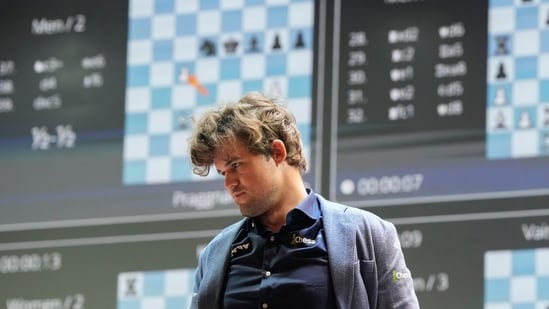
Throughout the match, Carlsen demonstrated signature precision and positional dominance. His relentless pressure led to a clean sweep of the board, prompting the AI to resign after being left with no pawns and no counterplay. ChatGPT, in its post-game resignation, wrote: “All my pawns are gone. You haven’t lost a single piece… As agreed, I resign.” The rare display of total control from Carlsen not only entertained his followers but also raised questions about the limits of language model-based AI in competitive chess scenarios.Mobile finder: Samsung Galaxy Z Fold 7 launched in India
Feedback Exchanged in Good Spirit
Despite the outcome, Carlsen offered constructive analysis to the AI opponent. He acknowledged the chatbot’s creative opening and a speculative piece sacrifice, but noted that it lacked proper follow-through. ChatGPT responded by attempting a self-assessment of Carlsen’s rating, estimating it to be in the 1800–2000 range, assuming long-form time controls — a humorous underestimate given Carlsen’s actual FIDE rating hovering around 2800.
AI Still a Step Behind in Chess Mastery
This friendly match shines a spotlight on the limitations of general-purpose AI when it comes to specialised tasks like chess. While ChatGPT can simulate conversation about chess and even play legal moves, it lacks the depth and intuition of engines like Stockfish or Leela Chess Zero, which are specifically designed for high-level chess play.
The episode ultimately served as a fun distraction for Carlsen and a reminder that, despite advances in AI, some human skills, like world-class chess mastery, remain out of reach for now.