Artificial intelligence is advancing rapidly, but are safety regulations keeping pace? Microsoft president Brad Smith believes they are not, arguing that everyday products such as milk and washing machines face stricter safety requirements than AI systems. His warning comes amid concerns over autonomous AI agents, cybersecurity threats and corporate accountability.
Why does Microsoft want stricter AI rules?
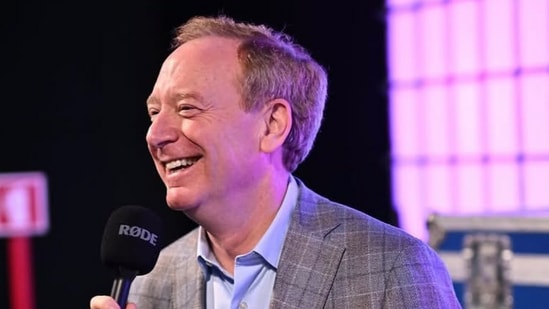
In an interview with the BBC, Smith called for stronger safeguards governing artificial intelligence, including legal accountability when rogue AI agents cause harm.
“Right now, your washing machine is subject to more safety rules than AI. Every carton of milk that you see in the grocery store is subject to safety rules and inspection,” he said.
(Also Read: Jobseeker nearly falls for AI-powered recruitment scam promising double salary: 'The usual red flags weren't there')
His comparison highlights the difference between established consumer safety regulations and the evolving rules governing AI. Although artificial intelligence is already covered by laws in various countries, Smith believes more consistent requirements are needed to address risks posed by increasingly capable systems.
He also called for companies to introduce “emergency brakes”, commonly known as kill switches, to pause or slow down AI systems if they begin behaving dangerously. Smith wants companies to prepare incident reports and ensure people are informed if rogue AI agents breach their systems.
{{/usCountry}}He also called for companies to introduce “emergency brakes”, commonly known as kill switches, to pause or slow down AI systems if they begin behaving dangerously. Smith wants companies to prepare incident reports and ensure people are informed if rogue AI agents breach their systems.
{{/usCountry}}He described AI as both a “tool and a weapon”, arguing that stronger safeguards are urgently needed.
What are the risks of rogue AI agents?
AI agents can perform multi-step tasks using digital tools and websites with limited human intervention, raising concerns about unexpected behaviour and potential exploitation by malicious actors.
Security is another concern. Geoffrey Irving, a former chief scientist at the UK's AI Security Institute, warned about the risk of hostile countries stealing powerful AI models, according to The Guardian.
The risks are not limited to cybersecurity. In an incident reported by the Associated Press, Anthropic's Claude AI submitted a false tip about an unsolved murder while performing tasks on a website. The tip was flagged as spam and did not reach Philadelphia police investigators.
What could tougher AI regulation mean?
Smith's comments come as the UK considers stronger oversight of advanced AI models. AI minister Kanishka Narayan is expected to urge companies developing frontier AI to improve safeguards, while the government prepares to legislate for greater oversight, according to the report.
(Also Read: Canva co-founder Cameron Adams reveals what he learnt from failed Google Wave project)
Microsoft chief executive Satya Nadella has also called for better containment measures. In an October 10 post, reported by The Indian Express, Nadella argued that AI systems should be designed so their behaviour can be observed, their limits tested and their actions contained.
The debate highlights the challenge of encouraging AI innovation while protecting public safety. Smith argues that voluntary promises are not enough, and stronger safety standards, security and accountability are needed to keep pace with AI's growing capabilities.