
A man in Australia who spent years trying to crack open a rock, believing it contained gold, was in for a surprise when scientists identified it as something far rarer: a meteorite dating back around 4.6 billion years.
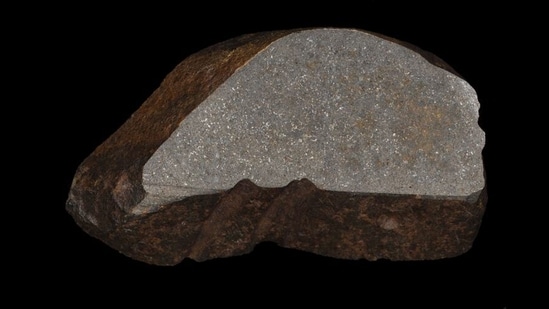
According to a report by Science Alert, David Hole discovered the 17-kg rock in 2015 while searching for gold with a metal detector in Maryborough Regional Park in central Victoria, Australia. Despite trying several tools, including a sledgehammer, he could not break it open before eventually taking it to a museum for examination.
Discovery of the rare meteorite
David Hole found the heavy, reddish rock resting in yellow clay at Maryborough Regional Park. The discovery appeared promising, as the area is part of Australia’s Goldfields region, where the gold rush peaked during the 19th century.
Convinced that there was a gold nugget inside, Hole took the rock home and tried several ways to open it. According to Science Alert, he used a rock saw, an angle grinder, a drill and even poured acid over it. However, none of his attempts worked, and even a sledgehammer failed to crack the rock.
Hole eventually took the specimen to the Melbourne Museum for identification. Melbourne Museum geologist Dermot Henry said the rock had features that suggested it could have come from space.
{{/usCountry}}Hole eventually took the specimen to the Melbourne Museum for identification. Melbourne Museum geologist Dermot Henry said the rock had features that suggested it could have come from space.
{{/usCountry}}“It had this sculpted, dimpled look to it. That’s formed when they come through the atmosphere; they are melting on the outside, and the atmosphere sculpts them,” Henry said, as per the outlet.
Henry said he had examined thousands of rocks during his 37 years at the museum, many of which people believed were meteorites. However, only two of those specimens had turned out to be genuine meteorites by that point. Hole’s discovery was one of them.
(Also Read: Astronomers discover possible new dwarf planet beyond Pluto, measuring up to 1,500 km across)
What did scientists find inside the rock?
Researchers identified the specimen as a meteorite and named it the Maryborough meteorite after the town near where it was discovered. Weighing around 17 kilograms, it is estimated to be approximately 4.6 billion years old.
Scientists used a diamond saw to cut a small slice from the meteorite and examine its composition. They found that it contained a high percentage of iron, classifying it as an H5 ordinary chondrite. The cut also revealed tiny crystallised droplets of silicate minerals, known as chondrules, inside the specimen.
The researchers published their findings in the Proceedings of the Royal Society of Victoria.
According to Henry, meteorites offer scientists an opportunity to study the early history of the Solar System.
“Meteorites provide the cheapest form of space exploration. They transport us back in time, providing clues to the age, formation, and chemistry of our Solar System (including Earth),” he said.
He added that some meteorites provide clues about the deep interior of Earth, while others contain stardust older than the Solar System itself. Certain rare specimens also contain organic molecules, including amino acids, which are considered the building blocks of life.
(Also Read: Indian-origin NASA astronaut Anil Menon shares real-time video of Moon rising and setting from space. Watch)
Where did the meteorite come from?
Scientists believe the Maryborough meteorite most likely originated in the asteroid belt between Mars and Jupiter. According to Henry, collisions between asteroids could have dislodged the space rock, eventually sending it towards Earth.
Although its exact arrival on Earth remains unknown, carbon dating suggests that it has been on the planet for less than 1,000 years.
ABOUT THE AUTHOR
Bhavya Sukheja is a Senior Content Producer at Hindustan Times with over 6 years of experience in digital journalism. She specialises in covering stories that reflect everyday human experiences, with a focus on viral videos, social media trends, and human-interest features that inform readers while sparking meaningful conversations. She loves chasing page views and finding stories that tug at readers’ heartstrings. Before joining Hindustan Times, Bhavya worked with Republic World and NDTV, where she developed her skills in real-time reporting and digital storytelling. Working in fast-paced newsrooms helped her build an editorial approach that prioritises accuracy, clarity, and audience engagement. Bhavya is driven by a curiosity about how people communicate and connect in the digital age. She is particularly interested in stories that highlight cultural shifts, shared emotions, and the evolving nature of online conversations. When she is not tracking trends, Bhavya enjoys unplugging and spending time with her cat.