Chhath Puja is known for its strict fasting, traditional offerings and prayers to the setting and rising Sun. However, the festival also has a lesser-known night-time ritual that creates a striking sight in many households. Known as Kosi Bharna, the ritual involves arranging sugarcane stalks into a small canopy, with earthen lamps and offerings placed beneath it.
What is Kosi Bharna during Chhath Puja?
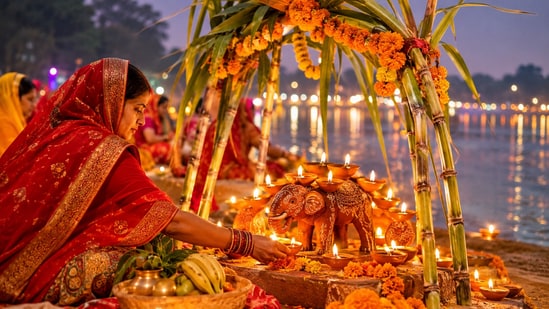
Kosi, also known as Kosiya, is a temporary canopy made by tying together sugarcane stalks. In several traditions, five stalks are used to form a small mandap, or ceremonial structure. Earthen lamps, fruits, thekua and other offerings are placed beneath it as family members gather for prayers.
The ritual is observed on the night of the third day of Chhath, after devotees offer Sandhya Arghya to the setting Sun. The Bihar Tourism department describes Kosi as a night-time observance in which a sugarcane canopy is decorated with earthen lamps and baskets of prasad. Some families also perform the ritual at the riverbank before the morning offering to the rising Sun.
(Also Read: Nvidia employees praise Jensen Huang amid affairs row: 'Jensen built far more than NVIDIA')
Why are sugarcane stalks and diyas used?
{{/usCountry}}(Also Read: Nvidia employees praise Jensen Huang amid affairs row: 'Jensen built far more than NVIDIA')
Why are sugarcane stalks and diyas used?
{{/usCountry}}Sugarcane is central to the arrangement, forming the canopy under which the offerings are placed. Its presence also reflects the importance of agricultural produce in Chhath, when devotees offer seasonal fruits, sugarcane and other items as part of their prayers.
The diyas illuminate the small structure, making it one of the distinctive sights associated with the festival. Lamps, fruits, thekua and other puja materials are commonly placed beneath the canopy. The Drik Panchang guide to Chhath Puja also describes these elements, while noting that the arrangements can differ across traditions.
A ritual associated with vows and wishes
For some devotees, Kosi Bharna is performed to fulfil a mannat, or a vow made to Chhathi Maiya. Families may observe the ritual after a wish has come true, often one related to the health and well-being of their children or family members.
A 2023 study by Akanksha Yadav and Vinita Chandra, published in Zeitschrift für Indologie und Südasienstudien, looks at the role of such vows in Chhath traditions. It describes Kosi Bharna as a ritual in which decorated earthen elephants carrying 21 lit oil lamps are placed beneath a canopy made of five sugarcane stalks. The study also explains how families perform the ritual after their wishes have been fulfilled.
Not every Chhath-observing family performs Kosi Bharna, and the ritual's details may vary between households. For those who follow it, the practice is a way of expressing faith and gratitude to Chhathi Maiya.