A village in China’s Guizhou province celebrates a centuries-old festival in which dogs are dressed in traditional Miao attire and carried through the streets on sedan chairs. Known as the Dog-Carrying Festival, the tradition honours the animals, which the Miao community believes helped their ancestors survive droughts and find water. The celebration also features rituals associated with rainfall, good harvests and respect for nature.
Dog dressed in traditional Miao attire
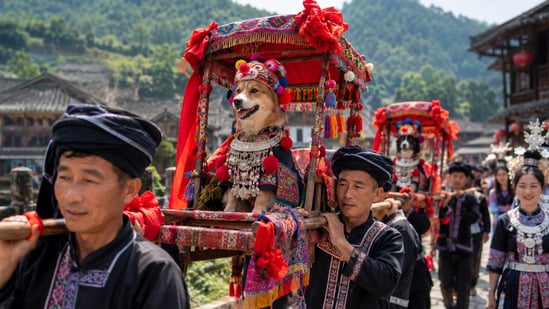
The festival, locally known as Tai Gou Jie, is celebrated every seventh month of the lunar calendar in Jiaobang village in Jianhe county, Guizhou province. According to a South China Morning Post report, the tradition was recognised as local intangible cultural heritage in 2015.
(Also Read: Indian woman fined S$2,500 for molesting waitress at Singapore rooftop bar; victim says she was fired after incident)
As part of the celebration, villagers select a dog and dress it in traditional Miao clothing. The animal is given a hand-crafted tiger-head hat and a silver neck ring before being placed on a bamboo sedan chair and carried through the village. A ritual priest accompanies the procession, chanting traditional scriptures.
The celebrations continue in nearby fields, where residents perform drum dances and splash mud on one another. These customs are associated with prayers for favourable weather, rain and a plentiful harvest.
Two legends explain the festival's origins
{{/usCountry}}The celebrations continue in nearby fields, where residents perform drum dances and splash mud on one another. These customs are associated with prayers for favourable weather, rain and a plentiful harvest.
Two legends explain the festival's origins
{{/usCountry}}The tradition is linked to two stories passed down within the Miao community. One tells of a severe drought that threatened the village's crops. According to local folklore, a village elder dreamt that praying with a dog would bring rain. The villagers followed the advice and, when rainfall arrived, believed the animal had played a role in saving their harvest.
Another legend credits a dog with helping the community's ancestors find a hidden source of water. Guizhou's landscape has limestone hills and underground caves, where water can disappear beneath the surface. Finding a reliable source would have been vital to the survival of early settlements.
These stories explain why dogs are regarded as more than companions in the community's traditions. They are remembered as animals that helped people survive.
Tradition passes respect for animals to younger generations
The festival also reflects the Miao community's wider beliefs about the relationship between humans and nature. According to SCMP, another custom involves unmarried young women carrying puppies on their backs while collecting rice from local households. An elder later distributes the food among children, in a ritual associated with wishes for their health and well-being.
(Also Read: Kentucky woman who allegedly forgot 10-month-old granddaughter in hot car cleared in her death)
The celebrations help villagers pass down stories about their ancestors and the animals that helped them. The festival also keeps their traditions alive and expresses gratitude to dogs.