A Harvard professor whose midterm exam was disrupted by a planned picket has said that the “deliberate disruption” ended up negatively affecting his undergraduate students. In a piece published November 6 in The Harvard Crimson, the student newspaper of Harvard University, Professor David S Jones criticised the disruption of his class on October 29.
Strike by Harvard graduate students
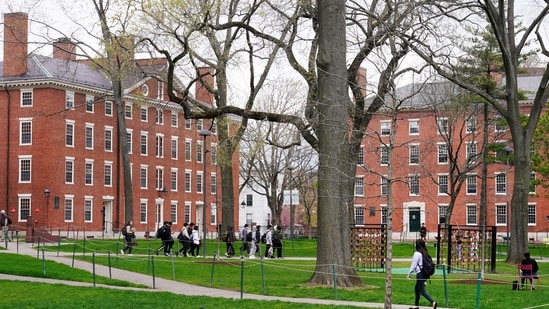
Harvard graduate students are striking to demand better pay and benefits, stronger protections against harassment and discrimination, and safeguards for noncitizen student workers. The Harvard Graduate Students Union-United Auto Workers (HGSU-UAW), which represents research assistants and teaching fellows, has accused the university of failing to adequately address these concerns during contract negotiations.
This is the second strike by the Harvard Graduate Students Union this year. The union first went on strike on April 21, with the walkout lasting 40 days before Harvard agreed to resume negotiations. However, after talks failed to yield an agreement, research assistants and teaching fellows launched a second strike on October 27, accusing the university of failing to meaningfully address their demands.
Planned picket disrupts midterm exam
David S Jones, Chair of the Harvard Department of the History of Science, shared his thoughts on the strike with The Harvard Crimson.
{{/usCountry}}David S Jones, Chair of the Harvard Department of the History of Science, shared his thoughts on the strike with The Harvard Crimson.
{{/usCountry}}The Harvard professor said that the Harvard Graduate Students Union had written to inform him of the picket in advance, asking him to reschedule his class. Jones, who had a midterm scheduled on the day of the planned picket, argued that scheduling the class would have been impossible.
(Also read: Indian student's post on ‘biggest cultural shock’ in US sparks debate on exam ethics: ‘It’s the case at Harvard’)
“Harvard has few spaces that can hold 280 students,” he pointed out, adding that he did check with the Registrar to see whether the venue of his class could be changed.
Jones also noted how rescheduling the midterm would have negatively affected his students.
“My class had an in-person exam scheduled for October 29. Students had been working hard to prepare, and rescheduling the exam was not a good option,” he said.
“Changing an exam date is disruptive in any well-designed course. Moreover, the strike is open-ended: I had no idea when it might end, and I had no guarantee that any future date would be picket-free. Converting the exam to a take-home is pointless in our age of generative artificial intelligence. As a result, I concluded that it was not appropriate to cancel or reschedule the exam.”
A ‘sonic assault’
Jones went forward with the midterm as planned. He said that the picket was organised as planned, but undergraduate students were able to enter the lecture hall to write their exam.
Unfortunately, the din created by the striking graduate students made it tough for many to write the exam. The Harvard professor described it as a “sonic assault”.
(Also read: ‘Why did you come back to India?’: Grandfather upset with Harvard-educated founder for leaving US)
He said that striking students used noisemakers to disrupt the exam, using a microphone to amplify their voices. He said that one person, at one point, simply screamed into the megaphone.
“This was not the usual picket. This was a sonic assault: shouting through an amplified megaphone and sustained blasts from horns, sirens, and other noisemakers. At one point someone simply shrieked, incoherently, into the megaphone. Because of a scheduling glitch, the class session was recorded: Panopto captured it all,” he said.
Panopto is Harvard University's official video platform and lecture capture tool.
Harvard undergraduates affected by strike: professor
Jones had purchased 100 pairs of earplugs and had allowed his students to wear noise-cancelling headphones in preparation for the disruption. “Nothing worked,” he said.
“One student apparently could not stand the noise and walked out after 15 minutes. The other students endured the assault with an astonishing display of bravery, patience, and fortitude,” he wrote.
He said that some students could simply laugh helplessly when the shrieking began, even as he acknowledged that it was unreasonable to expect students to take the exam under such conditions.
The professor accused the striking graduate students of deliberately disrupting an undergraduate exam, arguing that their protest ended up hurting fellow students rather than putting pressure on Harvard or its administration.
Jones said the protesters may have intended to target him for holding the exam despite the picket, but instead made it difficult for undergraduates to complete an exam they had prepared for. He also calls the incident unprecedented in Harvard's history.
Harvard’s reaction
In an October 26 statement, Harvard University said it believed a second strike by the Harvard Graduate Students Union-United Auto Workers (HGSU-UAW) was unwarranted, arguing that it had already addressed several of the union's key demands through its latest contract proposal.
The university said its offer included nearly a 16% compounded pay increase over the contract period, pay parity between teaching fellows and research assistants, expanded benefits for all PhD students, and additional financial support worth nearly $1 million.
It also proposed subsidised legal services, including immigration-related assistance, and paid leave for immigration matters for non-US resident student workers.
However, disagreements remained over the union's demand for separate harassment and discrimination complaint procedures, the structure of student benefits, and compensation terms. Harvard maintained that these differences could be resolved through continued negotiations and urged the union to return to the bargaining table rather than strike.
“The University remains fully committed to continued good-faith negotiations. We believe that remaining differences can be resolved at the bargaining table.”