A new fashion trend emerging in South Korea is drawing attention for its understated portrayal of wealth, with social media users describing it as “the style of a rich girl who has nothing left to buy, even when she goes shopping at a department store.”
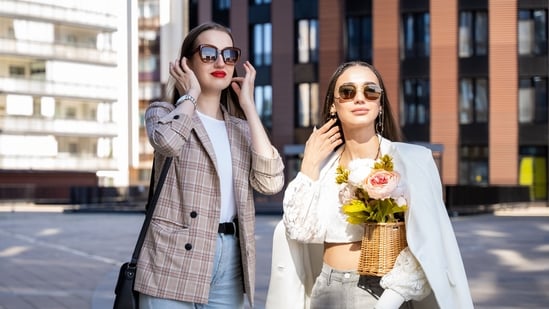
Known as “Hyunbaek-core,” the trend has gained traction among people in their 20s and 30s, as per a report by The Korea Times. It combines “Hyunbaek”, a shortened name for Hyundai Department Store, with “core”, a term commonly used to describe the defining aesthetic of a particular style.
The aesthetic evokes the image of a wealthy young woman browsing a luxury department store without appearing particularly interested in shopping. It is characterised by an effortless sense of affluence, understated elegance and an air of indifference towards material possessions.
Hyunbaek-core is closely associated with the concept of “quiet luxury”, which emphasises premium fabrics, refined silhouettes and subtle details instead of conspicuous designer logos. Materials such as silk and cashmere are central to this aesthetic, which communicates wealth without overtly displaying it.
While the trend bears similarities to the “old money” aesthetic, which draws inspiration from traditional upper-class lifestyles and dressing, Hyunbaek-core has a more relaxed and effortless approach. Rather than emphasising formality, it seeks to convey the impression of someone who has grown up surrounded by luxury and does not feel the need to prove it.
How Hyunbaek-core became popular
{{/usCountry}}While the trend bears similarities to the “old money” aesthetic, which draws inspiration from traditional upper-class lifestyles and dressing, Hyunbaek-core has a more relaxed and effortless approach. Rather than emphasising formality, it seeks to convey the impression of someone who has grown up surrounded by luxury and does not feel the need to prove it.
How Hyunbaek-core became popular
{{/usCountry}}Unlike earlier fashion trends such as “ballet-core” and “poet-core”, which take inspiration from particular professions, identities or cultural archetypes, Hyunbaek-core is built around a specific place: Hyundai Department Store.
The trend’s emergence is closely linked to the retailer’s growing popularity among younger, affluent consumers. Hyundai Department Store has pursued a strategy to attract this demographic, particularly through its flagship store, The Hyundai Seoul, in Yeouido.
The share of visitors in their 20s and 30s increased from 37% in 2020 to 46.7% in the first nine months of this year. This growing presence has helped establish the department store in the minds of younger consumers as a destination associated with wealth, luxury and an aspirational lifestyle. As a result, the department store has become more than a shopping destination, with its name now serving as shorthand for a particular social image and aesthetic.
(Also Read: The ‘kinda chic’ trend is the internet’s new language for self-love)
A growing fascination with inherited wealth
The popularity of Hyunbaek-core also reflects a broader shift in how young people view wealth and social mobility.
As economic pressures mount and some younger consumers become less convinced that hard work alone can guarantee upward mobility, the lifestyle of people born into privilege has increasingly become an object of fascination.
“Stories of self-made success and the rags-to-riches narrative have lost their persuasive power, and in their place, we are seeing an abstract longing for and admiration of inherited wealth,” Lee Jun-young, a professor in the Department of Economics and Finance at Sangmyung University, said.
This yearning is reflected in the appeal of an aesthetic that suggests wealth is an inherent part of one’s life rather than something that needs to be displayed or acquired through visible symbols of success. Hyunbaek-core, therefore, is not simply about wearing expensive clothes. It is also about projecting the image of someone for whom luxury is ordinary rather than aspirational.
Lee Eun-hee, a professor of consumer psychology at Inha University, described the trend as an example of the “panoplie effect”. The concept refers to how consumers use products associated with a particular social group to identify themselves with that group or signal a desired social identity. Lee attributed the trend to declining social mobility, suggesting that the appeal of such aesthetics is linked to people’s desire to associate themselves with a privileged class.