An Indian man living in Australia has explained why a $100,000 annual salary can look very different when converted into Indian rupees. Taking to Instagram. Karan Singh Gill explained how taxes, rent and everyday expenses affect his actual savings in Australia.
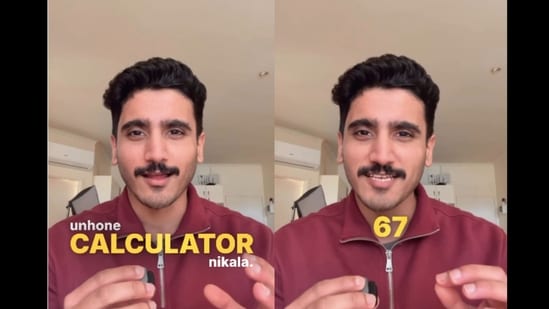
"Jab maine apni family ko bataya ki main Australia mein 1 lakh dollar kamata hoon, unhone calculator nikala, 67 lakh likha aur mujhe crorepati declare kar diya. (When I told my family that I earn $100,000 in Australia, they took out a calculator, wrote 67 lakh and declared me a crorepati)," Gill said in the video.
He said that his family's calculation was not completely wrong, as $100,000 converts to around ₹67 lakh at an exchange rate of ₹67 per AUD. However, he pointed out that the money is being earned and spent in Australia. "That ₹67 lakh is not going to be spent in India, it will be spent in Australia," he said.
(Also Read: Madhya Pradesh man quits job in Australia due to ‘toxic’ Indian manager: ‘Made my life difficult’)
Cost of living in Australia
{{/usCountry}}(Also Read: Madhya Pradesh man quits job in Australia due to ‘toxic’ Indian manager: ‘Made my life difficult’)
Cost of living in Australia
{{/usCountry}}Gill then broke down his $100,000 salary. He shared that $22,788 goes towards tax and the Medicare levy, leaving him with around $77,000. He then estimated his annual rent at $26,000, based on an average of $500 per week. This would leave around $51,000.
After that, he accounted for expenses such as groceries, transport, electricity, phone bills and insurance, which he estimated could cost another $20,000. "That leaves around $31,000," he said.
Gill said that people often make the mistake of converting the remaining amount back into rupees and assuming that the person is still saving a large amount of money. "Conversion only applies to the money that you send to India. The money you spend here doesn't have that ₹67 magic," he said.
He also gave examples of everyday expenses in Australia to explain his point. A $5 coffee, for instance, would be around ₹355 when converted, while a $40 haircut would be approximately ₹2,700. "Same salary, different country, completely different maths," Gill said.
He added that the amount left after taxes and living expenses is more important when looking at a person's actual financial position. He explained that the surplus can go towards goals such as a home deposit and an emergency fund. He also said that when banks in Australia assess someone for a loan, their gross salary alone does not tell the entire story, with their overall finances and surplus also playing a role.
In the caption of the Instagram video, Gill made a similar point, writing, "Earning $100k in Australia sounds like ₹67 lakh-until you realise the money is being spent in Australia too."
"After tax, rent and everyday expenses, that $100k could leave you with roughly $31k in this example," he wrote. He added that currency conversion only matters for the money sent to India, while expenses in Australia continue to be paid at Australian prices.
(Also Read: How an Australian woman overcame isolation in India to build a beautiful life)
How did social media react?
The video prompted a discussion among users about the cost of living in Australia compared with India.
One user wrote, "My haircuts in India already cost ₹3K and coffee costs ₹500. However I do understand that these are luxury prices in India."
"It's not always about money. It's about the peace and facilities you get in the country," commented another.
"If you live in tier 1 cities in India..life isn't considerably cheaper(comparing Tier 1 Indian cities to Melbourne). A coffee in a descent cafe in my home city Gurgaon costs 400-500 and a good haircut costs 1000-1500 for men and way more for women," wrote a third user.
"But same is true for anyone earning any number in India. They also pay tax, GST, groceries, insurance etc. Also, there is very small number who can save 30% of their income. So chill... You are doing very well in Australia than your counter parts in India. Your parents are rightly gloating about it," said another.