Malabar Hill is today counted among Mumbai’s most affluent neighbourhoods. It is home to the Raj Bhavan, lush Hanging Gardens, sweeping views of Back Bay, and lies in close proximity to the ancient Walkeshwar Temple. However, the origins of its name date back to a far stormier chapter of maritime history — one defined by pirates and naval skirmishes.
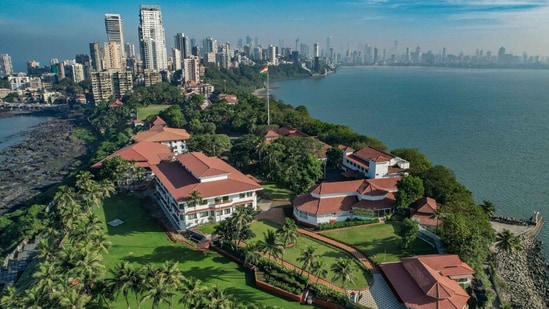
It is believed that Malabar Hill got its name from pirates who once operated along India's western coastline. The pirates, who came from the Malabar coast in present-day Kerala, reportedly used the waters around the hill as a hiding place to ambush trading vessels sailing towards Bombay, according to the Maharashtra government's Mumbai Legacy Project.
(Also read: Step inside billionaire Niranjan Hiranandani's lavish home in Mumbai's Malabar Hill: 6 floors of pure luxury)
Historical records indicate that Malabar pirates were active in the waters off Bombay by 1668, when their attacks on trading vessels had become a serious concern for the British East India Company.
The pirates of Malabar Hill
In its heritage documentation on Raj Bhavan, the Mumbai Legacy Project says: “Malabar Hill was named after the pirates of the Malabar coast who used to lie in wait of British fleets in the still waters of the northern parts of the Back Bay sea.”
{{/usCountry}}In its heritage documentation on Raj Bhavan, the Mumbai Legacy Project says: “Malabar Hill was named after the pirates of the Malabar coast who used to lie in wait of British fleets in the still waters of the northern parts of the Back Bay sea.”
{{/usCountry}}This link between the pirates of Malabar and Mumbai is attributed to Colonel John Biddulph, a British soldier and author who wrote the historical book “The Pirates of Malabar” in 1907.
(Also read: Malabar Hill’s Ridge Apartment set for redevelopment)
The Mumbai Legacy Project also states: “The place we now call Malabar Hill Point was named Shrigundi. Malabar Point got its name because of pirates from Dharmapatan, near Tellichery, like Kotta and Porka, along the Malabar Coast. When the British started ruling Bombay, these pirates hid in the calm waters at the north end of Back Bay, waiting for the northern fleet. Shrigundi, the original name, means the Lucky Stone.”
The original name of Malabar Hill
Samuel T Sheppard's “Bombay Place-Names and Street-Names” (1917), under the entry for Malabar Hill, reproduces an account from “Bombay Gazetteer: Materials, Part III”. The entry states:
“The Hill—the native name of which is Sri Gundi, which seems to mean "Lucky Stone"—is also said to derive its name from the fact that the neighbourhood of the Walkeshwar temple on it was a favourite haunt of the Malabar pirates.”
“Shri- Gundi is called Malabar Point after the pirates of Dharmapatan, Kotta, and Porka on the Malabar Coast, who, at the beginning of British rule in Bombay, used to lie in wait for the northern fleet in the still water in the sea of the north end of Back Bay.
“In 1668 so exposed was the trade of Bombay to Malabar pirates and to Shivaji that three small armed ships had to be built as convoys.”
Today, Malabar Hill is better known for its upscale residences, historic landmarks and panoramic views of Mumbai's coastline than for its maritime past. Yet, its name offers a glimpse into a time when Bombay's waters were vulnerable to pirate attacks and naval conflict.