E-Paper



Techie says he can’t afford 2BHK despite being among top 2% of India: ‘There’s a parallel black economy’
A Hyderabad-based techie has dismissed data that puts him among the top 2% earners of the country — claiming that there is a parallel economy of black money

 Prefer HTon Google


A Hyderabad-based techie has dismissed data that puts him among the top 2% earners of the country — claiming that there is a parallel economy of black money where people earn far more than him. Harsh Vardhan triggered a discussion on income and housing affordability after claiming that being among the country's top 2% earners still isn't enough to afford what many would consider a comfortable lifestyle.
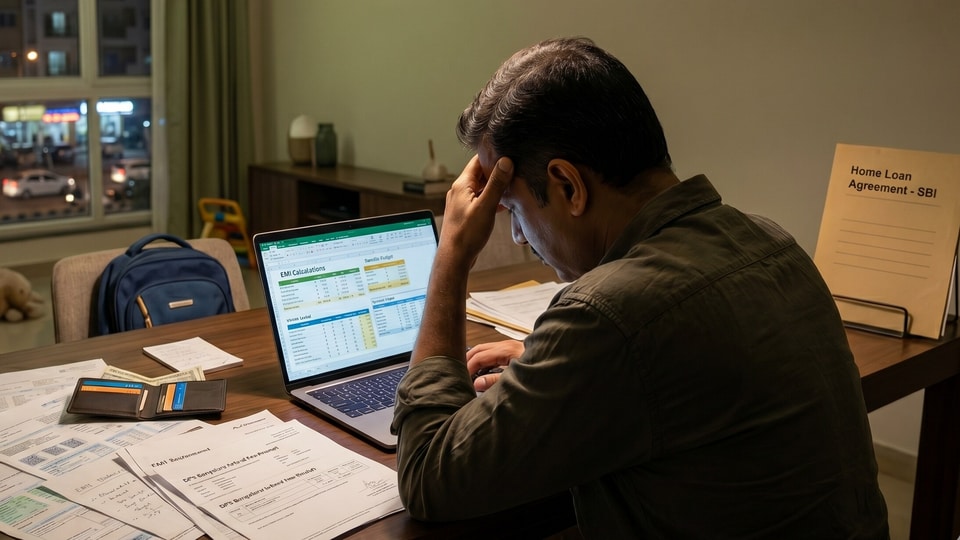
Hyderabad techie can’t afford 2BHK
In a post shared on the social media platform X on July 22, Harsh Vardhan said that he is among the top 2% of the country, if one goes by official data.
However, anecdotal evidence refutes this data — the techie pointed out that despite his purportedly high income, he cannot afford to buy a 2BHK in a gated society of Hyderabad.
In fact, his income doesn’t even stretch far enough to afford long duration stays in premium hotels.
“I am among the top 2% earners in India. Yet, I cannot afford to > buy 2 BHK in HYD gated community > stay in premium hotels for long duration,” wrote the tech professional, who has earlier spoken about his love for travelling to Vietnam.
"Why so?" he asked, before answering his own question: "Cause this data is BS."
Black money in India
The software professional argued that official income data paints an incomplete picture because it does not account for India's "parallel black economy" — income and wealth that goes unreported to tax authorities.
Black money typically refers to income earned legally or illegally but concealed to evade taxes, according to the government's 2012 White Paper on Black Money.
“There are no reliable estimates of black money generation or accumulation, neither is there an
accurate well-accepted methodology for making such estimation. By its very definition, black money is not accounted for, thus all attempts at its estimation depend upon the underlying assumptions made and the sophistication of adjustments incorporated,” the White Paper noted.
“There’s a parallel black economy in India. Where many earn more than me & never paid taxes,” Harsh Vardhan said.
To illustrate his point, he said that a 2BHK in his society costs ₹2 crore. He asked whether one could afford to buy a flat at that price while earning an honest salary.
“You can do the math. How many years of taxed income is that,” he asked.
Post sparks debate
The post sparked a debate on India’s taxation laws and cost of living.
“Problem is IT department is focussing only on existing tax payers instead of going behind tax evaders. Almost 80% of Indian businessman are tax evaders but I hardly hear news where IT Department or Government is doing something to get them into tax bracket,” wrote one X user.
“If there were so much prosperity in India, we would have sold much more than just 50k luxury cars in a year,” another said. “Black money should be controlled, but it does not mean that we have suddenly become a rich country.”
(Also read: The X Files: See how black money distorts your sense of wealth, earnings - and self)