...
...
Next Story

14 Keralites with ISKP, blast outside Turkmenistan mission in Kabul foiled

Credible reports from Kabul indicate the Taliban detained two Pakistani nationals with an explosive device outside the Turkmenistan embassy after the Kabul airport attack on August 26.

Updated on: Aug 28, 2021, 09:14:05 IST
Advertisement

At least 14 Kerala residents are part of the Islamic State of Khorasan Province (ISKP) terror group after being freed by the Taliban from Bagram jail even as there are unconfirmed reports of two Pakistanis being picked up by the Sunni Pashtun terrorist group for trying to detonate an IED device outside the Turkmenistan embassy in Kabul on August 26. The Kabul airport suicide bombing death figures are nearing 200, including 13 US soldiers.
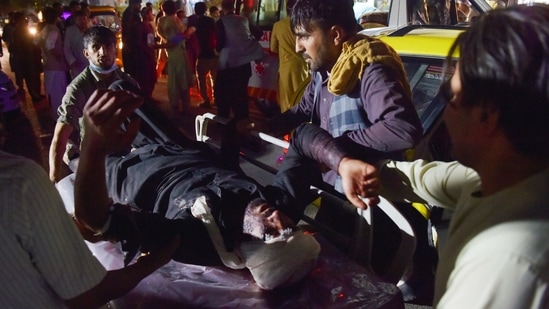
The Kabul airport suicide bombing death figures are nearing 200, including 13 US soldiers. (File Photo)

According to reports reaching from Afghanistan, Kabul is in control of the Haqqani Network as the Zadran Pashtuns are traditionally dominant on the Jalalabad-Kabul axis with the tribe dominant in Afghanistan's Nangarhar province bordering Pakistan. ISKP is also active in the Nangarhar province and has operated with Haqqani Network in the past.

It is understood that one out of the 14 Keralites contacted his home in the southern state, while the remaining 13 are still at large in Kabul with the ISKP terrorist group. After the so-called Islamic State of Syria and Levant occupied Mosul in 2014, batches of Keralites from the Malappuram, Kasaragod and Kannur districts left India to escape the land of Kafirs and join the jihadist group in the Middle East. Out of this, some families came down to Nangarhar province in Afghanistan to settle under the ISKP.

While India is worried that the Taliban and their handlers will use these radicalised Keralites to besmirch Indian reputation by indulging in acts of terror in Afghanistan, there are very credible reports coming about the detention of two Pakistanis who were trying to conduct a blast outside the Turkmenistan embassy. The Taliban are for obvious reasons tight-lipped about the entire incident but intelligence reports indicate that an improvised explosive device was recovered from these Pakistani nationals soon after the Kabul airport blast on August 26. Given that Pakistan along with the UK was involved in the US cutting out a deal with the Taliban, the incident appears to have been drowned in the mayhem after the airport attack. HT online has no independent means of confirmation.

Also read | Kabul attack killed 13 US troops, many of them in 20s. Here are their stories

The situation in Kabul is very fluid with Pakistan with the help of the Haqqani Network putting pressure on the Taliban to form a 12 member council with elements of the previous regime with the aim of getting global legitimacy, but the Mullah Yaqoob faction is reluctant. The neighbouring countries of Afghanistan are waiting for the US to exit from the Islamic Emirates on August 31 before any decision on its relationship with the Taliban is considered.

 
ABOUT THE AUTHOR
Shishir Gupta

Shishir Gupta is Executive Editor at Hindustan Times and one of India's top journalists covering national security, strategic affairs, foreign policy and geopolitics. Over the past three decades, he has extensively reported on India's military, diplomatic and security landscape, covering every major conflict and national security challenge, from the 1999 Kargil War and the 2020 East Ladakh standoff to Operation Sindoor in 2025. He has also covered major terror attacks, including the IC-814 hijacking, the 26/11 Mumbai attacks and the 2025 Pahalgam terror strike, along with numerous Pakistan-backed terrorist incidents in the Kashmir Valley and across India. He has reported on national and state elections for more than three decades. A recognised authority on strategic affairs, Gupta has covered India's nuclear programme since the Pokhran-II (Shakti series) tests in May 1998 and has written extensively on global nuclear issues, Indian diplomacy and the country's expanding global outreach. He has also reported widely on international conflicts and terrorism, with a special focus on the Indian subcontinent. Gupta has interviewed Prime Minister Narendra Modi more than four times, including Modi's first interview with the print media after becoming Prime Minister in May 2014. His other interviews include three with the Dalai Lama, as well as conversations with Benjamin Netanyahu, Amit Shah, Yogi Adityanath, S. Jaishankar, Nirmala Sitharaman and Piyush Goyal. He is the author of Indian Mujahideen: The Enemy Within (Hachette, 2011) and Himalayan Face-off: Chinese Assertion and Indian Riposte (Hachette, 2014). He was awarded the Chevening-Wolfson Joint Scholarship at Wolfson College, University of Cambridge, UK, in 1998 and participated in the International Visitor Leadership Program (IVLP) of the US State Department in 2006. He received the Ben Gurion Prize from Israel in 2011 and the K. Subrahmanyam Prize for Strategic Studies in 2015 from the Manohar Parrikar Institute for Defence Studies and Analyses (MP-IDSA). Since 2024, he has hosted Point Blank, Hindustan Times' weekly YouTube show on global geopolitics.

Get the latest World News, breaking headlines and global updates from the US, UK, Pakistan, Bangladesh, Russia and other countries. Follow major international events on Hindustan Times.
SHARE THIS ARTICLE ON
Hindustantimes wants to start sending you push notifications. Click allow to subscribe