From Hong Kong to Venezuela and Lebanon, angry protesters took to the streets this year, defying tear gas shells and police batons, rallying for a range of issues, and demanding, on many occasions, an overhaul of existing political systems.
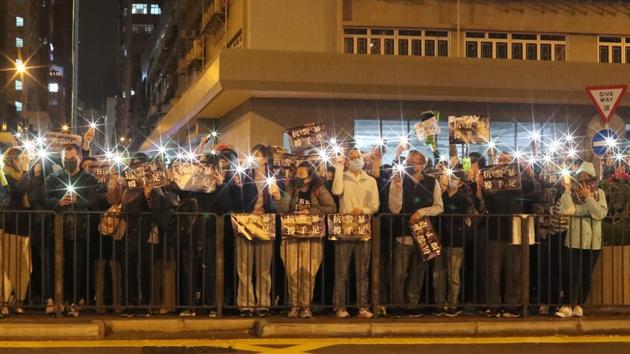
For many governments, from France to Bolivia, it was a year fraught with agitations. In many instances, the turmoil worsened already perilous economic situations. Lebanon’s economic woes, for instance, have only been exacerbated by its political unrest. Halfway across the world, seven months of protests in Hong Kong have pushed the relatively affluent region to the brink of a recession.
The dots connecting these protests have been a feeling of disaffection for reasons that vary from alleged institutional corruption to perceived threat to freedom.
On some occasions, the spark that set a nation ablaze was small, almost inconsequential: In Chile, it was a proposed subway fare hike; in Lebanon, it was the suggestion of a $6 tax on WhatsApp. In Hong Kong, the protests stemmed in opposition to an extradition bill; in France, the announcement of pension reforms; and in Egypt, allegations of corruption by top officials.
In recent years, Lebanon’s economy has worsened, resulting in a shortage of necessities such as electricity and water. “The protests started as a nationwide movement because we wanted our demands to be met: demands for better public services and living conditions. We have been living under the same corrupt system for the past thirty years and the conditions have been on a constant decline. This movement needed to happen,” a 25-year-old research centre project coordinator and a protester from Beirut said on condition of anonymity.
{{/usCountry}}In recent years, Lebanon’s economy has worsened, resulting in a shortage of necessities such as electricity and water. “The protests started as a nationwide movement because we wanted our demands to be met: demands for better public services and living conditions. We have been living under the same corrupt system for the past thirty years and the conditions have been on a constant decline. This movement needed to happen,” a 25-year-old research centre project coordinator and a protester from Beirut said on condition of anonymity.
{{/usCountry}}Mona A, an elementary teacher from Santiago, who has been a regular participant in protests in Chile, echoed a similar view.
“We must understand that the violence that is happening in the streets of Chile is the result of years of abuse of power by the privileged classes that run our country. Our health care, education, pensions and retirement are lacking and the wider opinion is that the government of [President Sebastián] Piñera needs to end.”
On the surface, the protests were disconnected, with each country having its own unique problem. But there appears to be a link in the larger context of political and economic developments in the last decade. Notably, the protests of 2019 have been self-assertive, leaderless, and defiant movements, aided by social media.
“Mass protests have often been a reflection of citizens unhappy with governance that denies them rights,” said Meenakshi Ganguly, the South Asia director of the Human Rights Watch. “The response has to be to address legitimate grievances instead of discrediting complaints, or crushing dissent with more abuses.”
She added: “In the end, the problem is that those elected to public service have forgotten that they are there to provide service to the people. They want to keep their power and continue to ignore the voice of the people. What happens when you crack down on dissent over and over again? It leads to defiance,” she added.
The protests have seen only a modicum of success in certain countries: Sudan overthrew the long-time president Omar al-Bashir, but the army retained much of its authority. President Pinera set an April 26 vote for Chileans to decide whether they want a new constitution, but has refused to resign. And while the Hong Kong government has permanently withdrawn the controversial extradition bill, it has refused to bow to the protesters’ other demands, including demands of universal suffrage. The demonstrations erupted against attempts to allow extraditions to the Chinese mainland but have gradually taken the shape of a pro-democracy revolt against Beijing’s rule.
In Iraq, demonstrations broke out on October 1 against unemployment, corruption and poor services, causing over 300 deaths. Though prime minister Adel Abdul Mahdi has resigned, it does not address the larger problems the country is facing.
“The other protesters are not related to us but we all know that this for our rights as people. We want a home, we want a decent life, and we don’t want to be killed,” Zainab, a 23-year-old Iraqi protester, said.