
Strong earnings reports from the U.S.’s largest companies are powering major indexes to new records, easing some concerns that the recent rally is overly dependent on a handful of artificial-intelligence stocks.
Some concerns.
Among the more than 440 S&P 500 companies reporting second-quarter earnings so far, 86% have beaten analysts’ estimates, according to FactSet data. That puts the index on track for a seventh consecutive quarter of double-digit earnings growth. A run of upbeat reports from companies including Palantir, Caterpillar
Strong earnings reports from the U.S.’s largest companies are powering major indexes to new records, easing some concerns that the recent rally is overly dependent on a handful of artificial-intelligence stocks.
Some concerns.
Among the more than 440 S&P 500 companies reporting second-quarter earnings so far, 86% have beaten analysts’ estimates, according to FactSet data. That puts the index on track for a seventh consecutive quarter of double-digit earnings growth. A run of upbeat reports from companies including Palantir, Caterpillar and Walt Disney this past week fueled a climb that carried stock indexes to their best weekly gains since April.
Investors still have plenty of volatility-fueling worries: the on-again, off-again war with Iran and new questions about how the Federal Reserve will fight inflation. Many note that earnings growth remains heavily concentrated in energy and AI stocks, particularly skyrocketing profits at memory companies supplying the AI build-out.
But earnings season is reassuring many that a strong core of corporate profitability underpins the market’s gains.
“These earnings are ridiculous,” said Phil Blancato, chief market strategist at Osaic. “These profit margins are incredible.”
In the coming week, investors will hear from companies including Cisco and Applied Materials, and parse the latest reading of the consumer-price index.
Companies in the S&P 500 have posted a roughly 50% jump in blended earnings growth, according to FactSet data, the most since the stimulus-fueled pandemic recovery in 2021. For energy firms, that rises to more than 147%, while totaling around 117% and 92% for communication-services and consumer-discretionary sectors, respectively. For tech, it was 70%.
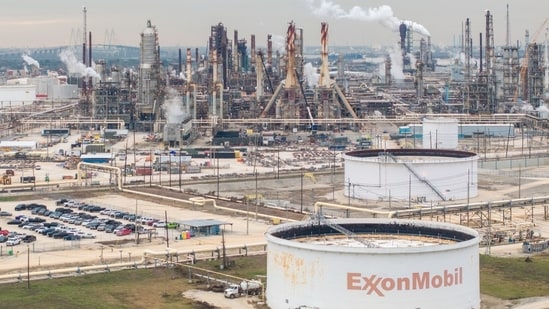
Skyrocketing oil prices from the Iran war are behind the big increase at energy companies. ExxonMobil’s profit more than doubled from a year earlier to the highest level since 2022, while Chevron reported its highest quarterly earnings on record. Refiners Marathon, Valero and Phillips 66 all posted their highest second-quarter earnings in four years.
Still, AI remains a primary driver of profits across the other leading sectors. Accelerating sales in Amazon.com’s cloud-computing business sent the stock up 15% in one session. Microsoft posted a record $450 billion one-day surge in market value after its earnings quelled concerns that investments on data centers, chips and more would outpace the company’s ability to generate cash. Its shares have gained around 29% since, ending a summer slump.
The results broadly eased worries about AI companies overspending relative to future profitability. Nvidia rose 12% this past week, its biggest weekly gain since May 2025.
The AI build-out is supercharging earnings in seemingly distant sectors, too. Demand for Caterpillar’s generators and construction machinery for data centers lifted the company’s total sales and revenue by 24%, helping power gains in the Dow Jones Industrial Average.
And the gains from AI are masking more normal earnings elsewhere, some analysts said. Alphabet and Amazon alone account for about 71% of the increase in S&P 500 blended earnings since July. If excluded, the growth rate would fall from around 50% to 32%, according to FactSet analyst John Butters.
While still high, the gap marks a sign that stocks remain vulnerable to shifting sentiment around the AI trade. A slump in chip stocks, for example, weighed on the S&P 500 and Nasdaq composite entering this reporting season, even as the Dow industrials climbed.
Still, companies more tied to the so-called real economy have also reported robust earnings. Furniture company Wayfair’s U.S. sales were up 9%, their best performance in the post-Covid era, Chief Executive Niraj Shah told analysts. It was high-earning Americans that have fueled much of this growth, Shah said, as Wayfair’s luxury brands outperformed.
Disney revenues rose 7%, buoyed by the box-office performance of “Toy Story 5” and theme-park visitors. “We’re performing significantly better than our competition,” said Josh D’Amaro, Disney chief executive. “We’re achieving this even during a period where there’s a fair amount of macro uncertainty.”
Results have been good enough to signal better times ahead. Since the start of the third quarter, the bottom-up consensus estimate for S&P 500 companies’ earnings-per-share has climbed 1%, with upward revisions to most sectors, according to analysts at Goldman Sachs.
And rising earnings have helped ease some of the most-acute worries that the market rally has stretched valuations unsustainably. Companies in the S&P 500 traded this past week at around 28 times their past 12 months of earnings, according to FactSet data. That is down from a recent high of more than 29 times in May, but well above the index’s 10-year average price/earnings ratio of 22.5.
Some investors remain skeptical that earnings justify the rally broadening much further. To them, chip makers and data-center suppliers are inflating results across all sectors, while raising fresh concerns about spending and free cash flow.
But some said the results suggest the gains could continue for some time.
“We could harp on the fact that the 10-year Treasury yields are above 4.5%,” said Dan Morgan, senior portfolio manager at Synovus Trust. “We could harp on concerns about inflation as it relates to oil. But it seems to me like most companies beat expectations. And it seems like we’re starting to say, ‘Well, yeah, those [jitters] are still here, but it looks like the market’s a little bit more resilient than what we might have anticipated in terms of profitability.’”
Write to Shradha Dinesh at shradha.dinesh@wsj.com
One Subscription.
Get 360° coverage—from daily headlines
to 100 year archives.
Archives
HT App & Website