This is the introduction to Checks and Balance, a weekly, subscriber-only newsletter bringing exclusive insight from our correspondents in America.
Sign up for Checks and Balance.
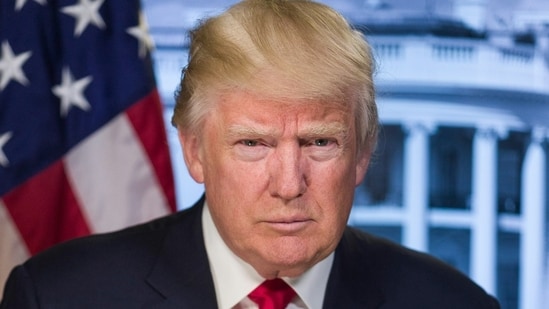
Just over a decade ago, in Bismarck, North Dakota, then-candidate Donald Trump set out his vision for the energy sector. “American energy dominance”, he told a conference of frackers, “will be declared a strategic, economic and foreign-policy goal of the United States.” In his first term, and again in his second, he adopted
This is the introduction to Checks and Balance, a weekly, subscriber-only newsletter bringing exclusive insight from our correspondents in America.
Sign up for Checks and Balance.
Just over a decade ago, in Bismarck, North Dakota, then-candidate Donald Trump set out his vision for the energy sector. “American energy dominance”, he told a conference of frackers, “will be declared a strategic, economic and foreign-policy goal of the United States.” In his first term, and again in his second, he adopted “energy dominance” as a formal policy, seeking to unleash drilling, from the shale basins of North Dakota to the deep waters of what he now calls the Gulf of America.
Mr Trump’s worldview was shaped by the oil shocks of the 1970s; his choice of the word “dominance” was always revealing, suggesting that he wanted America to wield power in the manner of a petrostate. But the main problem with Mr Trump’s energy strategy was not his desire to dominate, but that his vision of energy power was so narrow. He bet then, as he does now, that dominance comes exclusively from drilling oil and gas. It is a gamble grounded in a 20th-century view of geopolitics. And it is a gamble that the war in Iran has proved wrong.
Back in 2020, when I was energy editor, I wrote about a different kind of bet, made by China. Mr Trump, then running for re-election, remained fixated on pumping as much oil as possible from American wells. Meanwhile, China was crafting a new type of energy power. Fearful of being too dependent on foreign oil imports, it had invested aggressively in clean-energy supply chains, from solar panels to batteries to mines of the critical minerals needed to make them. Mr Trump was focused on leading a petrostate, I argued, while China was becoming an electrostate. As the world’s largest importer of oil, China was also testing ways to wield its power as a buyer, through long-term supply relationships with drillers in Russia, the Middle East and South America.I got some things wrong. In particular, I thought that demand for oil would soften more quickly, further amplifying China’s power as a buyer on whom petrostates depend. Instead, China has proved its strength in an environment of restricted supply. I was fascinated to read my colleague Matthieu Favas’s excellent recent piece explaining how China has employed its energy power during this war.
“Between February and June,” Matthieu writes, “China slashed its crude imports by half, or 5.5m b/d [barrels a day]—enough, experts reckon, to have shaved $30 or more off Brent, the global benchmark.” That is an astonishing figure. How did China do it? It had bought 200m barrels of oil in the 12 months to early 2026, when crude was cheap, so that it had ample reserves on hand. Centralised control meant it could cut off exports of refined oil products, keeping them within China’s borders. Crucially, its investments in renewables and green transport meant that, as oil prices rose, consumers and businesses could switch to alternatives. During a week-long holiday in May, Matthieu writes, charging of electric vehicles along motorways was more than 50% higher than it had been a year earlier. “China”, as an oil-trading boss told Matthieu, “is the new OPEC.”America’s energy policy has played an important role in the war, too. The country is the world’s largest producer of oil and gas; as buyers scrambled for alternatives to the oil trapped behind the Strait of Hormuz, exports of American oil reached a record 5.7m barrels a day in May. But irate Americans have faced higher prices at the pump, and the war has revealed the limits of Mr Trump’s strategy. Because he does not, for now, lead a state-run economy, he cannot force private frackers to pump more oil. Even if he banned exports, America doesn’t have the infrastructure to refine all of shale’s light, sweet crude.
Drawdowns mean the country’s strategic reserves are at a 40-year low. America’s slow adoption of clean energy prior to Mr Trump’s presidency, and the administration’s clear disdain for it now, have not halted green investment, but still have left the economy more exposed to pricey fuel. Mr Trump has accelerated the expiration of Joe Biden’s clean-energy tax credits and been slow to issue permits to onshore wind projects. His animus towards offshore wind is such that his administration is paying companies to scrap their projects; most recently, a developer received $1.2bn to abandon proposed wind farms off the coasts of New York, California and Louisiana. Such payouts have reached nearly $4bn.
Mr Trump erred in trying to mimic the petro power of the 20th century. China made a different gamble, and has become the energy power of the 21st. Unfortunately for Mr Trump, it is now clear that he has started a war whose economic and political effects he cannot control. Even his supporters are losing patience. Barely a third of MAGA voters think that the war in Iran is worth its economic costs.
On the Checks podcast this week, James Bennet, Shashank Joshi and I discussed whether moderates have a chance in the midterm elections and beyond. I hope you enjoy it. Please vote in our poll below, and do write to us at checksandbalance@economist.com.
One Subscription.
Get 360° coverage—from daily headlines
to 100 year archives.
Archives
HT App & Website