A Chinese startup successfully launched the country’s first commercial rocket capable of carrying satellites into orbit Thursday, as the space race between China and the US heats up.
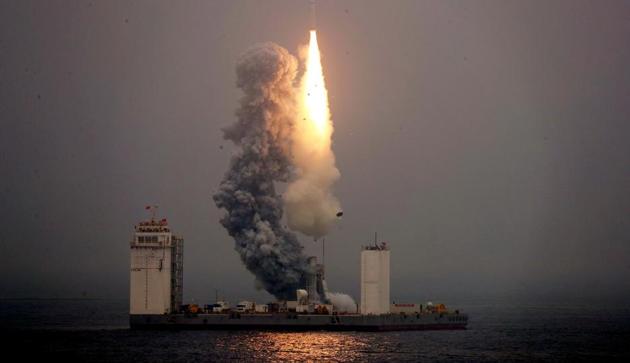
Beijing-based Interstellar Glory Space Technology -- also known as iSpace -- said it launched two satellites into orbit around 1:00 pm Beijing time (0500 GMT) from Jiuquan, a state launch facility in the Gobi desert.
The three-year-old company is one of dozens of Chinese rivals jostling for a slice of the global space industry, estimated to be worth about $1 trillion by 2040 according to Morgan Stanley.
The sector is currently dominated by SpaceX and Blue Origin in the US.
But Chinese startups are mostly focused on building technology to launch microsatellites instead of space tourism like their US counterparts, a spokeswoman for iSpace said.
Microsatellites are typically no larger than a shoebox and are used to monitor crops, weather patterns or disaster sites or used by universities for research purposes.
They are cheaper to build and easier to deploy than traditional truck-sized versions and their launch has become a lucrative market, currently dominated by the Indian space programme.
The 20-metre (66-foot) rocket designed by iSpace named Hyperbola-1 reached an altitude of 300 kilometres (186 miles), according to a statement on the company’s official WeChat social media account.
{{/usCountry}}The 20-metre (66-foot) rocket designed by iSpace named Hyperbola-1 reached an altitude of 300 kilometres (186 miles), according to a statement on the company’s official WeChat social media account.
{{/usCountry}}The company declined to say how much it cost them to build the rocket.
Two other private Chinese rocket builders, LandSpace and OneSpace, have both failed to launch their rockets into orbit in the last year.
Once dominated by state research agencies and the military, China allowed private companies to enter the space industry to build and launch satellites in 2014.
But in June Beijing tightened supervision of the sector, issuing new guidelines that said private players needed to get state permission before embarking on space-related research or manufacturing.
(This story has been published from a wire agency feed without modifications to the text.)