
China has imported dozens of new drugs including cancer medicines for government hospitals while it engages New Delhi in long-drawn negotiations to allow Indian pharmaceuticals access to the country.
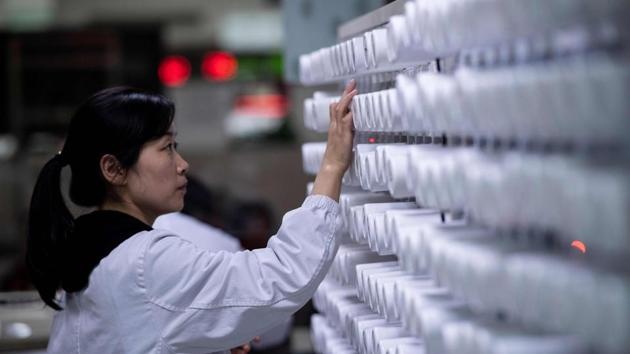
Hundreds of thousands of batches of foreign-made drugs are now available in government hospitals across the country to ease the cost burden of patients, state media reports said.
Suggested For You
“The latest 17 cancer drugs included in China’s national basic medical insurance program in October are now available in more than half of all major hospitals in China,” the national health commission was quoted by the state-controlled China Daily newspaper on Friday.
Many of these drugs are imported, the report said, but did not mention the countries of import although it was learnt that none were from India.
The 17 drugs are part of a list of 48 new ones allowed last year, many for cancers and other rare diseases. These drugs are cheaper than alternatives available in the Chinese market.
Indian drugs especially cancer-fighting drugs are in demand in China where the cost of treating the deadly disease is prohibitive — that’s where cheaper and effective Indian drugs could fill the demand.
It’s early to say whether China’s decision to import drugs from other countries shuts the window of opportunity for Indian companies here, but it certainly narrows it.
{{/usCountry}}It’s early to say whether China’s decision to import drugs from other countries shuts the window of opportunity for Indian companies here, but it certainly narrows it.
{{/usCountry}}Discussions between officials of the two countries have failed to ease the entry of generic drugs made in India into China.
The access is also meant to cut down the India-China trade deficit.
Chinese foreign ministry spokesperson Hua Chunying said in July that China and India were in sound communication on opening the Chinese market to drugs from India and conducting cooperation between the two sides’ pharmaceutical industries.
“Relevant departments have formulated specific measures on promoting China-India pharmaceutical trade cooperation and granting greater access to drugs from India,” Hua had then said.
That was when the movie ‘Dying to Survive’ — based on the true story of a Chinese cancer patient smuggling in made-in-India cancer drugs to China — was making waves.
That wave has subsided, the demand for cheaper drugs has remained and India-China talks on pharma haven’t apparently picked up pace.
“As of early January, 1,257 tertiary hospitals and 129 cancer hospitals in all 31 provinces, autonomous regions and municipalities on the Chinese mainland had bought at least one type of the drugs, with more than 600,000 boxes of drugs being used by patients,” the newspaper report said.
Many patented drugs, including cancer drugs, are sold expensive here because of reasons such as higher circulation costs and lack of research and innovation ability among domestic producers.
The report added that the 17 cancer drugs, many of them imported, treat major cancers such as lung, rectal and kidney cancers, and are in high demand by patients in China.
Explore More
ABOUT THE AUTHOR
Follow the latest breaking news, major developments and agenda-setting stories from India and around the world with the newsdesk at Hindustan Times. Operating round the clock, the desk brings together experienced editors, reporters and correspondents to deliver fast, accurate and contextual reporting across subjects that influence public policy, governance, business, society and international affairs. The HT News Desk covers politics, elections, government policies, the economy, business and markets, science and technology, the environment, law and order, infrastructure, education, climate issues and geopolitics, while closely tracking developments across states, institutions and global capitals. The team also leads coverage of major breaking news events, policy announcements, court proceedings, natural disasters, public emergencies and significant international developments. Reports published by the newsdesk are based on information gathered from reporters on the ground, official statements, government agencies, court records, regulatory filings, recognised institutions and other authoritative sources. Stories undergo editorial scrutiny and verification processes to ensure accuracy, fairness and relevance, and are updated as events evolve and additional information becomes available. Whether covering a key political decision in New Delhi, an economic policy shift affecting millions, a landmark court ruling or a major global event, the HT News Desk aims to provide readers with reliable, fact-based journalism that delivers not only the latest developments but also the context and analysis needed to understand their wider implications.