
The kidnapping of a young Chinese couple teaching Mandarin in Balochistan, the centre of the China-Pakistan Economic Corridor (CPEC), has set off alarm bells in the government, with the state-controlled media saying the abduction “highlights risks” of the project.
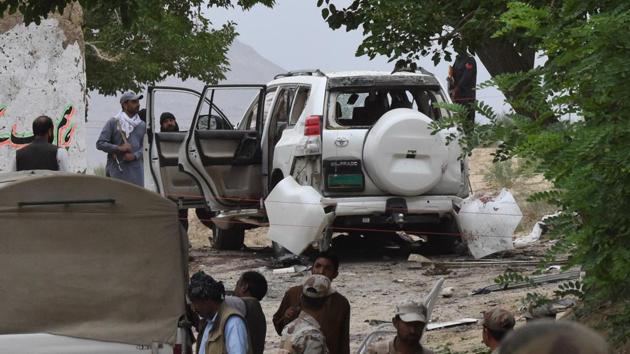
The couple was abducted from Quetta’s Jinnah Town in Pakistan’s southwestern Balochistan province on Wednesday.
Suggested For You
On Thursday, China condemned the kidnapping, saying it “attaches high importance to the safety of Chinese citizens overseas”.
A day later, the state media said the kidnapping was a worrying trend and marks the CPEC with security questions.
“No group has claimed responsibility for the kidnapping yet. But it is worth noting that Islamic militants have often carried out abductions of foreigners on Pakistani soil, either for ransom or to get publicity for their cause,” the tabloid Global Times said in an article.
“Chinese people have also been targeted occasionally, despite the friendly relations between the two countries,” it said.
The daily noted that the Balochistan province is at the “centre” of CPEC, which is expected to link China’s Xinjiang Uyghur Autonomous Region to the Pakistani port of Gwadar on the southern coast of the country.
{{/usCountry}}The daily noted that the Balochistan province is at the “centre” of CPEC, which is expected to link China’s Xinjiang Uyghur Autonomous Region to the Pakistani port of Gwadar on the southern coast of the country.
{{/usCountry}}“But the restive region has seen frequent violence committed by Islamic terrorists and separatists, and the Belt and Road program is often exposed to potential threats. Last year, a Chinese engineer was injured in a bomb attack in southern Pakistan and a separatist group, the Sindhudesh Revolutionary Army, claimed responsibility for the attack, saying they were targeting the CPEC,” the Global Times article said.
It said Beijing has urged Islamabad to step up its efforts to protect Chinese citizens in the country, especially after the attacks and the security risks.
“The Pakistani government has deployed 15,000 military personnel to protect projects under the economic corridor,” the paper said.
“Terrorism, political infighting and attempts by local political parties to divide the ‘CPEC cake’ have already caused substantial delays,” Shi Zhiqin, the executive dean of the newly opened One Belt, One Road Strategic Institute in Beijing wrote a few months ago in a widely circulated paper titled ‘The Benefits and Risks of the China-Pakistan Economic Corridor’.
Terrorism is one among multiple problems and “there have been many terrorist attacks in Pakistan,” Shi told HT earlier this month.
“The first of these risks is terrorism, which has long affected Pakistan’s internal security and stability. Although Pakistan has worked hard to strike at religious extremism and terrorist activities, its problems with terrorism have not substantially improved in recent years... Indeed, there already have been numerous occasions when Chinese engineers working in Pakistan have been attacked or even lost their lives,” Shi wrote.
Explore More
ABOUT THE AUTHOR
Follow the latest breaking news, major developments and agenda-setting stories from India and around the world with the newsdesk at Hindustan Times. Operating round the clock, the desk brings together experienced editors, reporters and correspondents to deliver fast, accurate and contextual reporting across subjects that influence public policy, governance, business, society and international affairs. The HT News Desk covers politics, elections, government policies, the economy, business and markets, science and technology, the environment, law and order, infrastructure, education, climate issues and geopolitics, while closely tracking developments across states, institutions and global capitals. The team also leads coverage of major breaking news events, policy announcements, court proceedings, natural disasters, public emergencies and significant international developments. Reports published by the newsdesk are based on information gathered from reporters on the ground, official statements, government agencies, court records, regulatory filings, recognised institutions and other authoritative sources. Stories undergo editorial scrutiny and verification processes to ensure accuracy, fairness and relevance, and are updated as events evolve and additional information becomes available. Whether covering a key political decision in New Delhi, an economic policy shift affecting millions, a landmark court ruling or a major global event, the HT News Desk aims to provide readers with reliable, fact-based journalism that delivers not only the latest developments but also the context and analysis needed to understand their wider implications.