
Chinese President Xi Jinping is pushing for a Covid-19 tracking system by using QR codes, as a part of “global mechanism” to ease international travel during the coronavirus disease pandemic. During a virtual G20 summit on Saturday, Xi stressed the need to restore the secure and smooth operation of global industrial and supply chains.
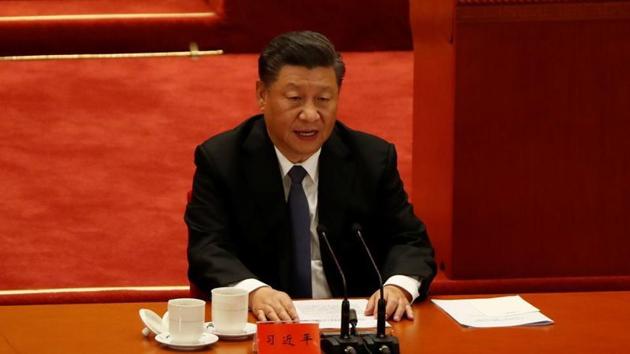
He proposed a mechanism on the mutual recognition of health certificates in the form of “internationally accepted QR codes”. “We need to further harmonise policies and standards and establish fast tracks to facilitate the orderly flow of personnel,” Xi said at the summit.
Suggested For You
The Chinese president said that the health certificates will be based on “nucleic acid test results” and expressed hope that more countries will join the mechanism, without further elaborating on the proposal.
Also Read | China says it has eliminated poverty from last nine poorest counties
What is Covid-19 QR code?
Earlier this year, China reportedly mandated the widespread use of QR-based health certificates which stores the travel and health history of an individual. The system has been credited with helping contain the virus in the country, the first epicentre of the coronavirus outbreak.
The Chinese government issues colour codes based on the big data on health information submitted by the users. While the green colour code allows users to travel freely, an orange or red code suggests that they need to quarantine for up to two weeks.
{{/usCountry}}The Chinese government issues colour codes based on the big data on health information submitted by the users. While the green colour code allows users to travel freely, an orange or red code suggests that they need to quarantine for up to two weeks.
{{/usCountry}}Several countries have used contact tracing apps to monitor and curb the spread of Covid-19. In April, a study by Oxford University found that even if approximately 60 per cent of the population used a contract tracing app, it would have significantly reduced the number of coronavirus cases and related deaths.
However, there have been concerns regarding privacy, and executive director of Human Rights Watch, Kenneth Roth, cautioned against Xi’s proposal for a global QR code system. “An initial focus on health could easily become a Trojan Horse for broader political monitoring and exclusion, akin to the dangers associated with China’s social-credit system,” tweeted Roth.
Explore More
ABOUT THE AUTHOR
Follow the latest breaking news, major developments and agenda-setting stories from India and around the world with the newsdesk at Hindustan Times. Operating round the clock, the desk brings together experienced editors, reporters and correspondents to deliver fast, accurate and contextual reporting across subjects that influence public policy, governance, business, society and international affairs. The HT News Desk covers politics, elections, government policies, the economy, business and markets, science and technology, the environment, law and order, infrastructure, education, climate issues and geopolitics, while closely tracking developments across states, institutions and global capitals. The team also leads coverage of major breaking news events, policy announcements, court proceedings, natural disasters, public emergencies and significant international developments. Reports published by the newsdesk are based on information gathered from reporters on the ground, official statements, government agencies, court records, regulatory filings, recognised institutions and other authoritative sources. Stories undergo editorial scrutiny and verification processes to ensure accuracy, fairness and relevance, and are updated as events evolve and additional information becomes available. Whether covering a key political decision in New Delhi, an economic policy shift affecting millions, a landmark court ruling or a major global event, the HT News Desk aims to provide readers with reliable, fact-based journalism that delivers not only the latest developments but also the context and analysis needed to understand their wider implications.