A LinkedIn post from Gaza-based photojournalist Mohammed Abu Aoun has cast a stark light on the deepening hunger crisis in the besieged enclave, as ceasefire talks between Israel and Hamas hit another impasse.
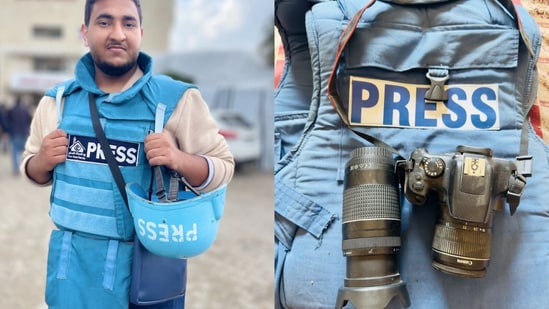
“I am the photojournalist Mohammed Abu Aoun from Gaza. I want to offer my equipment and the press shield for sale so that I can buy food for me and my family,” Abu Aoun wrote in a widely shared post that has ignited global attention. The post reflects a growing desperation among Gaza's civilian population, many of whom are now facing the deadly consequences of prolonged food scarcity.
The humanitarian crisis has reached critical levels. For months, Israel has tightly restricted aid and food deliveries into Gaza. Aid groups warn that the region is teetering on the edge of famine. Deaths from malnutrition have accelerated this month, with even humanitarian staff struggling to secure basic sustenance.
{{/usCountry}}The humanitarian crisis has reached critical levels. For months, Israel has tightly restricted aid and food deliveries into Gaza. Aid groups warn that the region is teetering on the edge of famine. Deaths from malnutrition have accelerated this month, with even humanitarian staff struggling to secure basic sustenance.
{{/usCountry}}At a charity kitchen in Gaza City on Friday, long lines of residents - many carrying empty pots - waited for watery lentil soup. “We’ve been living three months without bread,” said Riham Dwas, a mother of five. “We’re relying on charity kitchens, surviving on a pot of lentils, and there are many times when we don’t even have that.” She described taking her children to hospitals for IV saline drips when food runs out.
A ceasefire in limbo
The deepening hunger crisis comes as ceasefire negotiations between Israel and Hamas have stalled. Israeli Prime Minister Benjamin Netanyahu announced Friday that his government is considering “alternative options” after both Israeli and US delegations left Doha, Qatar, where talks had been taking place.
“Hamas is the obstacle to a hostage release deal,” Netanyahu said in a statement, adding that Israel and its US allies were exploring other ways to secure the release of hostages, defeat Hamas, and bring “lasting peace.”
The departure of the negotiating teams followed remarks by US special envoy Steve Witkoff, who accused Hamas of showing a “lack of desire” for a deal. Hamas officials, however, characterized the withdrawal as a pressure tactic. Bassem Naim, a Hamas representative, said talks were expected to resume next week and that recent discussions had resolved several major sticking points, including the delivery of humanitarian aid and the structure of a phased ceasefire.
Mediators Egypt and Qatar confirmed that the pause in talks was temporary and emphasized that “progress had been made.”
The proposed deal reportedly includes a 60-day truce, during which Hamas would release 10 living hostages and the remains of 18 others in stages, in exchange for Palestinian prisoners held by Israel. It also calls for a significant increase in humanitarian aid and further talks on a permanent ceasefire. However, disagreements over the future governance of Gaza and the presence of Israeli forces have kept both sides locked in a stalemate.
Civilians continue to suffer
The pause in diplomacy has done little to slow the violence or alleviate civilian suffering. An Israeli airstrike on a school-turned-shelter in Gaza City on Friday killed at least five people, including an 11-year-old boy. Grieving families carried the bodies of the dead through the streets. “Stop the war!” cried Taraji Adwan, whose son and grandson were among the casualties. “Our children are dying from starvation, malnutrition, dehydration, lack of food, strikes, and dying from fear and destruction. Enough, Hamas! Enough, Israel! Enough, world!”
The Gaza Health Ministry said approximately 80 people had been killed since Thursday night, including nine who died while trying to retrieve aid.
International outcry is mounting. French President Emmanuel Macron announced Thursday that France would formally recognize Palestine as a state, calling for an immediate halt to the conflict to “save the civilian population.” Jordan has requested permission to carry out food and formula airdrops, a plan Israeli officials say is under coordination.
Meanwhile, the number of daily cooked meals distributed by charity kitchens in Gaza has plunged from over a million in April to just 160,000, according to the United Nations.