
 E-Paper



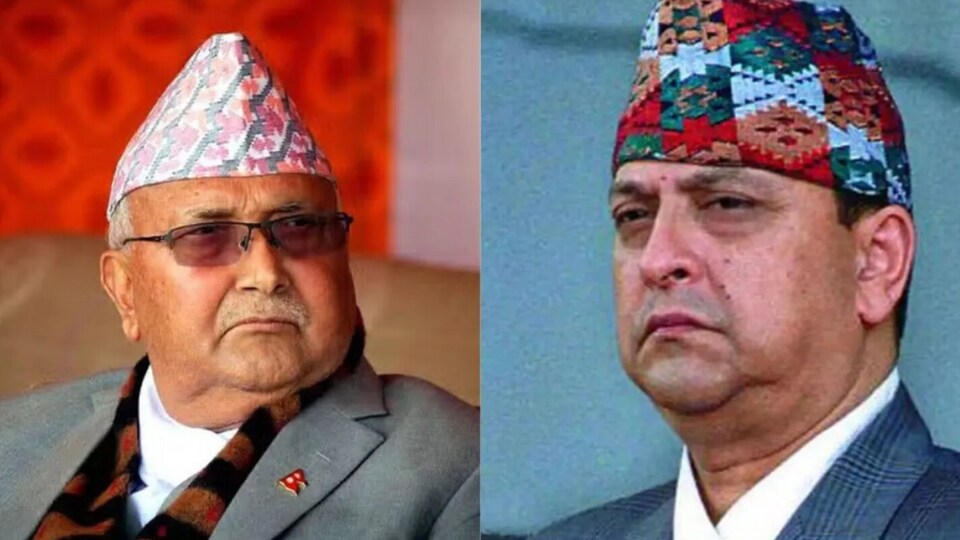
Former Nepal king expresses grief over 19 deaths amid protests against KP Oli
Nepal's prime minister KP Oli had to resign on Tuesday, a day after one of the deadliest crackdowns on protesters in years saw at least 19 people killed.

 Prefer HTon Google


As Nepal grapples with its worst political unrest in years, former King Gyanendra issued a rare public statement Tuesday expressing sorrow over the deaths of young protesters and calling for peace, good governance, and restraint from violence.
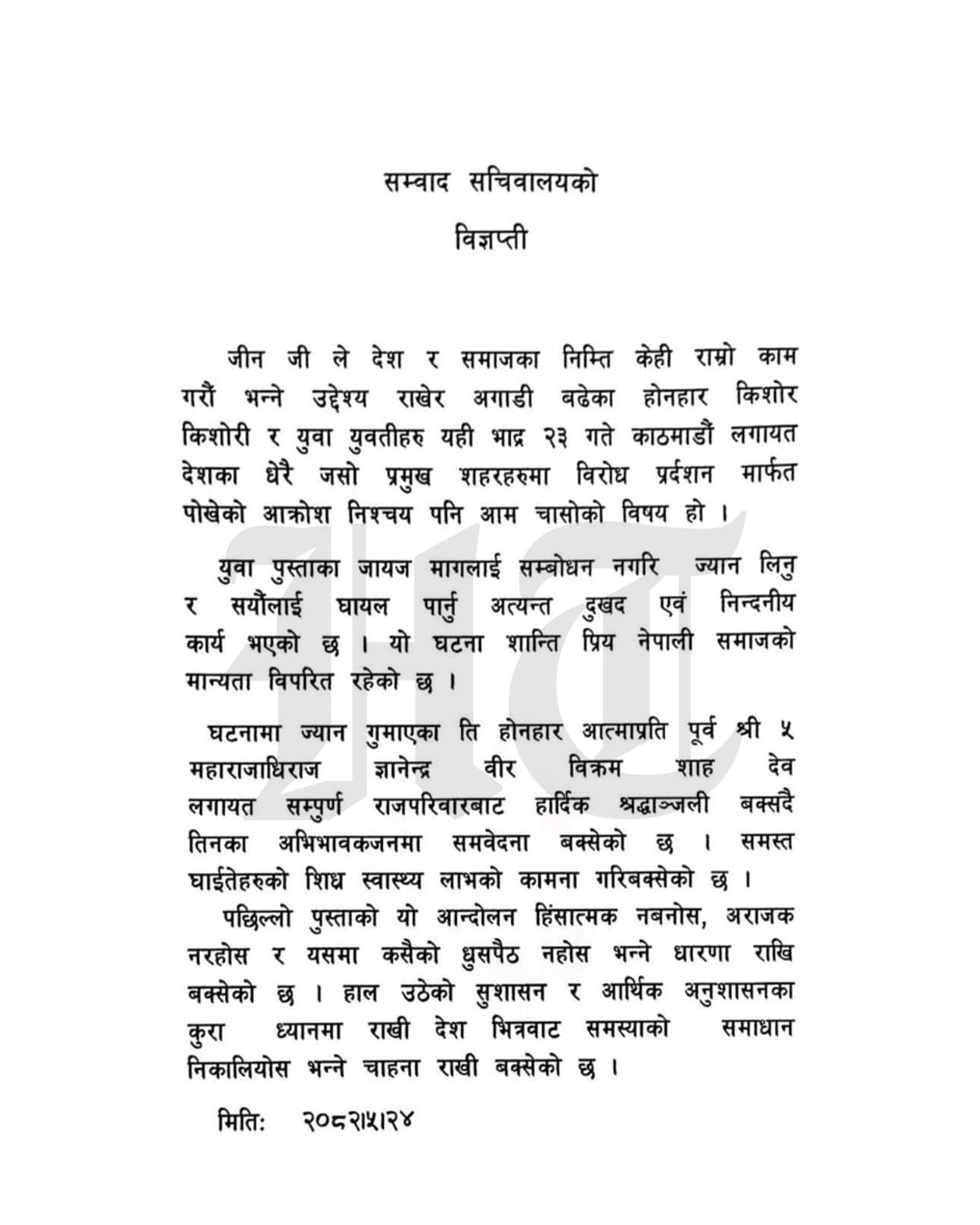
The statement, released through the royal press secretariat, came a day after deadly demonstrations against a government ban on social media platforms and mounting public anger over corruption left at least 19 people dead.
The former monarch, who was dethroned in 2008 after a popular movement abolished the monarchy, paid tribute to those killed in the protests, offered condolences to their families, and wished for the speedy recovery of the hundreds injured.
“It is extremely tragic and condemnable that, instead of addressing the legitimate demands of the younger generation, lives were lost and many were injured,” the statement read. “I condemn the violence, which is against the norm of the peaceful Nepalese society.”
Gyanendra urged Nepal’s youth to ensure that their movement does not descend into violence or anarchy and warned against infiltration by external elements. He said the demands for good governance and economic discipline raised by the protesters were legitimate and must be addressed for the country’s future.
Leaders issue urgent appeal
Adding to his call, Nepal’s senior leadership — including Chief Secretary Ek Narayan Aryal, Army Chief Ashok Raj Sigdel, Home Secretary Gokarna Mani Duwadi, Armed Police Inspector General Raju Aryal, Police Inspector General Chandra Kubere Khapung, and National Investigation Department head Hutaraj Thapa — signed a joint appeal Tuesday.
The appeal acknowledged the “grave loss of lives and property” in Kathmandu and across the country, extended condolences to victims’ families, and urged the public not to allow the situation to deteriorate further.
“With the resignation of the honorable prime minister already accepted, we appeal to all citizens to maintain restraint so that no further loss occurs,” the statement read. “Through political dialogue, we call for an early and peaceful resolution to this crisis.”
Crisis deepens after PM resignation
His remarks followed Prime Minister Khadga Prasad Oli’s sudden resignation on Tuesday, hours after protesters set fire to the homes of several top political leaders, including President Ram Chandra Poudel and former prime minister Sher Bahadur Deuba. A private school owned by Deuba’s wife, Foreign Minister Arzu Deuba Rana, was also torched.

The unrest, described locally as a “Gen Z uprising,” began with opposition to the government’s attempt to force social media platforms to register and operate under state oversight. Critics called the bill an attempt to censor dissent. But frustration over corruption, nepotism, and political dysfunction quickly transformed the rallies into an anti-government movement.
Despite an indefinite curfew, protests continued in Kathmandu and other cities Tuesday, with students and young activists chanting, “Punish the murderers in government. Stop killing children.”
Uncertain path ahead
The government’s use of lethal force has intensified anger, with witnesses saying police fired live rounds into crowds gathered around Parliament on Monday. Doctors at the National Trauma Center said many of the dead and wounded were shot in the head or chest.
Former King Gyanendra, who has largely stayed out of active politics since Nepal became a republic, stopped short of calling for any political change. But his intervention underscored the depth of the crisis gripping the Himalayan nation, where public trust in political leaders has collapsed.
“Considering the issues of good governance and economic discipline that have been raised, the nation must find solutions to its problems,” he said.
With the prime minister gone, attention now turns to Nepal’s deeply fractured parliament, where leaders face the urgent task of preventing the crisis from spiraling further — even as angry young Nepalis continue to take to the streets.


