Supermarkets across several European countries on Monday reported cyberattacks on their refrigeration systems, causing temperatures in refrigerators and freezers to rise sharply and leaving stores with spoiled food.
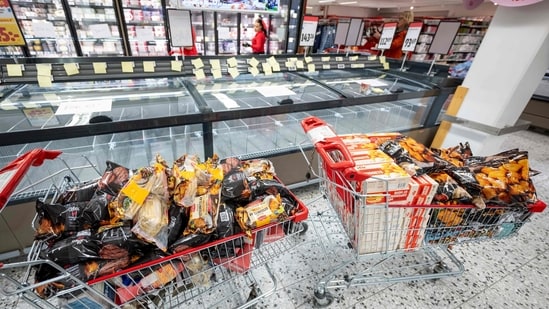
The incidents affected outlets in Ireland, Sweden, Belgium, Luxembourg, Estonia and Finland. This comes less than three weeks after a similar cyberattack hit hundreds of supermarkets in France which forced retailers to discard large quantities of chilled and frozen products, AFP reported.
No group has claimed responsibility for either wave of attacks.
Ireland's third-largest supermarket chain, SuperValu, confirmed that refrigeration systems in 13 of its 223 stores had been affected by a cyber incident, as per news agency Reuters.
The company said the problem involved a specific model of equipment and that chilled and frozen products had been removed from sale. SuperValu's owner, Musgrave, was investigating the incident after its monitoring systems alerted it to the problem.
In Sweden, supermarket chains ICA and Coop also reported problems with their refrigeration systems. Coop confirmed that six of its stores had been affected, while ICA said a limited number of outlets experienced disruptions overnight. According to Reuters, the incidents caused temperatures inside refrigerators and freezers to rise, forcing stores to deal with spoiled food.
{{/usCountry}}In Sweden, supermarket chains ICA and Coop also reported problems with their refrigeration systems. Coop confirmed that six of its stores had been affected, while ICA said a limited number of outlets experienced disruptions overnight. According to Reuters, the incidents caused temperatures inside refrigerators and freezers to rise, forcing stores to deal with spoiled food.
{{/usCountry}}The impact was particularly severe at an ICA franchise store in Stockholm, where freezer temperatures reportedly reached 50 degrees Celsius. Engla Ingwall, the store's sales manager, told Reuters that the attack began at around 2 am and was first noticed at 5.30 am.
"There has been a cyberattack and all our freezers reached 50 degrees (Celsius)," Ingwall told Reuters. "Everything is destroyed."
Belgium, Luxembourg and Estonia also report attacks
In Belgium, Carrefour confirmed that 15 of its 700 stores had been affected. Spokesperson Mich Vergauwen told Reuters that the incident was a cyberattack. Five Spar stores operated by Colruyt Group also reported attacks on their refrigeration systems, according to the company spokesperson cited by Reuters.
Ahold Delhaize, which operates supermarkets in Belgium and Luxembourg, also reported an overnight IT incident that affected refrigeration systems in dozens of stores. The retailer said temperatures in its cooling systems had increased and that it was investigating the disruption, according to The Guardian.
Stephan Moelans, chief executive of Belgian refrigeration company Sabcobel, confirmed to the Belga news agency that the incident was a cyberattack. He said the attackers had switched the evaporators in refrigeration units to defrost mode, causing temperatures to rise.
In Estonia, at least one supermarket was affected after hackers reportedly raised the temperature of its refrigeration units to 50 degrees Celsius. Technology supplier Kitman Coldtech confirmed the incident to public broadcaster ERR, according to Sky News. Finland also reported irregular temperatures in some smaller grocery stores belonging to the Kesko group, with the retailer saying it was investigating the cause and had not ruled out network interference, AFP reported.
Similar cyberattack hit French supermarkets in October
The latest incidents come less than three weeks after a major cyberattack disrupted refrigeration systems at hundreds of supermarkets in France on October 12. Retailers, including Intermarche, Carrefour, Leclerc, Monoprix and Cooperative U, reported problems after hackers allegedly took control of their cooling systems and raised temperatures inside refrigerators and freezers.
According to The Guardian, French police said hackers had taken control of cooling units at up to 700 supermarkets. Temperatures in some units rose from as low as minus 27 degrees Celsius to more than 50 degrees Celsius, forcing retailers to discard large quantities of fresh meat, dairy products and frozen food. Some stores also reported fires caused by overheating equipment.
Why supermarket refrigerators are being targeted
Tom Hegel, a researcher at cybersecurity firm SentinelOne, told Reuters that supermarket chains were attractive targets because they operated large networks of refrigeration controllers, building management systems, door access panels and payment equipment.
"Retail is an easy target because retail chains run enormous estates of refrigeration controllers, building management systems, door access panels and point-of-sale gear," Hegel said.
He also pointed to the financial impact of such disruptions, saying: "Grocery margins are thin and stock perishes within hours, so any disruption hurts quickly and in public."
A European Commission spokesperson said the incidents underlined the need to strengthen cybersecurity across the bloc. "These incidents show that cyberattacks can disrupt services, affect businesses and directly affect citizens' daily lives," the spokesperson told Sky News.