
 E-Paper



How did Donald Trump admin calculate reciprocal tariffs for countries? Details here
Donald Trump's anxiously awaited reciprocal tariffs on other countries start with a baseline of 10 per cent and go up to almost 50 per cent.

 Prefer HTon Google


US President Donald Trump’s administration reciprocal tariff bombshell has set alarm bells ringing across the world, with even an uninhabited island where only penguins and seals live also not being spared from the taxes that the Republican said he has slapped on countries that "looted" and “raped” America for decades.
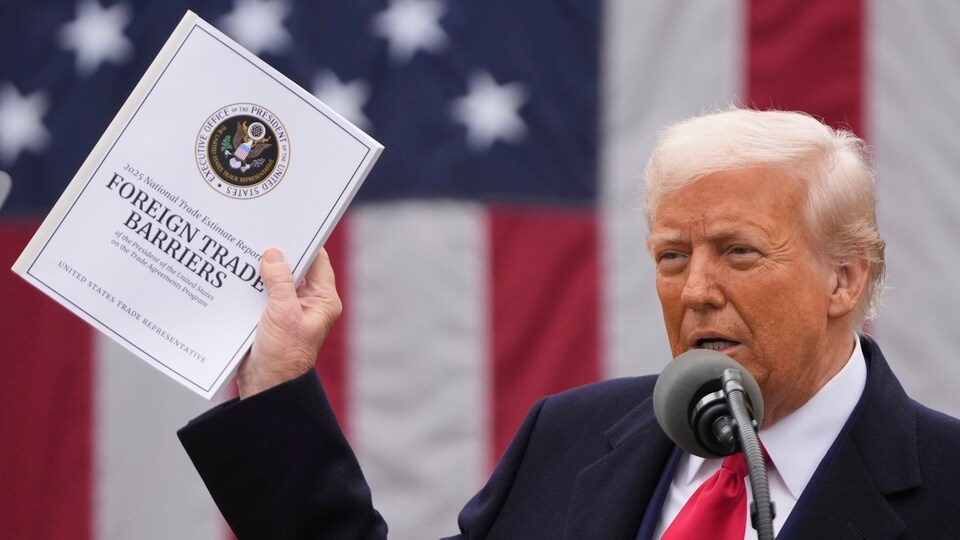
Donald Trump's anxiously awaited reciprocal tariffs on other countries start with a baseline of 10 per cent and go up to almost 50 per cent. Follow Donald Trump tariff news LIVE updates
The Donald Trump administration reportedly decided reciprocal tariffs on countries with a new method for calculating the charges on foreign nations, shifting from its previous focus on matching tariff rates and trade barriers to a model based primarily on trade balances. In simple words, Trump's reciprocal tariff formula is all about trade deficit.
How did Trump admin decide tariffs on countries?
In a statement released Wednesday night, the United States Trade Representative (USTR) explained the new methodology for chalking out tariffs, which has already created waves across global markets.
According to an analysis of the USTR done by Bloomberg, the formula takes a country’s trade surplus with the United States and divides it by its total exports, using data from the US Census Bureau for 2024. The result is then halved to produce the “discounted” tariff rate.
For example, China’s trade surplus with the US was $295 billion last year on exports of $438 billion, creating a ratio of 68 per cent. Dividing this by two, as per the new formula, results in a tariff rate of 34 per cent, the rate US has imposed on Beijing.
Also Read: What are reciprocal tariffs, imposed by Trump on countries which ‘looted, raped’ US
This calculation also applied to other countries, including Japan, South Korea, and the European Union, although some nations were subject to a flat 10 per cent tariff rate, such as those with which the US has a trade surplus or balanced trade.
The USTR noted that while calculating tariffs based on specific barriers was technically possible, this new formula would better serve Trump’s goal of reducing the US trade deficit.
Also Read: How did Russia, Canada, North Korea escape Donald Trump's April 2 reciprocal tariffs?
“While individually computing the trade deficit effects of tens of thousands of tariff, regulatory, tax and other policies in each country is complex, if not impossible, their combined effects can be proxied by computing the tariff level consistent with driving bilateral trade deficits to zero,” the statement read, although it was unsigned.
Trump's tariffs cause confusion
The tariff formula, which was largely unknown before Donald Trump’s announcement, generated further confusion when the rates released by Trump slightly differed from those listed in the annex accompanying his executive order. For example, South Korea’s rate appeared as 25 per cent on Trump’s placard, but 26 per cent in the official document. Same was the case with India, whose rates on Trump's placards were 26 per cent but in White House documents appeared to be 27 per cent.
Trump had previously hinted that the tariffs would factor in both direct tariff rates and non-tariff barriers, such as taxes and currency manipulation. Donald Trump displayed these rates from the White House on Wednesday under the heading "Tariffs Charged to the USA, Including Currency Manipulation and Trade Barriers."
This new formula marks a departure from earlier statements from the White House, which suggested a broader scope for the analysis, including tariffs, taxes, non-tariff barriers, and structural limitations on market access, as per the Bloomberg report.
Trade balances not included
In a memorandum issued on February 13, Trump instructed the USTR to evaluate non-reciprocal trade relationships, including unfair practices that limit market access and competition. The analysis did not include trade balances as part of the criteria, though Trump’s formula ultimately focused on the US’s trade deficits with individual countries.
The tariff model also included two other factors – price elasticity of import demand and the elasticity of import prices with respect to tariffs – which the administration set at values that effectively neutralised each other, resulting in no net impact on the final calculation.
With these changes, the Donald Trump administration aims to reshape the global trade landscape by driving down the US’s trade deficits, although the new formula’s implementation has raised concerns about the potential economic impact on both American industries and its trading partners.


