
Pakistan Prime Minister Imran Khan, who is desperately attempting to portray himself as an ambassador of Kashmiri people, has come under fire for his “double standards” and “ignorance” towards China’s treatment to Uighur Muslims.
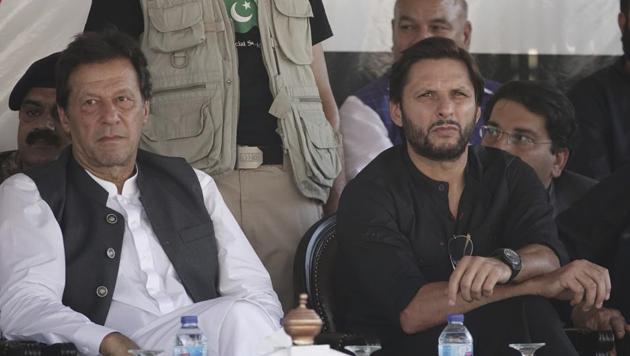
In an exclusive interview to Al Jazeera that was aired on August 14, Imran Khan talked in length about his version of conditions of Kashmiris and how BJP led government is “racist” and “fascist” while shockingly expressing complete ignorance on the issues being faced by Uighur Muslims.
Suggested For You
During the interview when journalist Mohammed Jamjoom asked Khan whether he had ever got a chance to discuss the issue of Uighur Muslims with Chinese President Xi Jinping, Khan replied that he does not know “much” about the problem and Beijing is Islamabad’s “best friend”.
“No, I have not. We have been facing so many of our internal problems right now that I do not know much about this problem. Let’s face it, ever since we came to power, apart from the economy and apart from dealing with the situation in Kashmir, we have been inundated with problems,” Imran Khan said.
“I will say one thing about China. For Pakistan, China has been the best friend”, he added.
{{/usCountry}}“I will say one thing about China. For Pakistan, China has been the best friend”, he added.
{{/usCountry}}When the journalist further asked Khan for his stand on the treatment of Uighur Muslims since he, too, has been criticised for not issuing any statement on this, Imran Khan said, “Right now, my responsibility is the people of Pakistan. Therefore, my number one effort is to help my own country.”
China has been condemned internationally for cracking down on the minorities living in their countries. China has been accused of oppressing the Uighur by sending them to mass detention camps, interfering in their religious activities and sending the community to undergo some form of forceful re-education or indoctrination.
Netizens did not miss the opportunity to highlight Imran Khan “hypocrisy” and chided him for being “selective in choosing the Muslim brethren”.
Pakistani journalist Taha Siddique pointed out Imran Khan’s hypocrisy in ignoring Uighur suppression in China.
“Dear @ImranKhanPTI last time when an FT journalist asked u the same u had said u’ve no idea about Uighurs in China & once again you have claimed ignorance while u keep on harping abt Muslim “genocide” in Kashmir and India. Why the double standards? #DontBeAHypocrite.” tweeted Taha Siddique
“While, he goes on and on and on about Kashmir and India. Laughable that as soon as Imran Khan is asked about the condemnation of China’s treatment of Uyghur Muslims, he remembers that his priority is the citizens of Pakistan. Hypocrisy galore this,” tweeted another Pakistani journalist Naila Inayat.
“Imran Khan is the best example of double standards. He can see a problem in Kashmir but he becomes totally blind when asked about Uighur Muslims being killed in China. shame shame Imran” tweeted one user.
“So, #ImranKhan finally admits that #Pakistan is indeed embroiled with internal issues but when will he seriously address them? When questioned about his stance on #Uyghurs, Kaptaan says “#China is our best friend!” Why so selective in choosing the #Muslim brethren?,” tweeted another.
A Twitterati said that Khan has set a “new record of double standards”.
“Funny how the massacre of Uighur Muslims is not his concern and China is a best friend. Woah! He has a set a new record of double standards. I sympathise with the Uyghurs, not only @ImranKhanPTI and @Malala the world is a mute spectator to their plight!,” tweeted a user.
“Imran Khan Pakistan Prime minister has condemned India for the crackdown in Kashmir Same man that saw nothing with what China is doing to Uighur Muslims...Muslim leaders and double standard hypocrisy. He is only defending Kashmir because Pakistan has an interest,” said a user on Twitter.
Last year too, during an interview with Turkish International News, upon being asked the same question about the condition of Uighurs in China, Khan had replied that he is not aware about the Chinese situation.
“I do not know the exact situation. Frankly, I mean I just have to tell you the truth. You know in Pakistan at the moment that since we have been in power for four months. A new government comes in first time in power. You know there were so many different issues to settle,” he had said.
(This story has been published from a wire agency feed without modifications to the text.)
Explore More
ABOUT THE AUTHOR
Follow the latest breaking news, major developments and agenda-setting stories from India and around the world with the newsdesk at Hindustan Times. Operating round the clock, the desk brings together experienced editors, reporters and correspondents to deliver fast, accurate and contextual reporting across subjects that influence public policy, governance, business, society and international affairs. The HT News Desk covers politics, elections, government policies, the economy, business and markets, science and technology, the environment, law and order, infrastructure, education, climate issues and geopolitics, while closely tracking developments across states, institutions and global capitals. The team also leads coverage of major breaking news events, policy announcements, court proceedings, natural disasters, public emergencies and significant international developments. Reports published by the newsdesk are based on information gathered from reporters on the ground, official statements, government agencies, court records, regulatory filings, recognised institutions and other authoritative sources. Stories undergo editorial scrutiny and verification processes to ensure accuracy, fairness and relevance, and are updated as events evolve and additional information becomes available. Whether covering a key political decision in New Delhi, an economic policy shift affecting millions, a landmark court ruling or a major global event, the HT News Desk aims to provide readers with reliable, fact-based journalism that delivers not only the latest developments but also the context and analysis needed to understand their wider implications.