You’ve probably walked past lantana without a second thought. With its tiny, brightly colored flower clusters, it appears to be a perfect garden plant. People grow it for its bright blooms, but may not consider how quickly it can spread. According to a 2012 PLOS One study by researchers at the University of Oxford, this shrub has become one of the worst weeds in recorded history. It got out of gardens in Australia and spread over the land. Queensland has paid a heavy price for that.
How a garden favorite got loose
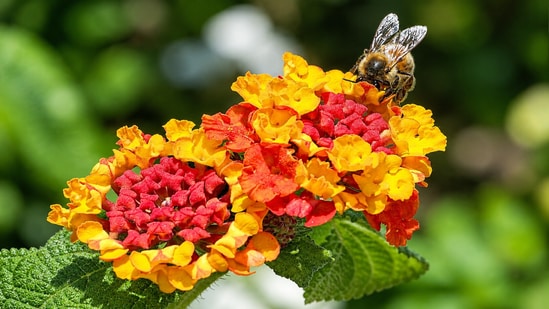
The plant is native to the American tropics. It reached Europe in the 16th century and has been bred for gardens ever since. That cultivation produced 630 named varieties and variants. The lantana that arrived in Australia shortly before 1850 came from these plants. It first appeared in Adelaide’s old botanical gardens and was so popular that more introductions followed, mainly in New South Wales and Queensland. It was only in the late 19th century that it was recorded as a noxious weed.
Why it spreads so well
Lantana is a hardy plant. It grows from sea level to 1800 meters or higher. It competes with the plants around it for nutrients and water and releases chemicals that can inhibit the growth of other plants. Its seeds are carried long distances by birds. It forms dense stands that outcompete native plants under favorable conditions. These characteristics have made it one of the most successful weeds, the researchers say. It is also poisonous to livestock and poses a serious threat to biodiversity in Australian World Heritage sites and ecological communities, including the northern Queensland rainforest, Fraser Island and the Greater Blue Mountains (the last of which is in New South Wales).
Deep Dive
Why has lantana become so invasive in Queensland?
How much does lantana cost Queensland’s grazing industry?
What are Queensland landowners required to do about lantana?
The bill for Queensland farmers
The study cites a 2003 assessment in Queensland in which lantana was ranked the most invasive weed. Control of lantana in Queensland cost an estimated A$1 million per year in 1973. The largest cost figure the study reports comes from farming. One analysis of Queensland’s grazing sector put the opportunity cost of lantana at A$121 million in 2007. In 1985, the figure for the same sector was A$3 million a year. Note that those two values are from different sources, so the comparison is rough. Opportunity cost is money lost when land isn’t used as well as it could be.
Why have control efforts been inadequate
{{/usCountry}}The study cites a 2003 assessment in Queensland in which lantana was ranked the most invasive weed. Control of lantana in Queensland cost an estimated A$1 million per year in 1973. The largest cost figure the study reports comes from farming. One analysis of Queensland’s grazing sector put the opportunity cost of lantana at A$121 million in 2007. In 1985, the figure for the same sector was A$3 million a year. Note that those two values are from different sources, so the comparison is rough. Opportunity cost is money lost when land isn’t used as well as it could be.
Why have control efforts been inadequate
{{/usCountry}}Lantana has been a tough weed for Australia to control. In Australia, the primary emphasis was on biological control, employing insects that consume the plant. Reports of control efforts peaked in the 1970s. But attempts to eradicate lantana in Australia, India and South Africa have mostly failed. Old records suggest it spread around Brisbane and Cairns in the 1920s and then spread into the wider countryside along the Queensland coast. The team suggests that land-use change after World War I, and again after World War II, may have helped it to spread, though old records tell only part of the story*.
Lantana is now recognized as a serious problem in Queensland. The Queensland Government has it listed as a restricted invasive plant of category 3 under the state’s Biosecurity Act 2014. The government says it covers 5 million hectares in Australia. Landowners are responsible for its impacts. It must not be given away, sold or released into the environment. The Oxford team points out that invasive species may not always be a target for eradication, and future plans may need to be geared toward adaptation. The lesson is a simple one: a plant that looks harmless in a garden can become a lasting problem once it escapes.