India strongly rebutted allegations by UN special rapporteur Gina Romero that young people in the country face retaliation or stigmatisation for speaking out on mental health and gender justice.
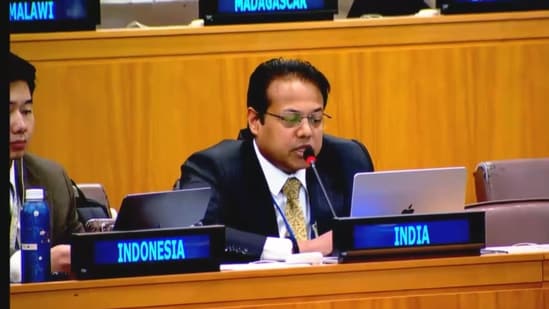
Delivering India’s statement at the 81st Session of the UNGA Third Committee, first secretary Anuj Swarup defended the country’s constitutional safeguards for freedom of expression and peaceful assembly, calling the report’s approach arbitrary.
“In India, these freedoms, together with freedom of speech and expression, are guaranteed to every citizen under Article 19 of our Constitution, and are protected by an independent judiciary, a free press, and an empowered National Human Rights Commission,” Swarup said in the Interactive Dialogue with the Special Rapporteur on the rights to freedom of peaceful assembly and of association.
The UN report comes amid protests in India demanding the resignation of Chief Election Commissioner (CEC) Gyanesh Kumar over voter roll revision.
The Indian delegate further highlighted that the report is “merely citing unnamed submissions in the footnote.”
"This level of arbitrary report writing is precisely the reason that the United Nations and its institutions have lost credibility,” he added.
"A sweeping charge against the world's largest youth population resting on anonymous and unverified claims is not evidence. It is hearsay, dressed up as a UN report, and my delegation rejects it outright,” Swarup further said.
What did Romero say about protests in India?
In a series of posts on X on October 10, Romero accused the Indian authorities of using excessive force against young people participating in peaceful demonstrations and detailing them arbitrarily. She further alleged that over 2500 protesters had been sent to detention centres in remote areas without access to legal assistance and subjected to torture or sexual abuse.
“India once again indian youth take the streets peacefuly to make their voices hear, and once again the gvt respond with unlawful and excesive use of force, arbitrary detentions. Also restriction of the press have been reported,” one of Romero's posts said.
Diplomat highlights youngster's involvement
The Indian diplomat at the UN argued that the report failed to reflect the realities of the civic population in India, highlighting the young people’s involvement in political movements and their interactions with senior government officials.
"Ironically, the same report notes that young Indians created a satirical political movement. In which repressive state does a satirical youth party question the government, marches on the capital, and then sits across the table with senior national leaders?"
ALSO READ: ‘Foreign occupation’: India shreds Pakistan at UN, asks it to vacate part of J&K that it ‘occupies’
Swarup also mentioned a statement made by UN Human Rights Commissioner Volker Turk in September. "The High Commissioner for Human Rights stated in the Human Rights Council last month that dialogue with young leaders is far more effective in the context of youth-led movements in India. Perhaps that update escaped the special rapporteur's attention,” he said.
‘Verify before you vilify’
Urging fairness by the special rapporteur, who is also a Colombian human rights advocate, he said, "Chair, a mandate holder who relies on anonymous inputs to generalise for 1.4 billion people does a disservice to the very mandate she holds. We urge this special rapporteur to verify before she vilifies and to bring the required rigour and fairness in her reports," he said.