The conflict involving the United States and Iran saw another sharp escalation on Wednesday, with diplomatic efforts over the Strait of Hormuz suffering a setback even as military activity intensified across the region.
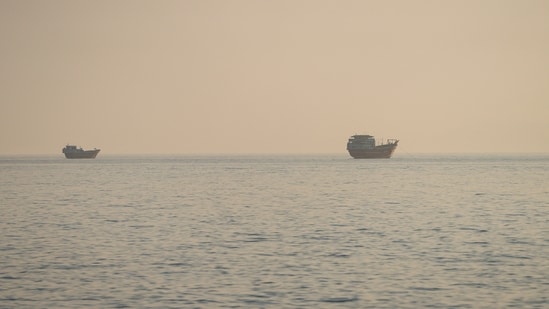
Iran rejected a proposal from Oman aimed at jointly managing the Strait of Hormuz, signalling that it has no intention of sharing control over the strategically important waterway, news agency Reuters reported.
Here are the top developments:
Iran rejects Oman's Hormuz proposal
A senior Iranian official told Reuters that Tehran had ruled out Oman's proposal for regional joint management of the Strait of Hormuz, saying it had "no chance of success".
Also read | US-Saudi joint strike targets Iran-backed 'terrorists' in Iraq as war escalates
The proposal, put forward by Oman, sought to ease tensions over the critical shipping lane, through which around one-fifth of global oil and liquefied natural gas moved before the US and Israel attacked Iran in February.
According to the Iranian official, the US and Saudi Arabia are trying to pressure Oman to advance their "unrealistic plans" regarding the strategic strait.
{{/usCountry}}According to the Iranian official, the US and Saudi Arabia are trying to pressure Oman to advance their "unrealistic plans" regarding the strategic strait.
{{/usCountry}}The official added that Iran believes the entire inbound route through the Strait of Hormuz and part of the outbound route must remain under Iranian control. A 50-50 joint control arrangement with Oman, the official said, would not serve Iran's interests, although Tehran continues to view Oman as a valuable neighbour.
IRGC claims action against oil tankers
Amid the diplomatic standoff, Iran's Islamic Revolutionary Guard Corps (IRGC) said its naval forces stopped three oil tankers in the Strait of Hormuz after the vessels allegedly ignored warnings and travelled along what it described as an "unsafe and illegal route".
Also read | Will US strike Iran again? Donald Trump sends mixed signals: 'Can avoid if…'
In a statement, the IRGC Navy said it continued to maintain full control over the strategic waterway and warned that "unlawful U.S. military interference" and instructions issued to vessels in the region would not go unanswered.
Reuters said it could not immediately verify the IRGC's account.
Oil prices rise as fighting intensifies
Renewed hostilities also affected global energy markets, with oil prices rising by more than $3 a barrel on Wednesday.
The increase came as the US and Saudi Arabia announced strikes on Iran-backed groups in Iraq, saying they were responsible for drone attacks targeting Saudi oil facilities.
The strikes were carried out just hours after the US military said it had intercepted what it described as a surprise Iranian attack on American troops in the region.
Also read | Trump bets this weapon could hurt Iran more than the bombs being dropped
Iran, however, rejected accusations linking it to attacks on US interests and Saudi oil infrastructure. Speaking to state television, an unnamed Iranian defence official called such claims a "major miscalculation".
Missile claims and attacks across the region
The IRGC also said it had launched several ballistic missiles at US military installations in Jordan.
Jordan's military, however, said its air defences intercepted and shot down five Iranian missiles targeting the kingdom on Wednesday.
The latest exchanges came after a brief pause in fighting, following US President Donald Trump's decision to halt a planned two-week bombing campaign and what appeared to be a temporary reduction in hostilities by Iran.
Saudi Arabia said on Tuesday that its air defences intercepted several drones targeting oil facilities in the kingdom's Eastern Province. Saudi Defence Ministry spokesperson Turki al-Maliki said the drones had been launched by Iran-backed militias from Iraqi territory.
Later, US Central Command and Saudi Arabia's Defence Ministry said they had carried out strikes on multiple locations in eastern Iraq that they alleged were being used by Iran to direct drone attacks.
Iraq's Popular Mobilisation Forces (PMF), however, said several of its official headquarters were struck by what it described as US and Saudi forces. The group said preliminary reports indicated that several people were killed, others were injured, and multiple buildings and facilities were damaged.
Oman's proposal aimed to break the deadlock
The proposal rejected by Tehran was designed to ease the prolonged dispute over the Strait of Hormuz.
According to a Gulf source and a Western diplomat who spoke to Reuters on Tuesday, Oman had proposed a regional framework backed by Gulf states under which ships using the strait would make voluntary contributions instead of being subject to unilateral control.
The proposed arrangement would have allowed Iran to participate in managing the waterway without exercising sole control. The system was modelled on the Strait of Malacca, where Indonesia, Malaysia and Singapore seek voluntary contributions from ships to support navigation, environmental protection and search-and-rescue operations.
Iran effectively shut the Strait of Hormuz after the US and Israel attacked Iran on February 28. Although a US-Iran agreement last month partially reopened the waterway and paved the way for further talks, that understanding collapsed in early July after Iran fired on vessels using a shipping channel it does not recognise.
(With inputs from Reuters)