Ireland on Friday headed to the polls to vote in a historic referendum on whether the country should liberalise its strict abortion laws.
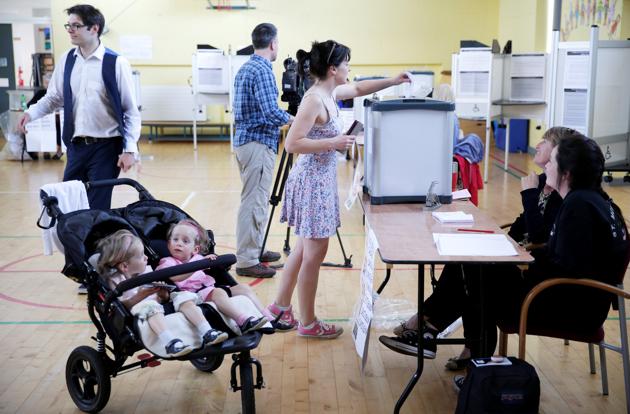
The intensely debated laws ban abortions in the Catholic country most cases, prompting thousands to travel abroad for termination
Prime Minister Leo Varadkar voted in favour of overturning the laws, tweeting afterwards: “It’s a big YES from me”. Reports from Dublin said a large number of Irish women based abroad, including in India, have travelled there to cast their vote to repeal the eighth amendment of the Constitution.
Heavy voting was reported in most polling booths that will remain open until 10pm local time, suggesting that the result is likely to be close. Personal stories from both sides of the debate have played a major role as more than 3.2 million eligible people cast their votes.
The referendum is the latest development in the long-drawn campaign to liberalise abortion laws, which prevent termination while the foetus is live, even if medical diagnosis point to a threat to the mother’s life. It has a strong counterpart in the “No” campaign.
The “Yes” campaign was catalysed by the widely-publicised death in 2012 of Indian dentist Savita Halappanavar, 31, who died when she was refused abortion even when there was a threat to her life. She was told that Ireland is a Catholic country, and laws prohibited abortion.
{{/usCountry}}The “Yes” campaign was catalysed by the widely-publicised death in 2012 of Indian dentist Savita Halappanavar, 31, who died when she was refused abortion even when there was a threat to her life. She was told that Ireland is a Catholic country, and laws prohibited abortion.
{{/usCountry}}Savita’s image is on one of the major posters of the “Yes” campaign, with the words, “Savita Matters, Women Matter”. Her Karnataka-based father, Andanappa Yalagi, has backed the “Yes” campaign and is reported to be closely following the referendum.
If Ireland votes to overthrow its abortion laws, Article 40.3.3 of the Constitution would be removed and be replaced with an enabling provision stating: “Provision may be made by law for the regulation of termination of pregnancy.”
Under the Varadkar government’s plans, if the vote is “Yes”, terminations would be accessible within the first 12 weeks of pregnancy. A woman would seek a termination from a medical practitioner, who would have a legal obligation to discuss the woman’s options with her.
A three-day waiting period will then be enforced. After that, the woman can have abortion if she still intends to terminate the pregnancy. After 12 weeks, abortions will be available in very specific circumstances — if there is a risk to a woman’s life or of serious harm to her health, two medical practitioners will be asked to determine if an abortion should be permitted.
Abortions will also be available if a woman is informed that the foetus will not survive outside the womb or will die shortly after due to a fatal abnormality.
Beyond the 24th week of pregnancy, there will be no abortions except in the cases of fatal foetal abnormalities or when there is an immediate risk to the woman’s life or health.