Scott Bessent often says he wants to be America’s “top bond salesman”. For the treasury secretary, falling bond yields would be a sign of success. An accountant might raise an eyebrow, though, on encountering a salesman who juiced his figures by purchasing his own wares. On August 19th Mr Bessent set out plans for the Treasury to buy back tens of billions of dollars’ worth of long-dated government debt. Yields briefly declined, but then rose again (see chart 1). Might
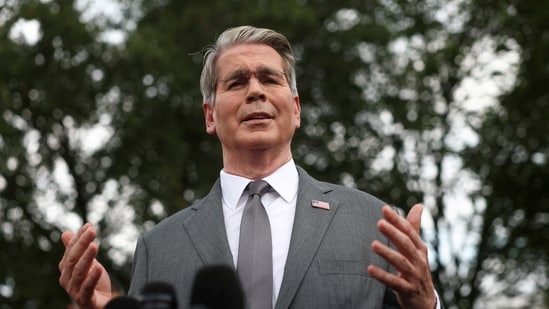
Scott Bessent often says he wants to be America’s “top bond salesman”. For the treasury secretary, falling bond yields would be a sign of success. An accountant might raise an eyebrow, though, on encountering a salesman who juiced his figures by purchasing his own wares. On August 19th Mr Bessent set out plans for the Treasury to buy back tens of billions of dollars’ worth of long-dated government debt. Yields briefly declined, but then rose again (see chart 1). Might the wheeze not only fail, but also risk spoiling the brand?
This year government-bond yields around the world have surged (meaning prices have fallen). They are up by 0.6 percentage points on American ten-year Treasuries; by 0.4 points on German bunds; and by 0.8 points on Japanese government bonds. This is due to a handful of forces.High inflation had still not been fully beaten back after the post-pandemic surge when America and Israel went to war with Iran, pushing up oil prices. Private borrowing to fund the vast build-out of artificial-intelligence data centres has also made capital costlier for everyone, including governments.
Most worryingly, bond markets are beginning to reckon with the consequences of the rich world’s debt binge. America’s budget deficit is 6% of GDP, the widest ever outside recession and wartime; on August 19th the Treasury said federal debt had passed $40trn (around 130% of GDP). The Congressional Budget Office, a nonpartisan scorekeeper, expects both deficits and debt only to grow. Mr Bessent’s own target of reducing deficits to 3% of GDP by 2028 looks fanciful. Other big economies, notably France and Japan, are also in poor shape. Worse, more than half of America’s deficit now consists of interest payments on past borrowing (see chart 2). That risks a vicious circle of rising yields, bigger deficits, still higher yields and so on.
This is not just an embarrassment for Mr Bessent. It is also a problem for the Trump administration. The midterm elections are ten weeks away and “affordability” is the word of the moment. Yet the two most salient costs for many voters—petrol prices and the 30-year mortgage rate—are both moving in the wrong direction. The first is helping to cause the rise in yields; the second is its consequence.
With his buy-backs, Mr Bessent is trying to put his thumb on the scale. Usually, the Treasury sees its role as keeping the bond market orderly and liquid during crises, not jostling yields around in what should be quieter times. Mr Bessent, sounding rather like the hedge-fund trader he once was, has taken a different view. “We believe that the yields don’t reflect the underlying fundamentals,” he said in a television interview after announcing his scheme.
The Federal Reserve—the other centre of power in American macroeconomic policy—does sometimes try to move bond yields, through programmes like quantitative easing (QE: buying bonds by creating bank reserves) or “Operation Twist” in 2011 (selling short-term Treasuries and buying long-term ones, a central-banking mirror of Mr Bessent’s scheme). But its goal has always been a short-term economic one, such as fighting recession or inflation, not keeping the government’s finances afloat. Ironically, Kevin Warsh, the Fed’s new chair, who was picked in a process run by Mr Bessent, has disavowed QE and says policymakers should not leave a heavy footprint in markets.
Mr Bessent’s announcement had only a limited immediate effect. Yields are already back to where they were before he made it. The buy-backs will not alter the total amount of American government debt, since they will be funded by issuing shorter-term bonds. And the amounts involved are small compared with the scale of America's borrowing. More important is the signal the scheme sends to markets: that the Treasury is willing to resist if yields keep rising. But market moves driven by changes in economic fundamentals have a habit of overwhelming even the most determined governments. Mr Bessent, who in 1992 helped to break Britain’s currency peg while working for George Soros’s hedge fund, should know that better than most.
Another irony is that Mr Bessent criticised his predecessor, Janet Yellen, for politicising the Treasury and interfering with the work of the Fed. Under Ms Yellen, the Treasury nudged up the share of government debt issued at shorter maturities. That, like Mr Bessent’s buy-backs, shifted borrowing from long- to short-term debt. Ms Yellen’s Treasury called it technocratic debt management; Mr Bessent echoed criticism of this as “activist Treasury issuance” to juice the economy before the 2024 election.
After taking charge, Mr Bessent quietly maintained the same issuance pattern. Now he has gone further with his loud declaration of intent. America may eventually need to issue more short-term debt, since some big buyers of long-dated bonds, like defined-benefit pension schemes, are receding in importance. But that is not what Mr Bessent is up to.
The buybacks are only the administration’s latest effort to resist rising bond yields. In July Mr Bessent structured his joint intervention with Japan to boost the yen in a way that minimised its impact on Treasuries, funding it through selling euros. Opening a dollar swap line with the United Arab Emirates, an idea reportedly under discussion, would ensure that the UAE, whose sovereign-wealth fund is a big holder of Treasuries, would not need to sell them in a crunch. In addition, over the past year Fannie Mae and Freddie Mac, the government-sponsored enterprises that package up mortgages, have increased their purchases of mortgage-backed securities in an apparent effort to push down mortgage rates, urged by Bill Pulte, their pugnacious boss, and President Trump (see chart 3). (Support for Argentina’s peso during a tight election fight for Javier Milei, the president, also illustrated Mr Bessent’s willingness to use American financial firepower for political purposes.)
Mr Bessent’s actions may not amount to much over the long term, but they may well be enough to squeeze yields down a little, at least until the midterms. That is already a far more brazen politicisation of the Treasury market than anything in recent history. Unfortunately for Mr Bessent, markets have other release valves. The dollar tumbled after his buy-back announcement (see chart 4), while gold surged: both signal investors’ increased scepticism about American assets. (Some MAGA types, including J.D. Vance, the vice-president, would welcome a weaker dollar, in order to make exports cheaper and boost manufacturing. But the immediate impact would be higher inflation, via dearer imports. Mr Bessent is not in the weak-dollar camp, so this is unlikely to be part of the plan.)
Scott against Kevin
Ultimately, lower yields plus a weaker dollar equals economic stimulus, akin to an interest-rate cut. That is not what America’s economy needs, whatever the political calculations. Markets expect, if anything, the Fed to raise rates at its next meeting in September. Mr Warsh insists he “will not waver” in returning inflation to the Fed’s 2% target, which it has overshot for five years. His determination to be vague about his thinking in his first few months in the job may itself have pushed yields up a bit.
Easing by the Treasury and tightening by the Fed could lead to a curious monetary-policy tug-of-war over the next few months. Mr Trump has long groaned about high interest rates. Mr Bessent may have calculated that trying to jawbone yields down could show the boss he is trying, even if markets rebuff his efforts. But the further he goes, the more pressure he piles on Mr Warsh.
Mr Bessent’s interventions may reflect his macro-trader past, Mr Trump’s quirky views on economics, and midterm politics. But they are more than mere Trumpian aberrations. Messing with markets becomes more tempting as countries’ debt situation worsens—just look at Japan’s constant meddling in the yen and its own government-bond market. Barring an unexpected display of deficit-cutting courage by its politicians, or a vast productivity windfall from AI, America will need to issue ever more Treasuries to fund its growing debt. That will become pricier if investors no longer see the bond market as a stable, apolitical place. With each fiddle, Mr Bessent and his successor salesmen may find their wares increasingly hard to hawk.
One Subscription.
Get 360° coverage—from daily headlines
to 100 year archives.
Archives
HT App & Website