
Veteran Nepalese politician Sher Bahadur Deuba is set to become Nepal’s prime minister for the fourth time on Tuesday after the main opposition party decided to end the obstruction of parliament.
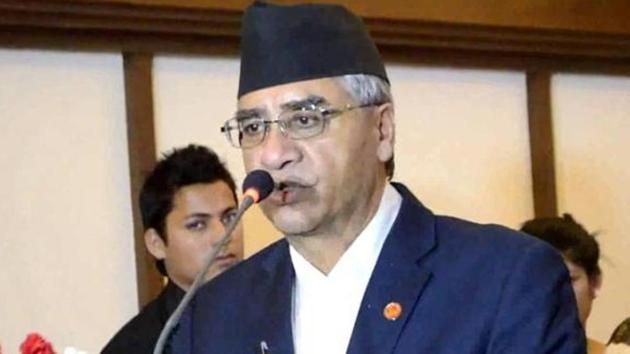
Nepal Parliament is conducting election to the post of Prime Minister in the afternoon.
Suggested For You
Deuba, 70, is the sole candidate to contest in the prime minister election as the main opposition UML or any other party didn’t register their candidacies. Deuba has the support of more than 50% of the lawmakers needed for his election to the top post.
He needs to secure 297 votes in the 593-strong Parliament to prove his majority during Tuesday’s election, and with the NC-Maoist Centre alliance enjoying 287 seats in Parliament and four other parties supporting the alliance having 21 seats, it looks plain sailing for Deuba.
The election was earlier slated to be held on Sunday but was postponed to Tuesday after the main opposition CPN-UML launched a protest over re-election in a ward.
However, now with the main opposition party agreeing to end obstruction of the parliament, Nepali Congress (NC) President Deuba is become the country’s 40th prime minister.
{{/usCountry}}However, now with the main opposition party agreeing to end obstruction of the parliament, Nepali Congress (NC) President Deuba is become the country’s 40th prime minister.
{{/usCountry}}The CPN-UML decided to end House obstruction after the ruling parties agreed to hold local elections in the remaining four provinces on June 28 and the provincial and parliamentary elections by January, 2018.
“We decided to end the obstruction in parliament after the ruling parties agreed to commit in the House to hold elections in the remaining four provinces and not repeating any irregularities,” said former UML chairman Jhal Nath Khanal after the meeting between the government and the Opposition.
As per the Constitution, a candidate must secure a simple majority in parliament to get elected as the head of the government. CPN-Maoist Centre, Madhesi Peoples Rights Forum Democratic, Rastriya Prajatantra Party and other fringe parties have agreed to vote in favour of Deuba.
Deuba is likely to form a small Cabinet on Wednesday which will be expanded in a few days and some of the Madhesi parties are also likely to join the coalition. The responsibility of conducting the second phase of local level election will rest upon Deuba.
Outgoing Prime Minister Prachanda of the CPN (Maoist Centre) proposed Deuba’s candidacy while senior NC leader Ram Chandra Poudel seconded the proposal at the Parliament Secretariat which on Friday published the schedule to elect the new prime minister on majority basis.
Prachanda resigned on May 24 after a brief stint of nine months, honouring a power sharing understanding with the ruling coalition partner Nepali Congress to hand over the country’s leadership to the largest party in Parliament.
Deuba served as the prime minister from 1995 to 1997, from 2001 to 2002, and from 2004 to 2005. Deuba was sacked by the then King Gyanendra Shah in 2005 over failure to hold elections and bring Maoist rebels to a round table negotiation.
Explore More
ABOUT THE AUTHOR
Follow the latest breaking news, major developments and agenda-setting stories from India and around the world with the newsdesk at Hindustan Times. Operating round the clock, the desk brings together experienced editors, reporters and correspondents to deliver fast, accurate and contextual reporting across subjects that influence public policy, governance, business, society and international affairs. The HT News Desk covers politics, elections, government policies, the economy, business and markets, science and technology, the environment, law and order, infrastructure, education, climate issues and geopolitics, while closely tracking developments across states, institutions and global capitals. The team also leads coverage of major breaking news events, policy announcements, court proceedings, natural disasters, public emergencies and significant international developments. Reports published by the newsdesk are based on information gathered from reporters on the ground, official statements, government agencies, court records, regulatory filings, recognised institutions and other authoritative sources. Stories undergo editorial scrutiny and verification processes to ensure accuracy, fairness and relevance, and are updated as events evolve and additional information becomes available. Whether covering a key political decision in New Delhi, an economic policy shift affecting millions, a landmark court ruling or a major global event, the HT News Desk aims to provide readers with reliable, fact-based journalism that delivers not only the latest developments but also the context and analysis needed to understand their wider implications.