Social Security's trust fund is projected to run out of money in the last three months of 2032. Once the trust fund is depleted, the program would still collect payroll taxes from workers, but there would not be enough money to pay scheduled benefits in full.
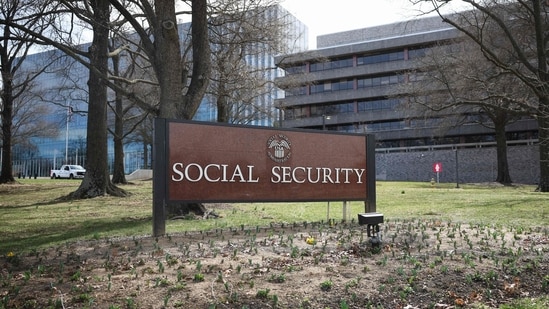
The latest Social Security Board of Trustees report projects an immediate 22% cut in benefits if no changes are made. That means retirees and other Social Security recipients could see their monthly payments fall sharply.
One way being discussed to protect Social Security is to increase the payroll tax paid by workers and employers. The current Social Security payroll tax rate is 12.4%. The tax is normally split equally: 6.2% is paid by the employee and 6.2% by the employer. In 2026, the tax applies to earnings up to $184,500.
Social Security tax increase could cost workers $3,000
The amount workers could pay would depend on how high the payroll tax is increased. The median full-time US worker earns about $61,583 a year, according to Census data. A calculator from the Cato Institute estimates that such a worker could face between $2,617 and $3,024 more in taxes each year, depending on the new tax rate.
That means a worker could lose roughly $218 to $252 a month in additional taxes. Cato Institute budget and entitlement policy director Romina Boccia compared the additional cost to roughly two months of median rent in the US.
{{/usCountry}}That means a worker could lose roughly $218 to $252 a month in additional taxes. Cato Institute budget and entitlement policy director Romina Boccia compared the additional cost to roughly two months of median rent in the US.
{{/usCountry}}Also read: What is California’s Proposition 40? How the proposed 5% billionaire tax could work
Social Security payroll tax rate could rise
The Social Security trustees estimated that the payroll tax rate would need to rise to 16.65% to close the program's long-term funding gap. The Congressional Budget Office (CBO) previously estimated that a 17.31% payroll tax rate could close the gap. These figures assume that raising the payroll tax would be the main action used to fix Social Security's finances.
A payroll tax increase would not necessarily come entirely out of workers' paychecks. Social Security taxes are normally divided between employees and employers. However, self-employed workers pay the full combined payroll tax themselves, according to Cato. For employees, the immediate increase could therefore be divided between the worker and the employer.
How higher Social Security tax could affect wages
Workers could face costs beyond the extra tax directly taken from their paychecks. Economists say employers may respond to higher payroll taxes by offering lower wages than they otherwise would.
Alex Durante, senior economist at the Tax Foundation, said economic theory suggests employees ultimately bear the employer's share of payroll taxes through lower wages. This means workers could feel the impact even when the additional tax is technically paid by their employer.
Also read: Buying a home in 2026? What US buyers should know about mortgage rates and loan costs
Social Security tax cap could change
Some lawmakers want to change the current payroll tax cap instead of simply increasing the tax rate for everyone. The current Social Security taxable earnings cap is $184,500. Income above that amount is currently not subject to the Social Security payroll tax. Supporters of removing or raising the cap argue that higher-income Americans could contribute more to the program.
Social Security retirement age could rise
Another idea is to gradually increase the full retirement age, or FRA. The current full retirement age is 67 for people born in 1960 or later. One proposal would increase the FRA by three months each year. Under such a system, Americans would have to wait longer to receive their full scheduled Social Security benefit.
Increasing the retirement age is considered a benefit cut because people would have to wait longer for their full benefits. A 2024 analysis by the Center for American Progress examined a full retirement age of 69. The analysis estimated that benefits for new retirees could eventually be reduced by as much as 14.3% after the change was fully phased in. The impact could become larger over time because retirees would also lose future cost-of-living increases on the lower benefit amount.
The different proposals involve different trade-offs. Raising payroll taxes would increase the amount workers and employers contribute. Raising or removing the payroll tax cap would put more of the burden on higher earners. Increasing the retirement age would reduce benefits by making people wait longer for full payments. Changing COLA rules could reduce future benefit increases for many retirees.