SEVENTY-FIVE years ago, as the world emerged from the deadliest conflict in human history, governments gathered in Geneva to draft the Refugee Convention. Millions had been displaced. It was generally assumed that refugees were a temporary consequence of extraordinary times.
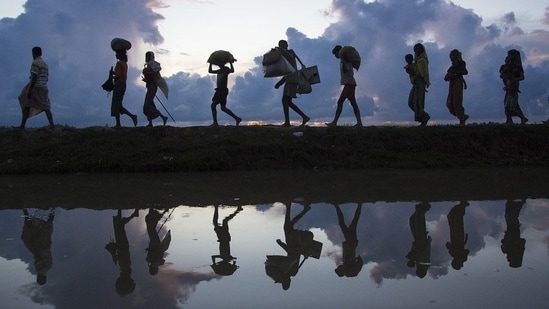
History proved otherwise. From Indochina to Rwanda, from Syria to Ukraine, the decades since have been marked by upheaval and forced displacement. Each crisis has tested the system. It has never been perfect, but it has fulfilled its fundamental purpose:
SEVENTY-FIVE years ago, as the world emerged from the deadliest conflict in human history, governments gathered in Geneva to draft the Refugee Convention. Millions had been displaced. It was generally assumed that refugees were a temporary consequence of extraordinary times.
History proved otherwise. From Indochina to Rwanda, from Syria to Ukraine, the decades since have been marked by upheaval and forced displacement. Each crisis has tested the system. It has never been perfect, but it has fulfilled its fundamental purpose: protecting human life and dignity. At its heart lies a simple principle born from the ashes of war: when people are forced to flee persecution and violence, they should not be abandoned to their fate.
Today, the asylum system is under pressure. In an age of growing cross-border movement, it has become entangled with debates over immigration, public services and national identity. The recent situation in Spain’s North African enclave of Ceuta, which saw an influx of tens of thousands of migrants from Morocco in a single day, highlighted the challenges posed by large-scale arrivals and the need for systems that can quickly distinguish refugees from other migrants.
The forces driving displacement will not disappear. No one benefits when asylum systems break down or when only a few countries bear the burden. Refugee protection strengthens stability, order and security. But it is also a moral commitment, grounded in a simple truth: human dignity does not end at a border.
Critics often portray asylum as a back door for illegal immigration. Some reasonably ask how governments can know whether someone is genuinely fleeing persecution. Public frustration is understandable. In many countries, asylum systems are chronically under-resourced. Claims take years to resolve. Rejected applicants often remain, reinforcing perceptions of dysfunction and unfairness.
Yet these are failures of implementation, not of the Refugee Convention itself. That document provides the legal basis for effective border management because it defines who is, and who is not, a refugee. It does not require states to admit everyone who arrives at their borders. Refugee status is reserved for those fleeing persecution, conflict or serious harm who cannot obtain protection from their own governments.
The answer, therefore, is not to dismantle refugee law but to make asylum systems work better. Governments need processes that can rapidly screen arrivals, assess claims fairly and quickly, and distinguish between those entitled to protection and those who are not. The former should receive protection promptly; the latter should be returned in accordance with the law. The Convention and effective asylum systems enable that.
Systems that take years to reach decisions cannot sustain public confidence. By the end of 2025, nearly 9m asylum claims were pending worldwide. Reducing the backlog requires investment in courts, caseworkers and modern procedures, including faster processing for claims that are clearly well-founded or unfounded. Countries must also work together to ensure that rejected asylum seekers are returned swiftly and lawfully. Responsibility-sharing arrangements, including supported returns and transfers to safe third countries where full refugee protection is available, can help create a more orderly alternative to irregular and dangerous journeys. The European Union’s Migration and Asylum Pact, though imperfect, contains elements of such an approach.
Governments have a responsibility to secure their borders. But the strength of the Convention is that it recognises both the legitimate interests of states and the profound human stakes involved when people are forced to flee. Security and humanity are not competing values. They reinforce one another.
Yet fixing asylum systems is not enough. We must move beyond managing displacement to reducing it, by addressing deeper failures: unresolved conflicts, limited opportunities in countries hosting most refugees, and pressures that extend well beyond Europe and North America.
Nearly 70% of refugees are hosted by low- and middle-income countries, often neighbours of conflict zones facing economic pressures of their own. More than two-thirds of these refugees remain displaced for years. This is neither fair nor sustainable.
Humanitarian aid saves lives in emergencies, but it cannot be a substitute for a future. The vast majority of refugees do not seek dependency; they seek the chance to rebuild. Most hope to return home when it is safe to do so. As a Kurdish saying puts it, ”Paris is sugar, but home is sweeter.”
That ambition lies behind my vision to halve, by 2035, the number of refugees trapped in long-term displacement and dependent on aid. The first priority is enabling refugees to return home voluntarily when conditions permit. Peace remains the most effective solution. In Syria, more than a million refugees have voluntarily returned since the fall of the Assad regime.
For those who cannot yet return, the priority must be self-reliance. When refugees are included in national systems, they can study, work and contribute to local economies.
Supporting refugees closer to their countries of origin is not charity; it is enlightened self-interest rooted in human solidarity. Host countries gain investment and enterprise. Wealthier countries face less pressure at their borders. What is morally right and what is practically effective often point in the same direction.
Ultimately, abolishing the Refugee Convention will not abolish refugees. Wars and persecution, sadly, continue to force some across borders. The question is whether governments confront that reality through common rules and shared responsibility, or retreat into approaches that leave both states and vulnerable people less secure.
The Convention’s architects understood that refugee protection requires secure borders, clear rules, balanced responsibilities and international co-operation. They also understood something deeper: that shared humanity creates obligations as well as interests. Seventy-five years later, that insight remains as relevant as ever.
Barham Salih is the United Nations High Commissioner for Refugees. He served as President of Iraq from 2018 to 2022.
One Subscription.
Get 360° coverage—from daily headlines
to 100 year archives.
Archives
HT App & Website