
The Trump administration resurrected its global tariffs by shining a light on forced labor. The tariffs face a court challenge, but the spotlight isn’t going away.
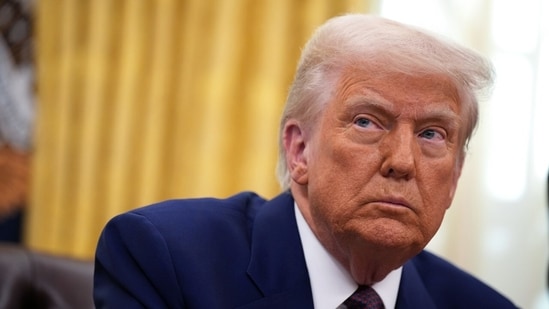
After the U.S. Supreme Court in February shot down President Trump’s global tariffs—which relied on emergency economic powers—the administration turned to a new theory to partially revive them, accusing America’s trade partners of failing to take action against forced labor.
Critics of the novel theory, including Democratic attorneys general and governors in more than two dozen states, last week asked a New York-based federal court to invalidate the new tariffs. The Trump administration turned to forced labor as a pretext, they argued.
The White House didn’t respond to a request for comment on the lawsuit.
Regardless of the administration’s motivations, after the U.S. unveiled its forced-labor tariffs, a number of U.S. trading partners began to beef up their own legal regimes. Increased global scrutiny on supply chains is likely to continue no matter what the U.S. Court of International Trade decides.
“It’s a big issue,” said Luis Lozano, the former president of Toyota’s Mexico unit and who now serves as chief executive of Mexico City-based advisory Odysseus Business Intelligence.
“There’s more eyes,” Lozano said. “And there’s certain words as a global company you don’t want combined with your brand. One is ‘forced labor.’”
Firm line
{{/usCountry}}“There’s more eyes,” Lozano said. “And there’s certain words as a global company you don’t want combined with your brand. One is ‘forced labor.’”
Firm line
{{/usCountry}}Section 301 of the Trade Act of 1974, under which the Trump administration has imposed its new round of tariffs, lets the president take action against countries it finds have engaged in unfair trade practices. Various administrations have regularly used it over trade disputes in a number of sectors, from beer to green technology.
The Trump administration supercharged the use of this legal power by taking action in July against 60 economies that it said had failed to adequately address forced labor, putting competing U.S. workers on an unfair footing.
The U.S. has for decades taken a much firmer line on forced labor than its peer countries, first banning imports tied to the practice in 1930.
In 2022, a tough measure specifically targeting China came into force. The Uyghur Forced Labor Prevention Act effectively bans the import of any goods that can be tied to Xinjiang over human-rights concerns. Beijing has denied allegations of forced labor and other abuses in the region.
That law forced many businesses to investigate their supply chains. Automaker Volkswagen, for example, in 2024 had a shipment of vehicles kept out of the U.S. after finding a single part traced to Xinjiang. VW said at the time it diligently investigates possible human-rights issues in its supply chains.
As of August, the U.S. had under the UFLPA investigated about 44,000 shipments and denied entry to nearly 27,000 of those, most of them electronics.
Mixed records
Many U.S. allies have had more mixed records on forced labor. The European Union is planning to enforce its forced-labor import ban by December 2027, nearly a century after the first U.S. law was passed.
Canada agreed to bar imports of goods made with forced labor as part of a free-trade agreement from Trump’s first term. But as of Oct. 2, Canada had held up just 53 shipments for inspection over forced-labor concerns and blocked two, one of textiles and another of seafood, according to figures provided by the Canada Border Services Agency.
Canada is one of the countries that have scrambled to bulk up their forced-labor enforcement amid the U.S. push. Prime Minister Mark Carney’s government proposed a tougher forced-labor law in June, about a week after the USTR filed a preliminary report that criticized the forced-labor records of Canada and other U.S. trading partners.
“Regardless of whether one is for or against the tariffs, everyone has to admit that the 301 investigations have ignited conversations about forced labor in supply chains all over the world,” said Laura Murphy, a forced-labor researcher who advised the Biden administration.
“In some places where advocates have been arguing for new action for a decade, we are seeing sudden movement,” Murphy said.
Shot in the arm
The administration’s focus on forced labor is a welcome one, said Samir Goswami, director of forced-labor programs at Hague-based Global Rights Compliance, which works with governments and international institutions to promote international law.
“We just needed to see enforcement through any instrument,” Goswami said.
Colombia, for example, in late September banned the import of goods with any forced-labor touchpoint. India did the same in July.
The USTR in September said it had brought 50 countries together for training on imposing and enforcing forced-labor bans. Mexico and Argentina committed on the sidelines of a G-20 meeting last week to work to eliminate forced labor from global supply chains.
Countries around the world are unlikely to reverse their new forced-labor-related policy moves regardless of what the U.S. court decides, said Richard Mojica, head of the customs-and-import-trade practice at the law firm Miller & Chevalier.
“Countries that have gone through this are unlikely to wind down any of these laws,” said Mojica, who advises large international businesses.
Companies are also diving much deeper into supply chains as they wrestle with tariffs and an increase in sanctions around the world, he said.
“You have a situation where it becomes important to know the identity of these supply-chain players,” Mojica said. “Not knowing them creates potential liability.”
Write to Richard Vanderford at Richard.Vanderford@wsj.com