
 E-Paper


A Fight Over Dirt Spans Two of Trump’s Controversial D.C. Projects
Soil dug up from White House ballroom construction is now at the center of litigation over the president’s plan to renovate a nearby public golf course.


 Prefer HTon Google


WASHINGTON—Litigants sometimes fight dirty. They don’t often fight about physical dirt.
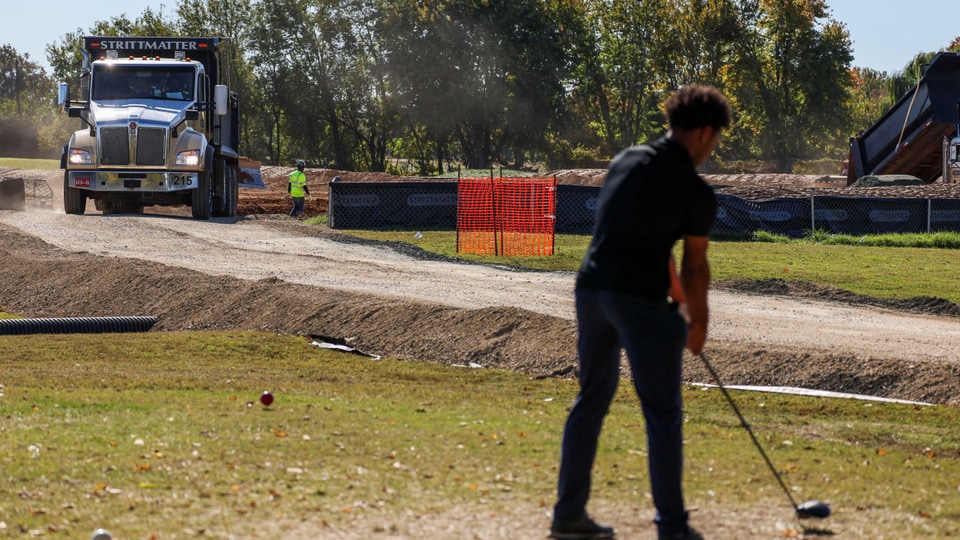
About 37,000 cubic yards of it are at the center of a case that bridges two of President Trump’s hot-button initiatives in the nation’s capital: the construction of a White House ballroom and his plans to transform a beloved—and decidedly unfancy—public golf course on an island in the Potomac River into a championship-level facility.
The dirt came from the White House grounds where Trump demolished the East Wing and construction crews have spent months digging below ground to make way for a bunker and other facilities that the president says are essential.
Workers hauled 150 truckloads of the soil 2 miles away, to East Potomac Golf Links, where it currently sits in a large mound on one of the site’s nine-hole courses. A local preservation group has sued to block the renovation. One of its arguments is that the dirt is likely contaminated and will hurt golfers and the environment if it is used in the makeover.
The National Park Service says no decision has been made on whether or how the dirt will be used in any course construction. The government says the soil, which is fenced off and covered in grass, is clean—or at least clean enough. The Park Service had it tested and said no asbestos was detected. Though there are other toxins present, including arsenic and lead, the service said it isn’t enough to harm anyone. The DC Preservation League now wants to test the dirt itself.
The fate of the pile sits with U.S. District Judge Ana Reyes, who in a hearing this month said she didn’t understand why the government won’t give the preservation group some soil samples.
“If there isn’t a problem with it, who cares?” Reyes asked.
But the government is digging in. “We’re not legally obligated to,” Justice Department lawyer Michael Robertson told the judge.
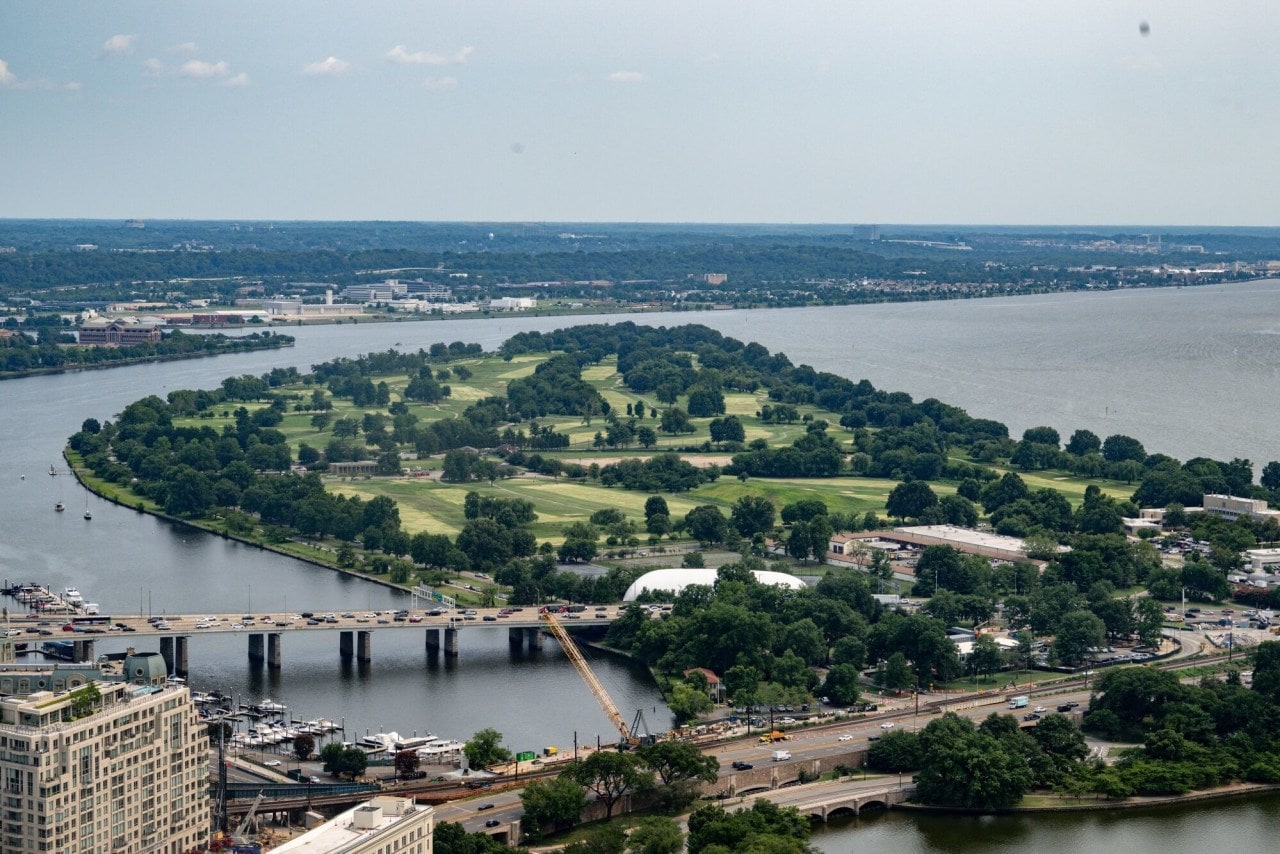
The Trump administration says there isn’t a detailed blueprint in place to redesign the East Potomac facility, which first opened as a municipal course in 1920. But Trump himself has already picked an architect and announced Sept. 1 as the start date for construction.
“When completed, this Course will have the ability to host Major Golf tournaments, including The U.S. Open, The Ryder Cup, The PGA Championship, and other top PGA Tour events,” he wrote in a social-media post late last month.
Trump also is continuing to race through the ballroom construction. A different preservation group wants the project halted until Congress has approved the building plans. Courts have allowed work to continue for now while litigation is ongoing.
In real-estate development, dirt is big business.
“It’s a major cost of construction,” said Richard Turner, who sold fill from his farmland in southeast Virginia for more than two decades. In 2022, his company, Isle of Wight Materials, supplied much of the fill for a three-million-square-foot Amazon fulfillment warehouse in Suffolk, Va.
If companies are dealing with dirty dirt, it can jeopardize development deals, drive up project costs and put businesses at risk. A construction company agreed to pay $11 million last year to resolve environmental violations after it admitted it used more than 4,000 tons of contaminated fill to rebuild a Rhode Island state highway interchange.
For now, the dirt, which was seeded with grass to prevent runoff, isn’t interrupting play at East Potomac. Moving the mound would cost as much as $5.4 million, the government estimated in a court filing.
Without more evidence that the dirt is harming anyone, the judge said she can’t force the government to haul it away. Still, the judge said, there appears to be a lot of arsenic in the soil “and that seems like a bad thing.”
Write to Lydia Wheeler at lydia.wheeler@wsj.com


