Ahead of the highly anticipated rollout of reciprocal tariffs by the United States, President Donald Trump took to social media to declare his vision for "Liberation Day."
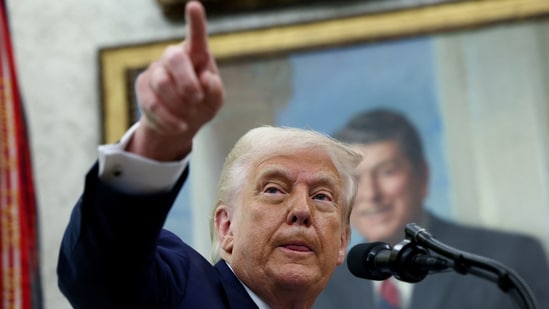
"It's Liberation Day in America," wrote Trump on his social media platform, Truth Social.
In his post, Trump dubbed April 2, which marks the introduction of sweeping tariffs by the US, a milestone in his country's fight to "liberate" America’s domestic industries from foreign dependency.
Apart from the tariffs to be announced on Wednesday's “Liberation Day”, as Trump calls it, 25% tariffs on imports of autos and auto parts are due to take effect on Thursday.
Also Read | Trump declares Liberation Day tariffs will be ‘very kind and very nice’, but to whom?
The new tariffs are a bid to boost US manufacturing and “punish” other countries for what he has said are “years of unfair trade practices.”
But by most economists' assessments, the risky move threatens to plunge the economy into a downturn and mangle decades-old alliances.
What is Trump's 'Liberation Day'?
{{/usCountry}}But by most economists' assessments, the risky move threatens to plunge the economy into a downturn and mangle decades-old alliances.
What is Trump's 'Liberation Day'?
{{/usCountry}}Trump, a staunch advocate of “equal and reciprocal tariffs”, declared ‘Liberation Day’ a public holiday, marking the US's break from dependence on foreign products.
The government plans to introduce substantial economic incentives to promote local employment and correct unfair practices in global trade on this day.
What did the White House say about Trump's reciprocal tariffs?
“April 2, 2025, will go down as one of the most important days in modern American history,” White House press secretary Karoline Leavitt said at Tuesday's briefing while adding that the new tariffs will take effect immediately.
The White House says the criteria for raising tariffs will include not just US trade deficits but also various taxes, exchange rates, government subsidies, and various non-tariff trade barriers.
Also Read | ‘Dirty 15’: Countries which are likely to be worst hit by Donald Trump's 'Liberation Day' tariffs
White House trade adviser Peter Navarro has suggested that the new tariffs would raise $600 billion annually, which would be the largest tax increase since World War II.
Treasury Secretary Scott Bessent told lawmakers that the tariffs would be capped and could be negotiated downward by other countries.
What are Trump's 'reciprocal tariffs'?
The new duties are due to take effect immediately after Trump announces them on Wednesday. In addition to these duties, a separate 25% global tariff on auto imports will also take effect on April 3.
Also Read | 'Time for reciprocity': White House on India's ‘100% tariffs’ on US goods ahead of ‘Liberation Day’
In just over 10 weeks since taking office, Trump has imposed new 20% duties on all imports from China over fentanyl and fully restored 25% duties on steel and aluminum, extending these to nearly $150 billion worth of downstream products.