The US Federal Reserve raised its benchmark interest rate by 0.25 percentage point on Wednesday, September 16. The move was widely expected by Wall Street. After the increase, the Fed’s target range for the federal funds rate moved to 3.75% to 4%. This is the first time the central bank has raised rates in three years.
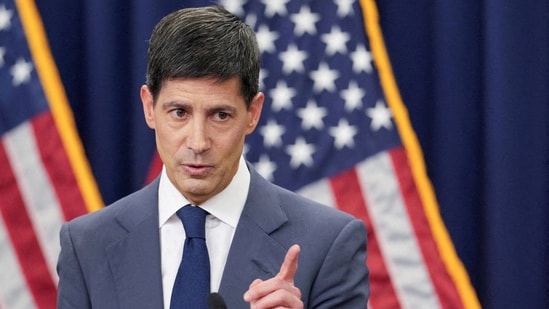
The Fed’s latest decision comes as it continues to deal with stubborn inflation. A recent rise in oil prices has added to concerns about inflation staying high. The central bank also signalled that another rate increase could come before the end of 2026. This means borrowing costs could rise again later this year.
Historically, the Fed has often raised interest rates more than once after starting a rate-hiking cycle. This has added to expectations that Wednesday’s increase may not be the last one.
Deep Dive
What is the new federal funds rate range after the recent Fed hike?
Why did the Federal Reserve decide to raise interest rates now?
How does a Fed rate hike typically affect stock markets?
Morgan Stanley economists changed their forecast this week, as noted by CNBC. They previously expected no further rate hikes, but now expect two increases, partly because of Fed Chairman Kevin Warsh’s public comments and the recent rise in oil prices.
{{/usCountry}}Morgan Stanley economists changed their forecast this week, as noted by CNBC. They previously expected no further rate hikes, but now expect two increases, partly because of Fed Chairman Kevin Warsh’s public comments and the recent rise in oil prices.
{{/usCountry}}Morgan Stanley also pointed to inflation linked to the expansion of artificial intelligence and a broader change in market expectations toward more rate increases. The firm expects the next rate increase to come in December. Morgan Stanley chief US economist Michael Gapen said not raising rates again could hurt the Fed’s credibility and push up longer-term risk premiums.
How the Fed rate hike could affect your money
The Fed’s interest-rate decision can affect several borrowing and saving costs for consumers. These include mortgages, credit cards, auto loans and savings accounts. The quarter-point rate increase could make some types of borrowing more expensive. Consumers could face higher costs when carrying credit card debt or financing a new car.
Some home loans could also become more expensive as interest rates move higher. However, the impact on mortgages can vary because mortgage rates are also influenced by longer-term bond yields and other market factors.
How markets reacted after the Fed decision
US stocks remained in positive territory after the Fed announced the quarter-point rate increase on Wednesday afternoon. The S&P 500 was up about 0.4% on the day after the announcement.
The Nasdaq Composite gained about 0.8%, while technology stocks remained higher following the Fed’s decision. The Dow Jones Industrial Average was little changed, staying close to the flat line during the session.
The 10-year US Treasury yield moved lower after the Fed announcement. It was last down by nearly 5 basis points at 4.947%.
Fed sees higher inflation, another rate hike
The Federal Reserve’s latest economic projections show that inflation could rise slightly by the end of 2026. The Fed’s median forecast for core personal consumption expenditures (PCE) inflation is now 3.4% for the end of 2026. That is slightly higher than the Fed’s previous 3.3% forecast from its June meeting.
The latest core PCE reading also showed inflation at 3.3% year-over-year in July, according to the latest available data. Fed officials also expect one more rate hike in 2026 after Wednesday’s increase. Their median projection puts the federal funds rate at 4.1% by the end of the year.
There was some difference among Fed officials over how many more increases may be needed. Twelve FOMC members indicated that they expect one more rate hike this year. Another four members signalled that they expect two more rate hikes before the end of 2026.
Meanwhile, two members said rates should remain at their current level, indicating that they do not expect another increase this year. Warsh did not submit a rate forecast in the latest projections. He also withheld his rate forecast in June, when the Fed last released its projections. The projections show that the Fed is still watching inflation closely, while a majority of officials see at least one additional rate increase before the end of the year.