On Tuesday, the jury in the Lindsay Clancy trial in Plymouth, Massachusetts gave the first indication of apparent progress after four days of deliberation, as they announced that they are stuck in a deadlock.
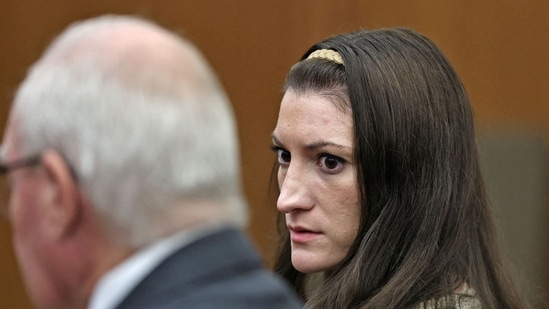
Judge William Sullivan, who is hearing the case, asked the jury to deliberate once more to see if they can reach a verdict - the second request he made after the jury's announcement that they are hung. But Judge Sullivan can only do so three times - and if the jury comes back hung again, he can declare it a mistrial.
A hung jury means the jurors cannot reach the unanimous verdict required in a criminal case. Some well-known cases include Bill Cosby's first sexual assault trial, the Karen Reed case, and most recently Jonathan Rinderknecht's Palisades fire case.
Deep Dive
What does a hung jury mean in the context of Lindsay Clancy's trial?
What happens if the jury in Lindsay Clancy's trial remains deadlocked after three sessions of deliberations?
How does Massachusetts law address a hung jury situation in a murder trial like Lindsay Clancy's?
In Lindsay Clancy’s case, the jury has told the judge it is deadlocked over whether she is criminally responsible for killing her three children; the judge has asked them to continue deliberating, so there is not yet a hung jury or mistrial.
Also read: Lindsay Clancy trial: Jury says ‘they are deadlocked’; Will there be a ‘dynamite’ instruction?
What Happens If The Jury Is Hung A Third Time?
{{/usCountry}}Also read: Lindsay Clancy trial: Jury says ‘they are deadlocked’; Will there be a ‘dynamite’ instruction?
What Happens If The Jury Is Hung A Third Time?
{{/usCountry}}Massachusetts law states that a judge can declare a mistrial if the jury remains deadlocked or hung after asking them to deliberate for three times. As of now, the jury is on its second session of deliberation in the Lindsay Clancy case.
If the jury returns hung the second time, the judge can declare the Tuey Rodriguez charge - a set of reminders read out by the judge when the jury is sent back for deliberations again. Most recently, it was read during the Karen Reed trial.
But if the jury returns without a verdict still, Judge Sullivan will be left to deliberate whether to retry the case.
“I know that this was a long trial, all right,” Judge William Sullivan told the jury when he sent them for deliberation the second time. “I know there were over 80 witnesses. There were over 300 exhibits. But because of that, I’m going to ask you to go back out.”
What Is The Tuey-Rodriguez Charge? How Does It Work?
The Tuey-Rodriguez charge, also called a “dynamite” or “deadlock” charge, is a special instruction a Massachusetts judge can give a jury when it says it is unable to reach a unanimous verdict.
In simple terms, the judge tells jurors to go back, reconsider their positions, and make a genuine effort to reach a unanimous verdict, rather than immediately declaring a mistrial.
However, it is not supposed to tell minority jurors to surrender their views, but rather encourages the whole jury to reconsider.
NBC Chicago published the details of the Tuey-Rodriguez charge read during Karen Reed's trial.