Iran on Saturday firmly rejected a request from UN nuclear watchdog chief Rafael Grossi to inspect nuclear facilities recently targeted by strikes from Israel and the United States, alleging that the demand reflected “malign intent”.
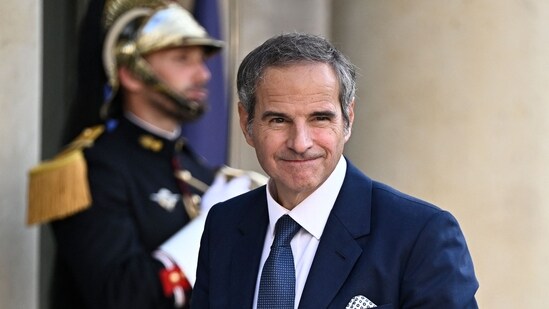
Foreign minister Abbas Araghchi, posting on X, criticised the director general of the International Atomic Energy Agency (IAEA), saying, “Grossi's insistence on visiting the bombed sites under the pretext of safeguards is meaningless and possibly even malign in intent.”
He added, “Iran reserves the right to take any steps in defence of its interests, its people and its sovereignty.”
Araghchi once again lashed out at Grossi personally, accusing him of a glaring failure to condemn the Israeli and American attacks on Iran’s nuclear infrastructure. He characterised Grossi’s silence as “an astounding betrayal of his duties”.
Araghchi accuses Grossi of aiding Israeli, US strikes
He further alleged that Grossi had “directly facilitated... the unlawful Israeli and US bombings” by “obfuscating” Iran’s efforts to address the agency’s concerns. This, he said, was evident in the IAEA’s May 31 report, which described Iran’s cooperation as “less than satisfactory”.
According to Iran, that report became the basis for the IAEA board of governors’ adoption of a censure motion, which in turn paved the way for Israel’s military campaign that began on June 13 and lasted twelve days.
{{/usCountry}}According to Iran, that report became the basis for the IAEA board of governors’ adoption of a censure motion, which in turn paved the way for Israel’s military campaign that began on June 13 and lasted twelve days.
{{/usCountry}}The minister's remarks followed the Iranian parliament's approval of a bill that suspends cooperation with the UN nuclear agency.
Araghchi said that the revised relationship with the IAEA would remain in place “until the safety and security of our nuclear activities can be guaranteed.”
Earlier in the week, Grossi had urged Iran to grant IAEA inspectors access to its nuclear facilities in order to assess the condition of its substantial stockpile of highly enriched uranium.
His request came amid mounting concerns in Israel and Western capitals over whether Iran managed to move its uranium stockpile ahead of the Israeli and US bombardments.With AFP inputs