Nvidia projected quarterly revenue above market expectations on Tuesday, offering investors some reassurance after the resignation of longtime chief Jensen Huang sent the chipmaker into turmoil.
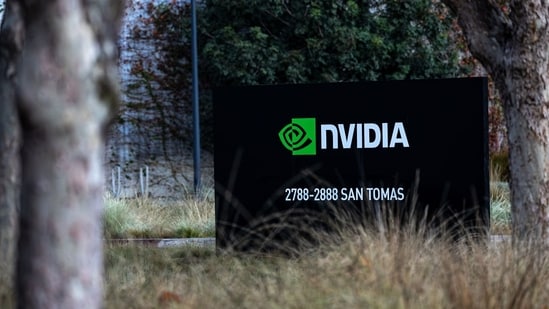
The company forecast fourth-quarter revenue of $130 billion, with a possible variation of 3% in either direction. That compares with the average analyst estimate of $125.25 billion, based on figures compiled by LSEG.
Nvidia expects its adjusted gross margin to range between 71% and 72%, broadly in line with the 71.7% forecast by analysts.
Deep Dive
What revenue did Nvidia forecast for the fourth quarter after Jensen Huang’s departure?
Does Nvidia’s revenue forecast include data center chip sales to China?
Why are investors watching Nvidia’s earnings and future guidance so closely?
The company also clarified that its outlook does not factor in any sales of data center chips to China.
Vera Rubin signals Nvidia’s AI growth
The earnings report also provides an early indication of the performance of Vera Rubin, Nvidia’s latest AI processor generation, which succeeds Grace Blackwell.
In August, the company projected that Vera Rubin would contribute roughly 20% of its data center revenue in the October quarter and estimated that revenue would increase by 70% in the following fiscal year.
Also read | Nvidia faces SEC probe after Jensen Huang’s resignation: Report
Investors seek clarity on Nvidia’s future
{{/usCountry}}Also read | Nvidia faces SEC probe after Jensen Huang’s resignation: Report
Investors seek clarity on Nvidia’s future
{{/usCountry}}Following Huang’s departure, investors are seeking greater clarity on Nvidia’s direction, including the future of its multibillion-dollar investments in cloud companies, suppliers and AI startups, as well as who will take charge of the world’s most valuable chipmaker.
Huang’s departure brings an end to three decades of founder-led oversight of Nvidia’s chip development strategy, customer relationships and engagement with Washington.
Earlier on Tuesday, Nvidia’s board established a committee focused on national security and export controls, marking its first major governance decision since Huang stepped down. The move comes as the company faces growing scrutiny over its role in national security.
US export restrictions
The US has further tightened licensing rules governing chip shipments to Southeast Asian countries and data centers abroad that provide services to Chinese businesses.
At the same time, lawmakers are preparing to question Huang, who had previously called for expanded exports of Nvidia’s chips to China.
AI spending adds to investor concerns
Concerns over rising AI investment were already weighing on investors, while Democrats’ strong performance in the midterm elections has raised expectations of increased regulatory scrutiny and potentially slower growth in data center construction.
Also read | Nvidia stock falls as Jensen Huang signals willingness to return as CEO
Investors are also seeking clarity on whether Nvidia’s incoming CEO will continue funding its customers, a business approach that critics have questioned as a circular financing model.