Deconstruction includes careful dismantling of a building so that its components can be salvaged for reuse and recycling. One of the most closely followed examples in California was a Spanish Colonial Revival mansion in Woodside, a wealthy town south of San Francisco. Steve Jobs bought the property in 1984. He spent years fighting in court to demolish it, and it finally happened in 2011. At the time, a pipe organ, fireplace mantels, light fittings and other pieces had been carried out and a surprising number of them can still be traced today.
A house built on copper money
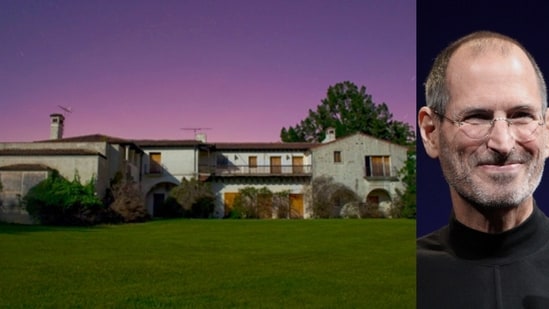
Architect George Washington Smith created the Jackling House for copper mining tycoon Daniel C. Jackling, and it was constructed between 1925 and 1926. With a spacious courtyard, beautifully planted gardens, outdoor balconies and a pipe organ integrated into the music room, it was about 17,000 square feet in size. The house had 14 bedrooms, according to The Almanac, while the Pacific Coast Architecture Database said there were 30 rooms in total.
Jobs bought the property in 1984 and lived there for about 10 years. Then he rented it out. In 2000, he stopped maintaining it. In 2001, Woodside’s history committee stated that doors were torn off their frames, windows were gone and plants were growing inside. Jobs planned to replace the place with a smaller, more modern residence. The courts had to decide if the old house was worth saving, and it took them years to decide.
The long legal fight
Jobs started lobbying Woodside for permission to demolish it around 2001, and the municipality approved a permit in 2004. Preservationists contested it, and in early 2006 a judge ruled against demolition. The California Supreme Court refused to consider an appeal by Jobs in April 2007. The town council again voted to allow demolition on May 13, 2009. A superior court judge affirmed that ruling in March 2010, and preservation group Uphold Our Heritage subsequently discontinued its case.
{{/usCountry}}Jobs started lobbying Woodside for permission to demolish it around 2001, and the municipality approved a permit in 2004. Preservationists contested it, and in early 2006 a judge ruled against demolition. The California Supreme Court refused to consider an appeal by Jobs in April 2007. The town council again voted to allow demolition on May 13, 2009. A superior court judge affirmed that ruling in March 2010, and preservation group Uphold Our Heritage subsequently discontinued its case.
{{/usCountry}}Lawyers debated, but the house’s greatest jewel was at risk. The Organ Historical Society says the organ was originally an Aeolian instrument and was enlarged in 1938 by the Kilgen Organ Company from two keyboards and 14 ranks of pipes to four keyboards and 55 ranks. That’s 3,816 pipes in total. Late in 2010, a trespasser or vandal was reported to have set fire to the console, destroying its stop tabs, nameboard, music desk and combination action, according to the same database. Before the house came down, the organ was turned over to a private group called the Friends of the Jackling Organ, which moved most of it into storage. Demolition began Feb. 14, 2011. With the organ out of the way and the clock running, attention turned to everything else worth keeping.
What was saved
Jobs decided to let the town and other heritage groups salvage relics from the home. Woodside collected a 50-foot flagpole, copper mailbox, roof tiles, woodwork, fireplace mantels, light fixtures and moldings. Some of those objects were used to inaugurate an exhibit called Days of Grandeur at the town’s community museum in October 2011, while the flagpole was set aside for a location outside the museum.
Some of the finest architectural details went to the University of California, Santa Barbara, which looks after the papers and collections of Smith, the house’s architect. A finding aid on the Online Archive of California lists a wooden door frame from the organ room, a copper light fixture from the library, an iron wall sconce, a thermostat and decorative tiles, along with two binders of photographs that document the house. The collection arrived as a gift from the town of Woodside in January 2013.
Not every piece found such a tidy home. In 2018, the council weighed what to do with the leftovers, which were valued at around $30,300, according to The Almanac. The options ranged from offering them to a nearby house that Smith also designed to holding a silent auction or sending the rest to salvage.
Steve Jobs died on Oct. 5, 2011, nearly eight months after the demolition, before he could build the smaller house he had planned for the site. After the demolition, most of the organ went into storage, according to the Organ Historical Society’s database, which still lists the instrument as not playable in its original location, with no new installation on record. The Woodside museum kept its display items, and a university archive holds the door frame and tiles. For anyone searching for the Jackling House today, those fragments are the closest thing to a front door.