President Donald Trump said Thursday he has instructed the Commerce Department to change the way the Census Bureau collects data, seeking to exclude immigrants who are in the United States illegally.
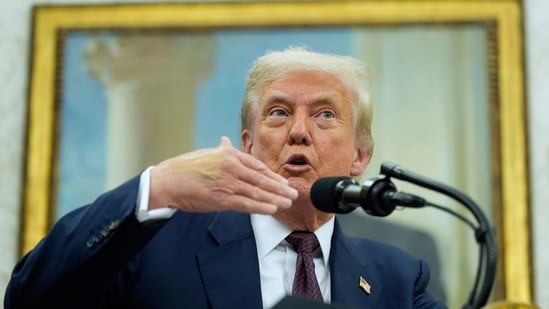
"People who are in our country illegally will not be counted in the census," Trump said.
He further revealed that he has directed the Department of Commerce to "immediately begin work on a new and highly accurate census." This directive aims to reshape how the US population is counted, potentially affecting congressional representation, federal funding allocations, and policy planning.
The controversial step that could significantly impact federal resource allocation and the apportionment of political power in the years leading up to the 2028 presidential election.
Since taking charge in January 2025, Trump has amped up efforts to deport immigrants living illegally in the US.
By seeking to exclude undocumented immigrants—who have historically been counted in census tallies regardless of legal status—Trump’s proposal could shift political representation and financial resources, potentially to the detriment of states with large immigrant populations. However, the legality of such a move remains unclear, and constitutional and legal challenges are likely.
Trump’s latest directive is also consistent with broader efforts to reshape the federal government’s statistical infrastructure. Just last week, he dismissed Bureau of Labor Statistics Commissioner Erika McEntarfer after revised jobs data showed weaker hiring than previously reported for May and June - undermining Trump’s narrative of a booming economy.
{{/usCountry}}Trump’s latest directive is also consistent with broader efforts to reshape the federal government’s statistical infrastructure. Just last week, he dismissed Bureau of Labor Statistics Commissioner Erika McEntarfer after revised jobs data showed weaker hiring than previously reported for May and June - undermining Trump’s narrative of a booming economy.
{{/usCountry}}The White House defended the firing, saying it was about ensuring transparency in light of “excessively large revisions” to key labor data. Still, the episode raised fresh concerns among economists and statisticians about potential political interference in traditionally nonpartisan government data agencies.