In a stunning turn of events, Astrobotic's Peregrine lunar lander faces a bleak fate, with the company announcing on Tuesday that it has "no chance" of executing a soft landing on the moon. The setback occurred after a propellant leak was detected within the first few hours of the spacecraft's journey through space, marking the first U.S. attempt of its kind in five decades.
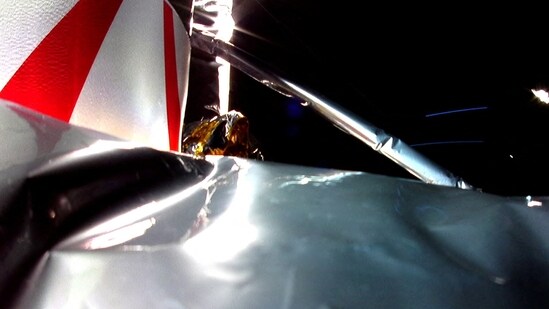
Despite the grim prognosis, the space robotics firm revealed that there are approximately 40 hours of fuel remaining on the lander, allowing it to function "as a spacecraft" while engineers assess its new mission in orbit. The craft was launched aboard the inaugural flight of Vulcan, a rocket developed over a decade by United Launch Alliance (ULA), a joint venture between Boeing and Lockheed Martin.
The launch from Cape Canaveral, Florida, at 2:18 a.m. ET on Monday was initially successful, but the lander encountered a propulsion system issue en route to the moon. Following the launch, the lander failed to assume its correct sun-facing orientation in space, causing a drastic drop in battery levels. Astrobotic, however, managed to rectify the issue.
"The team continues to work to find ways to extend Peregrine's operational life," stated the company. Engineers are actively collecting data and validating spaceflight operations for components and software related to its upcoming lunar lander mission.
{{/usCountry}}"The team continues to work to find ways to extend Peregrine's operational life," stated the company. Engineers are actively collecting data and validating spaceflight operations for components and software related to its upcoming lunar lander mission.
{{/usCountry}}In an unfortunate coincidence, NASA is expected to announce a delay in the timeline for the Artemis missions during a Tuesday briefing. The setback is attributed to delays in the delivery of essential components by contractors. The Artemis program, introduced in 2017, is a key element of NASA's plan to establish a sustained presence on the moon and apply the knowledge gained for future Mars missions.
The initial mission of Artemis, called Artemis 1, took place in 2022 after multiple postponements. Astrobotic, in a statement on Monday night, disclosed that Peregrine has approximately 40 hours of fuel left before entering an "uncontrollable tumble."
"At this time, the goal is to get Peregrine as close to lunar distance as we can before it loses the ability to maintain its Sun-pointing position and subsequently loses power," the company said. Observers are left speculating whether a crash landing, albeit uncontrolled, may be attempted, given that a controlled descent seems unfeasible. An image released earlier by Astrobotic, taken from a mounted camera, showcased extensive damage to an outer layer of the spacecraft, serving as evidence of the propulsion system anomaly, although no further details were provided.