The Supreme Court on Monday, April 7, allowed Donald Trump to enforce the Alien Enemies Act for now. This is a significant victory for the White House, which will allow immigration officials to depend on a sweeping wartime authority to quickly deport alleged gang members.
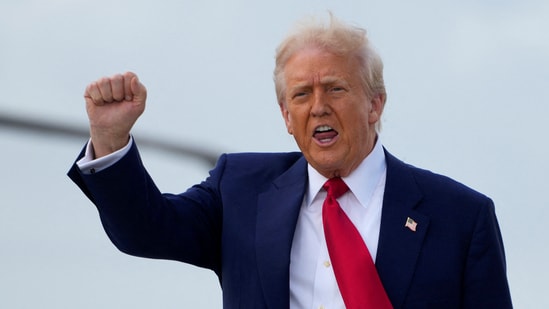
The unsigned decision in the case allows President Trump to invoke the 1798 law to speed removals. At the same time, litigation over the act’s use plays out in lower courts. The court demanded that people who will be deported in the future be given notice they are subject to the act. They should also get an opportunity to have their removal reviewed.
The court’s three liberal justices reportedly dissented from the decision. Meanwhile, Justice Amy Coney Barrett, a member of the court’s conservative wing, partially dissented, according to CNN.
Trump framed his emergency appeal as a fight over US District Judge James Boasberg’s order that temporarily blocked him from enforcing the Alien Enemies Act against five Venezuelans who sued, as well as a broader class of people who may be affected. Boasberg’s orders were tossed out by the Supreme Court as it granted Trump’s request.
“The notice must be afforded within a reasonable time and in such a manner as will allow them to actually seek habeas relief in the proper venue before such removal occurs,” the justices wrote. “The detainees subject to removal orders under the AEA are entitled to notice and an opportunity to challenge their removal.”
What is the Alien Enemies Act?
{{/usCountry}}“The notice must be afforded within a reasonable time and in such a manner as will allow them to actually seek habeas relief in the proper venue before such removal occurs,” the justices wrote. “The detainees subject to removal orders under the AEA are entitled to notice and an opportunity to challenge their removal.”
What is the Alien Enemies Act?
{{/usCountry}}According to the Brennan Center for Justice, “The Alien Enemies Act of 1798 is a wartime authority that allows the president to detain or deport the natives and citizens of an enemy nation. The law permits the president to target these immigrants without a hearing and based only on their country of birth or citizenship.”
The Alien Enemies Act has been invoked thrice in the past, according to the website – in the War of 1812, World War I, and World War II.
Describing who “alien enemies” are, House.gov says, “Whenever there is a declared war between the United States and any foreign nation or government, or any invasion or predatory incursion is perpetrated, attempted, or threatened against the territory of the United States by any foreign nation or government, and the President makes public proclamation of the event, all natives, citizens, denizens, or subjects of the hostile nation or government, being of the age of fourteen years and upward, who shall be within the United States and not actually naturalized, shall be liable to be apprehended, restrained, secured, and removed as alien enemies.”