
 E-Paper


Why did Jerry Greenfield leave Ben & Jerry? Ben Cohen blames ‘conflict with Unilever’
“Jerry has a really big heart, and this conflict with Unilever was really kind of tearing him apart,” Ben Cohen explained.

 Prefer HTon Google


Jerry Greenfield’s resignation from the iconic ice cream company Ben & Jerry he helped build five decades ago with Ben Cohen left many individuals shocked. After repeated reports of conflict with the company’s parent brand, Unilever, it has been made clear that incongruence on matters of social messaging ultimately led to the split.
Jerry Greenfield’s resignation
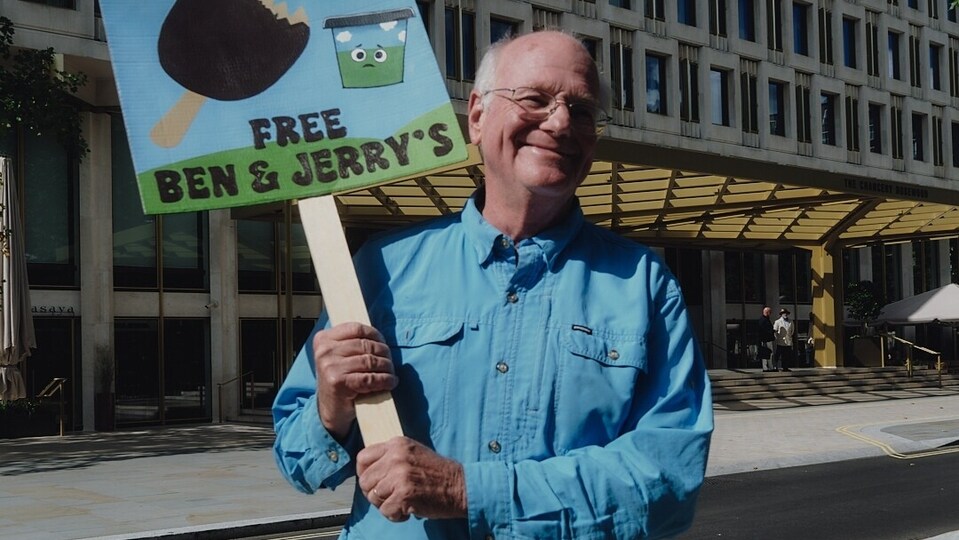
On September 17, Cohen posted a statement on his official social media handle, which announced Jerry Greenfield’s decision to step back from the company. “After 47 years, Jerry has made the difficult decision to step down from the company we built together. I’m sharing his words as he resigns from Ben & Jerry’s. His legacy deserves to be true to our values, not silenced by @MagnumGlobal #FreeBenAndJerrys,” he wrote in the caption.
“For more than 20 years under their ownership, Ben & Jerry’s stood up and spoke out in support of peace, justice and human rights, not as abstract concepts, but in relation to real events happening in our world,” Greenfield wrote in the statement. “That independence existed in no small part because of the unique merger agreement Ben and I negotiated with Unilever, one that enshrined our social mission and values in the company’s governance structure in perpetuity. It’s profoundly disappointing to come to the conclusion that that independence, the very basis of our sale to Unilever, is gone.”
Also Read: What is Jerry Greenfield's net worth? Here's why co-founder of Ben & Jerry's quit the company
Ben Cohen explains
As per CNN, Cohen accused conflicts with Unilever over independence in executing the company’s three-tiered model of supporting social justice and equality, along with a product and financial mission, which led to the split. Initially started off as a homegrown brand, the company soon came to dominate a global market before being sold off to Unilever in 2000 under an agreement that allowed the brand to operate independently. Tensions between the two sides have been evident in multiple public spats and disagreements over decisions like stopping manufacturing in Israel have been made in the open recently.
“Jerry has a really big heart, and this conflict with Unilever was really kind of tearing him apart. So he felt like he had no choice to resign,” he said. “Jerry’s kind of sad that it’s come to this, but part of him is feeling a sense of relief that he’s no longer in this intense conflict.”
“When we came up with that three-part mission, we deliberately wrote it horizontally to make the statement that they are all equally as important. As the company acts on its social values and as it produces great ice cream, it ends up making a good profit.”
As of now, Cohen continues to be a part of the company and prefers to “fight from the inside”. Unilever is currently trying to rebrand the company into The Magnum Ice Cream Company.


