Air travellers across the United States are facing hours-long delays at security checkpoints as the Transportation Security Administration struggles with staffing shortages. The issue stems largely from a partial shutdown of the Department of Homeland Security (DHS), which oversees the TSA.
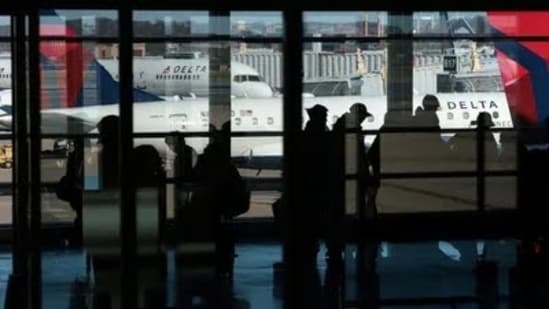
Because of the funding lapse, TSA employees, classified as essential workers, have continued working without pay for weeks. The result has been absenteeism, resignations, and a visible slowdown in airport operations.
Why aren’t TSA workers being paid?
The disruption traces back to a political standoff in Washington over DHS funding. Lawmakers remain divided over how to allocate money to agencies like US Immigration and Customs Enforcement (ICE) and Customs and Border Protection.
Reports cited by CNBC note that the funding lapse has already led to missed paychecks for TSA officers, directly impacting staffing levels at airports. Despite attempts to pass temporary funding measures, both parties have blamed each other for prolonging the shutdown.
How bad is the staffing shortage?
The impact has been significant. Hundreds of TSA workers have reportedly quit since the shutdown began in mid-February, while call-out rates have surged well above normal levels.
{{/usCountry}}The impact has been significant. Hundreds of TSA workers have reportedly quit since the shutdown began in mid-February, while call-out rates have surged well above normal levels.
{{/usCountry}}Also Read: Viral ICE agents meme at JFK Airport takes social media by storm: ‘Look at those faces…’
At some major airports, absentee rates have climbed to as high as 30 percent during peak periods.
Everett Kelley, president of the American Federation of Government Employees, told Al Jazeera that workers are being asked to show up “without a paycheck,” despite having “families, mortgages and bills like everyone else.” The strain has led to exhaustion and declining morale across the workforce.
Why are delays worse at some airports?
Not all airports are equally affected. According to officials cited by Al Jazeera, wait times depend on factors like passenger volume, staffing on specific shifts, and even break schedules.
This has made delays unpredictable, with some airports functioning relatively normally while others see chaotic queues.
Experts say the situation resembles a “Whac-A-Mole” problem, where disruptions shift from one airport to another without warning.
What is the government doing to fix it?
The administration of Donald Trump has deployed federal agents from ICE to assist at airports, though critics argue they lack proper training for TSA-specific roles. The move has added to concerns about both efficiency and safety.
Meanwhile, lawmakers are working on a funding bill that could restore pay to TSA workers and stabilise operations. However, negotiations remain uncertain.
Also Read: Why are ICE agents getting paid during the government shutdown but TSA isn't? Explained
Why experts say this is a bigger crisis
Analysts warn the issue goes beyond long lines. The shutdown has exposed vulnerabilities in the US aviation system, especially as global tensions and travel disruptions add pressure.
Consumer advocate William McGee told Al Jazeera, “For years we’ve bragged about how the US has the best and safest aviation system in the world. I’m not sure that’s something we get to say anymore.”
With no immediate resolution in sight, travellers are being advised to arrive at airports much earlier than usual as uncertainty continues.