Imposition of emergency and governor’s rule in Pakistan Tehreek-e-Insaf (PTI)-ruled Khyber-Pakhtunkhwa (KPK) province by Shehbaz Sharif's government last Sunday has serious ramifications for Rawalpindi General Headquarters (GHQ), with Field Marshal Asim Munir's military opening another front in Pakistan.
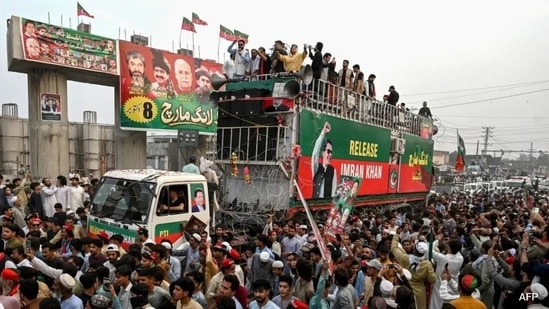
First, this clearly indicates that Munir has failed in striking a political deal with incarcerated PTI leader Imran Khan, who has been in prison since 2023, and refuses to go into exile. Pakistan is known for political deal-making as Benazir Bhutto, Nawaz Sharif, Shehbaz Sharif and Gen Pervez Musharraf all went to exile in either west or Saudi Arabia after being imprisoned by deep state-backed political adversaries. Clearly, Imran Khan, who is popular in Pashtun-dominated KPK, has chosen to stay in prison rather than go to his children in London.
Second, the PTI's provincial government has been dismissed on grounds of its failure to take action against terrorist groups like Tehreek-e-Taliban Pakistan (TTP), which Munir accuses of getting cross-border support from the Taliban administration in Afghanistan. Even though it is the Pakistan Army that is currently participating in Operation Azm-e-Istehkam against terrorists in KPK since June 2024, it has absolved itself of all burden by putting the blame of not taking action against terrorists on the provincial government. Fact is that the Pakistan Army, now under Munir, has launched no less than 16 counter-terrorist operations in KPK—from Op al-Mzan to Op Zarb-e-Azb to Op Radd ul-Fassad in the past 25 years without success. The Pakistan Air Force has also bombed these areas through aerial strikes.
Third, with Imran Khan’s popularity among KPK Pashtuns and support from Afghanistan Taliban (as it is part of greater Pashtunistan), KPK has already erupted in violence and could become another security state like neighboring Balochistan, with Rawalpindi and spy agency Inter-Services Intelligence (ISI) fully dominating the region. This means that KPK, like Baluchistan, could see an anti-Islamabad insurgency in the long run with the Pakistan Army being stretched into this volatile region dominated by warring Pashtun tribes.
{{/usCountry}}Third, with Imran Khan’s popularity among KPK Pashtuns and support from Afghanistan Taliban (as it is part of greater Pashtunistan), KPK has already erupted in violence and could become another security state like neighboring Balochistan, with Rawalpindi and spy agency Inter-Services Intelligence (ISI) fully dominating the region. This means that KPK, like Baluchistan, could see an anti-Islamabad insurgency in the long run with the Pakistan Army being stretched into this volatile region dominated by warring Pashtun tribes.
{{/usCountry}}Fourth, by imposing emergency in KPK, Munir’s relations with Taliban-ruled Afghanistan will further worsen as Kabul has always offered what they call is moral support to their Pashtun brothers across the Khyber Pass. Taliban does not recognise the Durand Line and military skirmishes are the order of the day on the so-called international border between the two countries from Torkham to Spin Boldak. Munir, by bombing Afghanistan in the name of counter-terrorist operations against TTP, has already ruined ties with the country that Pakistan once called its strategic depth.
Finally, India under Prime Minister Narendra Modi has still not called off Opersation Sindoor after the 2025 Pahalgam massacre; so Pakistan is vulnerable on its eastern front as well. Afghanistan under Taliban is seething in rage to avenge the bombing by Pakistan Air Force—and hence Islamabad has its western front also opened. Pakistan has live insurgencies like that in Balochistan. Now KPK could erupt, creating a serious internal security situation west of Indus river.
On top of all this, Iran is very unhappy with Pakistan for siding with the United States in the ongoing Gulf War and then attacking its proxy Houthis in Yemen in support of Saudi Arabia under the Mecca defence pact. Given that Islamic Revolutionary Guard Corps
(IRGC)-backed Houthis have used long-range ballistic missiles and kamikaze drones that have a range of over 2000 km—and have targeted Tel Aviv, the United Arab Emirates and now all over Saudi Arabia, Pakistan air defence will have to be on alert in case Houthis decide to punish Munir for siding with Crown Prince Mohammed bin Salman. The matters get worse as Iran has criticised Pakistan for joining the Mecca pact or what Pakistan calls Sunni NATO; it is just been a little more than two years (since January 16, 2024) when Tehran attacked Pakistan with ballistic missiles in Balochistan against what they called were Sunni terrorists backed by Rawalpindi.
In sum and substance, Munir’s action in KPK and in Yemen is further going to complicate the Field Marshal’s life, with Pakistan Army facing multiple fronts internally and externally. Pakistan PM Sharif will also have to pay in future for being a convenient political tool for the Field Marshal.