
 E-Paper



US prez Obama is in Cuba, these Cuban migrants ‘want’ to be in US
There has been a steady increase in illegal immigration attempts to the US from Cuba since diplomatic relations between the two countries were normalized in late 2014.

 Prefer HTon Google


Shouts of “USA!” and “Obama!” echoed over the stone plazas as President Barack Obama and his family made their way around rain-slicked courtyards in Old Havana on Sunday evening, savoring the adulation of Cubans welcoming him warmly despite a driving rain as he began a history-making visit.

“Welcome to Cuba! We like you!” a man shouted as Obama’s entourage passed. Above, a woman applauded and hooted from her wrought-iron balcony.
“Change is going to happen here and I think that Raul Castro understands that,” he told ABC in the Cuban capital, acknowledging it was not going to occur “overnight.”
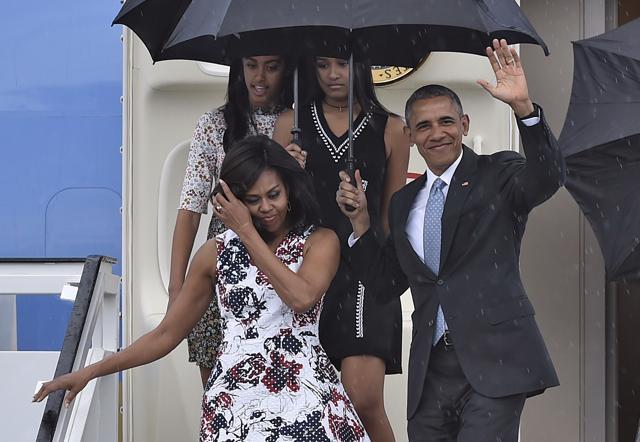
Whereas on the other end of the spectrum, there has been a steady increase in illegal immigration attempts to the US from Cuba since diplomatic relations between the two countries were normalized in late 2014.
The numbers have increased so much that, Clint Johnson, mayor of a central Florida city told media that he is planning to visit Cuba and return home on a makeshift raft so he can better understand what Cuban migrants go through when crossing the Florida Straits.
The issue also has a political angle to it as both the senators Ted Cruz and Marco Rubio, Donald Trump’s top Republican rivals, are sons of Cuban migrants.
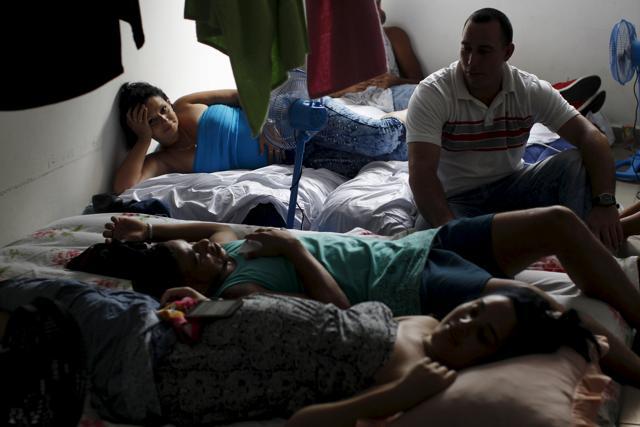
Stranded in Costa Rica
Costa Rica’s president on Friday saw off one of the last planes carrying departing Cuban migrants, resolving a three-month period in which nearly 8,000 US-bound Cubans were stranded in his country.

“You are going full of dreams, but have also gone through very tough situations,” President Luis Guillermo Solis told the Cubans before they boarded their flight in San Jose to Mexico.
The Cubans’ passage through Central America had been blocked since mid-November, when Nicaragua -- a Cuban ally -- barred them from entering its territory.
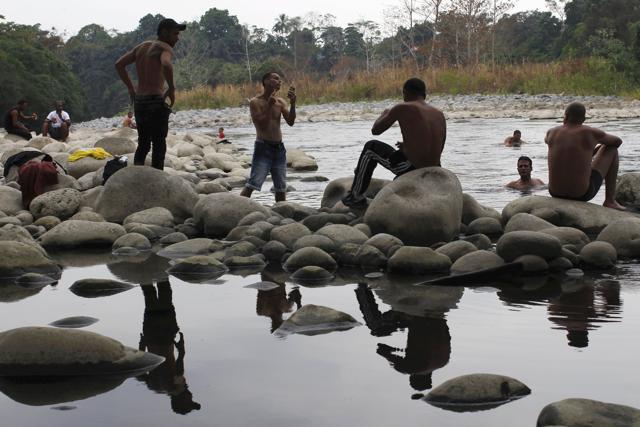
That forced Costa Rica to negotiate “air bridges” over Nicaragua to El Salvador and Mexico that, from January, started flying out some of the 7,800 Cubans who piled up on its territory with no easy path north.
According to official figures, 7,802 Cubans were given temporary visas for Costa Rica since mid-November.

Panama, which was also forced to host around 2,000 Cubans when Costa Rica in turn closed its border to new arrivals, has also organized flights for them to Mexico.
Unlike other Latin American migrants, Cubans get relatively easy access to the United States when they cross a land border. A Cold War-era law puts them on a fast-track to American residency.
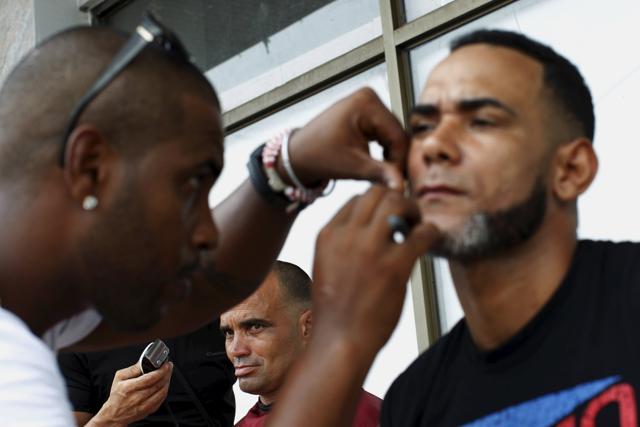
The number of Cubans aiming for the US has spiked over the past year, with many fearing that a thaw in US-Cuban relations underway will eventually end America’s open-door policy for them.
Of the 7,802 Cubans, 4,350 took the flights that they were required to pay for themselves, at a cost of between $555 and $790 each.

Another 3,450 were believed to have used “coyotes” -- people smugglers -- to clandestinely get them through Nicaragua and other Central American nations. The coyotes demanded around $1,000 each, according to a report in the newspaper La Nacion.
“People-trafficking is a tragedy for all of humanity,” Solis told reporters at San Jose’s airport.
“It’s a dreadful business, more lucrative than drug-trafficking,” he said.

He said that a small number of Cubans were still in Costa Rica and unable to make the journey north for different reasons.
But he said the “hard work” of supporting them and getting most of them out had been concluded satisfactorily.
The last of them flew to Mexico on March 15 to continue their journey to the United States, the government said.


