
 E-Paper


Follow the latest breaking news, major developments and agenda-setting stories from India and around the world with the newsdesk at Hindustan Times. Operating round the clock, the desk brings together experienced editors, reporters and correspondents to deliver fast, accurate and contextual reporting across subjects that influence public policy, governance, business, society and international affairs. The HT News Desk covers politics, elections, government policies, the economy, business and markets, science and technology, the environment, law and order, infrastructure, education, climate issues and geopolitics, while closely tracking developments across states, institutions and global capitals. The team also leads coverage of major breaking news events, policy announcements, court proceedings, natural disasters, public emergencies and significant international developments. Reports published by the newsdesk are based on information gathered from reporters on the ground, official statements, government agencies, court records, regulatory filings, recognised institutions and other authoritative sources. Stories undergo editorial scrutiny and verification processes to ensure accuracy, fairness and relevance, and are updated as events evolve and additional information becomes available. Whether covering a key political decision in New Delhi, an economic policy shift affecting millions, a landmark court ruling or a major global event, the HT News Desk aims to provide readers with reliable, fact-based journalism that delivers not only the latest developments but also the context and analysis needed to understand their wider implications.
Differences should not become disputes: India on Doklam standoff with China
National Security Adviser Ajit Doval will travel to Beijing on July 27 to attend a meeting of the BRICS multilateral grouping.


India made a renewed pitch for a “peaceful resolution” of the Doklam standoff on Thursday through diplomatic channels, stressing that “differences” should not become “disputes”.
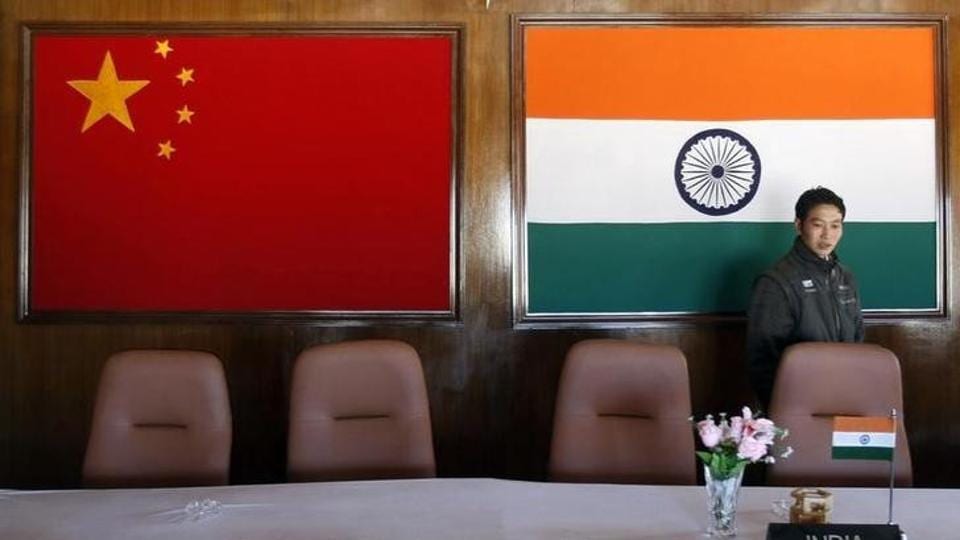
Ministry of external affairs spokesperson Gopal Baglay told reporters that New Delhi has been in “close contact” with the Bhutan government on the unfolding developments.
“India’s approach is to have a peaceful resolution of issues on border with China,” he said, underlining the understanding at the Astana meeting that differences between India and China should not be allowed to become disputes.
Prime Minister Narendra Modi had met Chinese President Xi Jinping on the sidelines of the Shanghai Cooperation Organisation (SCO) Summit in June in Kazakh capital Astana.
“So, it is obvious that every responsible power, person and player in the world prefers peaceful resolution of matters,” Baglay said.
Asked whether India has briefed other countries on the issue, Baglay said it would not be appropriate for him to comment on diplomatic interactions on sensitive matters.
Baglay also confirmed that National Security Advisor Ajit Doval will travel to Beijing on July 27 to attend a meeting of the BRICS multilateral grouping.
Chinese and Indian soldiers have been locked in a face- off in Doklam area of the Sikkim sector for over a month after Indian troops stopped the Chinese army from building a road in the disputed area.
New Delhi has expressed concern over the road building, apprehending that it may allow Chinese troops to cut India’s access to its northeastern states.
China’s state-run media has stepped up rhetoric against India in recent weeks.
China claimed that it was constructing the road within its territory, and has been demanding immediate pull-out of the Indian troops from the Doklam plateau.
Doka La is the Indian name for the region which Bhutan recognises as Doklam, while China claims it as part of its Donglang region.
Of the 3,488-km-long India-China border from Jammu and Kashmir to Arunachal Pradesh, a 220-km section falls in Sikkim.


