
 E-Paper



CIA believed as far back as 1948 that Subhas Chandra Bose was dead
For decades, Indians have grappled with the question of whether Netaji Subhas Chandra Bose died in an airplane crash at Taipei in August 1945, but the CIA believed as far back as 1948 that the iconic Indian leader was no longer alive.

 Prefer HTon Google


For decades, Indians have grappled with the question of whether Netaji Subhas Chandra Bose died in an airplane crash at Taipei in August 1945, but the CIA believed as far back as 1948 that the iconic Indian leader was no longer alive.
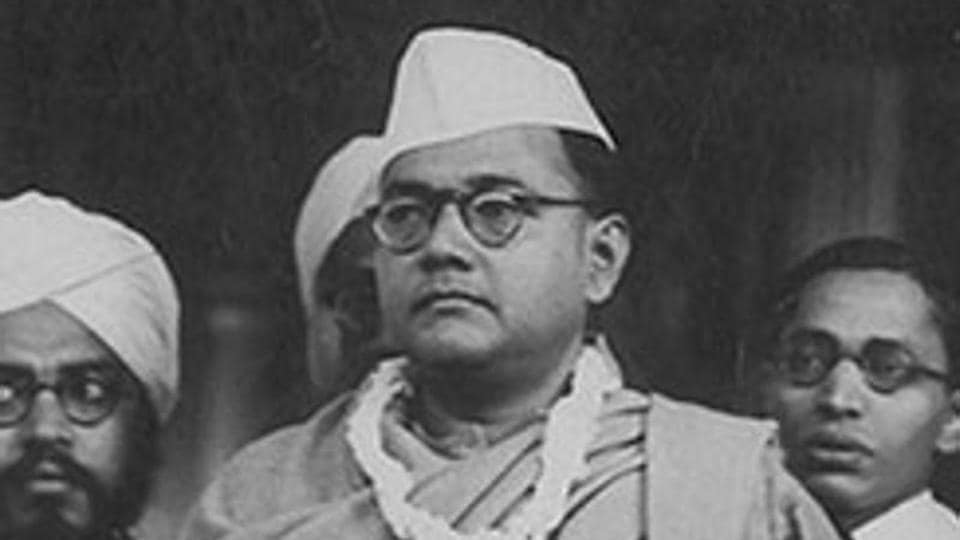
A brief report on the Forward Bloc, dated September 10, 1948, made it clear that the CIA thought Bose had perished in the crash of Japanese military aircraft. The report is part of the 930,000 declassified documents posted in the CIA’s online archive.
“The Forward Bloc, which first emerged under the leadership of Subhas Chandra Bose, was continued after Subhas’ death by his brother, Sarat Chandra Bose,” the confidential report stated.
Another CIA report on India’s Communist parties and organisations and their influence on workers and trade unions, prepared sometime in the early 1950s, gave some details of Bose’s death. The document also detailed Bose’s escape from India to Germany during World War II and his raising of the Indian National Army that comprised Indian soldiers captured by the Japanese and other Indians in Southeast Asia.
“Bose died in an airplane crash in Indochina in the fall of 1945 but the British brought a number of the INA officers to trial,” this report stated.
Several documents in the archive appear to indicate that the CIA and its war-time predecessor, the Office of Strategic Services, did not think much of Bose’s capabilities.
A CIA report, titled “Study on German intelligence activities in the Near East and related areas prior to and during World War II” and dating from the 1940s, had this to say about Bose: “He was vain, always sought the spotlight on the political scene, and was characterized as an opportunist and oppositionist.”
An OSS note from July 1943, giving background on Bose, stated: “The Nazis are well aware that the Indian people have no national patriotism, but they hope, just the same, that Chandra Bose will be able to embarrass the British.”
A 1956 investigation report of the Japanese government concluded that Bose died of injuries sustained in the air crash at Taipei on August 18, 1945, three days after Japan formally announced its surrender in World War 2. The report also stated that he was cremated at the Taipei Municipal crematorium on August 22.
Bose’s Germany-based daughter Anita Pfaff told Hindustan Times she was annoyed with many people believing “asinine” theories that he survived the crash. She also said India should bring Bose’s ashes from Tokyo to India.
Last year, the Indian government began declassifying hundreds of files related to Bose following demands by members of his family and others. However, a section of the family maintains Bose survived the crash and lived incognito in India for several years.
Read more:
Revealed: How CIA tried to gather intel before 1971 India-Pakistan war
US wanted ‘nuclear emissary’ to reduce India-Pakistan tensions, CIA papers reveal
From Subhas Chandra Bose to Sai Baba, how the CIA tracked India
CIA files: Despite keeping tabs, US was unaware of Indira Gandhi’s Emergency plans
CIA thought Sathya Sai Baba’s movement would become a ‘worldwide religion’



