E-Paper



Naga accord a 'framework agreement', Nagalim issue set aside
The landmark peace accord signed on Monday by the government and the NSCN-IM, the dominant rebel group in Nagaland, is a “framework agreement” that will pave the way for a final and lasting solution to one of the longest running insurgencies in Asia, rebel and government sources said.

 Prefer HTon Google


The landmark peace accord signed on Monday by the government and the NSCN-IM, the dominant rebel group in Nagaland, is a “framework agreement” that will pave the way for a final and lasting solution to one of the longest running insurgencies in Asia, rebel and government sources said.
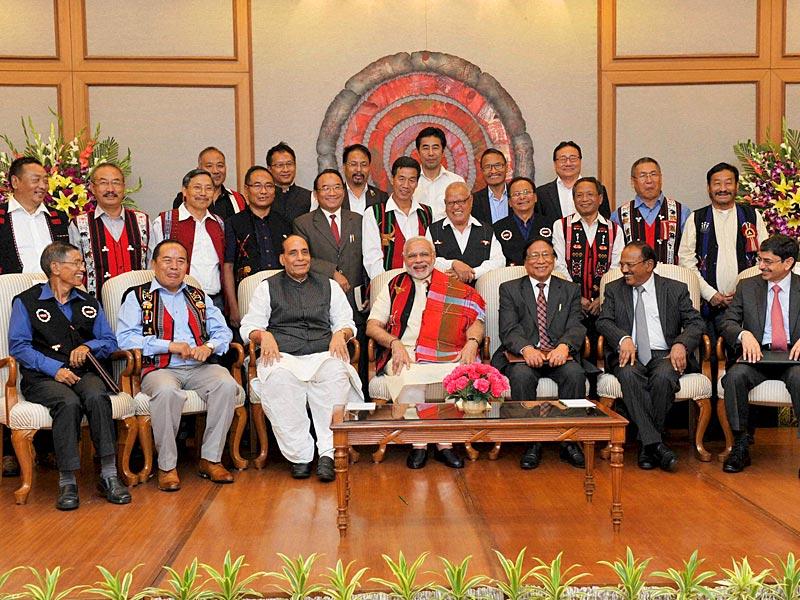
Two government officials familiar with the negotiations that preceded the signing of the accord described the agreement as “initial and preliminary” in nature.
One of the officials said the NSCN-IM’s most contentious demand – the creation of Nagalim or Greater Nagaland comprising all Naga-inhabited areas of the northeast – had been “set aside for now”. The accord will be “confined to Nagaland”, the official added.
Read:A history of accords but peace has eluded Nagaland
The second government official said the accord will pave the way for further deliberations that will lead to a lasting solution to the six-decade-long insurgency in Nagaland.
A source in the NSCN-IM too confirmed that the document signed on Monday by NSCN-IM general secretary Thuingaleng Muivah and RN Ravi, chairman of the Joint Intelligence Committee, was a preliminary agreement.
Read:Treaty with NSCN(IM): Nagaland's neighbours wary of contents
A statement issued by Muivah following the signing ceremony said: “Better understanding has been arrived at and a framework agreement has been concluded basing on the unique history and position of the Nagas and recognising the universal principle that in a democracy, sovereignty lies with the people.”
The lengthy statement issued by the Press Information Bureau too included a line towards the end that said: “Within this framework agreement, details and execution plan will be released shortly.” It did not give details.
Sources in the government and the NSCN-IM further said the framework agreement largely focussed on less contentious issues on which the two sides had been able to reach consensus following some 80 rounds of talks since they agreed on a ceasefire in mid-1997.
However, both sides described the signing of the accord on Monday as a key breakthrough in efforts to end the insurgency and unrest in Nagaland and to make the NSCN-IM part of the mainstream.
Before the NSCN-IM agreed to ink the accord, Muivah met top "kilonsers" or ministers of the rebel group at the group’s Camp Hebron in Nagaland on July 27. At the meeting, the NSCN-IM leadership vetted and approved the draft of the accord.