Recently I was in the Baramulla district in north Kashmir as part of the NITI Aayog’s Aspirational Districts Programme for evaluating the implementation of developmental schemes. During my interaction with the beneficiaries of the Direct Benefit Transfer (DBT) programme, I was realised the reach of the Pradhan Mantri Ujjwala Yojana scheme in the remote villages of Uri block of the district. During several interactions, people of the block told us about how the programme has benefitted their lives.
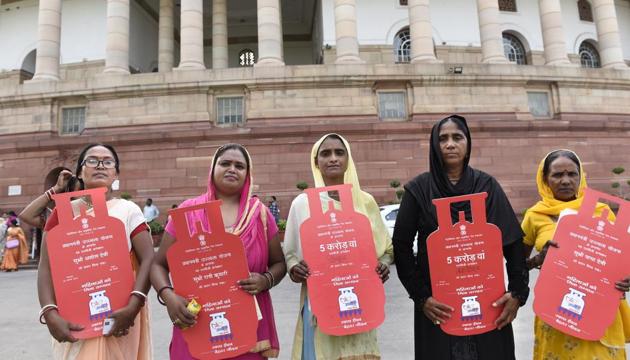
After hearing their views, I visited households of the Ujjwala scheme beneficiaries. I randomly chose a household, and to visit that house, we had to climb a hillock for around 15 minutes. It was a small single-bedroom house. A middle-aged woman took me to her kitchen for tea, which was made using LPG. While making tea, she told us that she doesn’t have to spend her time and energy to gather firewood to make her food. In fact, she has now started extra money from knitting during her spare time.
Within poorer households, women often face a ‘triple burden’ - market work, housework and family care. As families grow bigger, this burden increases as women are expected to participate both in low-paying jobs and also function as the main caregiver of the household. Estimates suggest that Indian rural women spend 374 hours a year collecting firewood. Over four million people die prematurely because of illnesses arising from open and polluting cooking fire sources. Women are the most significant sufferers of unclean fuel sources and are susceptible to heart diseases, lung cancer, are at the risk of contracting tuberculosis and cataract. Studies show that by shifting to LPG, women and girls may save up to 1.5 hours a day, allowing them time for education, self-employment and participation in the community activities. Studies from Africa also suggest that shifting to cleaner alternatives increase women’s labour force participation by upto 9%.
Even as efforts have been strong to implement the scheme, certain roadblocks still exist. While those who availed the scheme expressed great satisfaction, poorer families face challenges when it came to refilling the cylinders. Taking cognisance of these hindrances, the government subsidised refilling of cylinder by directly transferring the subsidy amount into the account of the woman head of household. This scheme coupled with the ‘GiveItUp’ campaign, has been encouraging the general population to give up their LPG subsidy in favour of those in need. As a result, LPG coverage has increased from 56% in 2015 to 95% in 2019. Even then supply chain management and beneficiary identification continue to be a cause of concern. Addressing these concerns KM Mahesh, director, ministry of petroleum said: “Efforts are underway to make beneficiaries adopt LPG on a sustainable basis. Greater push is being given to promote 5 kg refills and to promote adoption through ‘change management’ by conducting LPG Panchayats and safety clinics for beneficiaries”.
{{/usCountry}}Even as efforts have been strong to implement the scheme, certain roadblocks still exist. While those who availed the scheme expressed great satisfaction, poorer families face challenges when it came to refilling the cylinders. Taking cognisance of these hindrances, the government subsidised refilling of cylinder by directly transferring the subsidy amount into the account of the woman head of household. This scheme coupled with the ‘GiveItUp’ campaign, has been encouraging the general population to give up their LPG subsidy in favour of those in need. As a result, LPG coverage has increased from 56% in 2015 to 95% in 2019. Even then supply chain management and beneficiary identification continue to be a cause of concern. Addressing these concerns KM Mahesh, director, ministry of petroleum said: “Efforts are underway to make beneficiaries adopt LPG on a sustainable basis. Greater push is being given to promote 5 kg refills and to promote adoption through ‘change management’ by conducting LPG Panchayats and safety clinics for beneficiaries”.
{{/usCountry}}While efforts to increase usage beyond first time installation are underway, the international community has been lauding government efforts. Through this scheme, India has been making progress on Sustainable Development Goals. It is promoting gender equality, giving women opportunities for self-development by creating additional employment opportunities(Goal 5); promoting good health (Goal 3); providing access to affordable, reliable, sustainable and modern energy (Goal 7); and, combating air pollution (Goal 13 and Goal 15).
In a nutshell, the Ujjwala scheme is heralding “The Blue Flame Revolution”. It is impacting the lives of poor rural women by empowering and allowing them leisure time which they rightfully deserve.
Vijayashree Yellappa is a consultant with NITI Aayog.
The views expressed are personal